









The landscape of generative AI is shifting rapidly from simple chat-based interactions to complex, autonomous agentic systems. However, as organizations increasingly deploy these agents to handle multi-step workflows, they are encountering a significant "visibility gap." Traditional monitoring tools, designed for deterministic request-response cycles, often fail to capture the nuanced, non-deterministic behaviors of AI agents. To bridge this divide, Amazon Web Services (AWS) has officially introduced Amazon CloudWatch Omni, a unified, AI-powered observability solution designed to provide developers and operators with a cohesive way to build, evaluate, and manage AI agents across any framework or model provider.
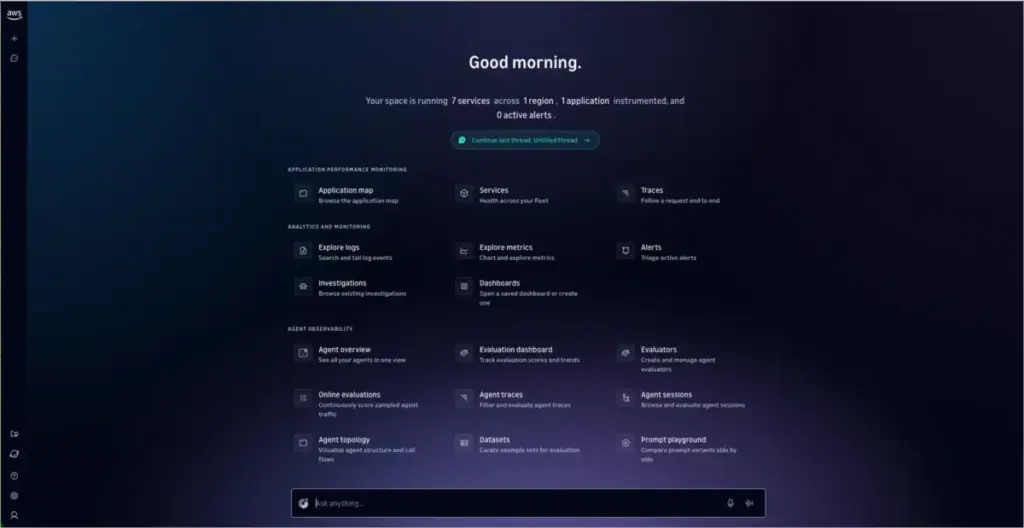
CloudWatch Omni represents a fundamental departure from the traditional AWS Management Console-centric model. It is an app-centric platform that prioritizes developer experience by bringing observability directly into the integrated development environment (IDE) while offering a standalone web experience for operations teams. By supporting open standards and providing a dedicated "eval-driven" workflow, Omni aims to solve the persistent challenge of debugging AI systems where a minor tweak to a prompt can lead to unforeseen degradation in output quality, even when standard error metrics remain deceptively healthy.
The Challenge of Non-Deterministic AI Systems
For engineering teams, the current state of AI observability is often fragmented. When an AI agent fails—perhaps by hallucinating a fact, failing to select the correct tool, or getting stuck in a reasoning loop—developers are frequently forced to manually parse through disparate logs scattered across multiple systems. This context-switching, moving between code editors, terminal windows, and browser-based dashboards, consumes valuable time and obscures the root cause of failures.
The non-deterministic nature of large language models (LLMs) exacerbates this. Because an agent’s behavior can shift based on subtle variations in context or prompt engineering, teams often struggle to differentiate between a genuine code bug and a model-level regression. Existing tools have largely forced a choice between siloed generative AI monitoring platforms or overly simplistic solutions that do not integrate into the daily development lifecycle. CloudWatch Omni is designed to resolve this by capturing every trace of an agent’s journey—from the initial prompt to the final output, including every reasoning step, tool invocation, and sub-call made along the way.

Dual-Surface Observability: From IDE to Production
A key differentiator for CloudWatch Omni is its commitment to meeting teams where they already work. The platform delivers its observability capabilities through two primary, yet interconnected, surfaces.
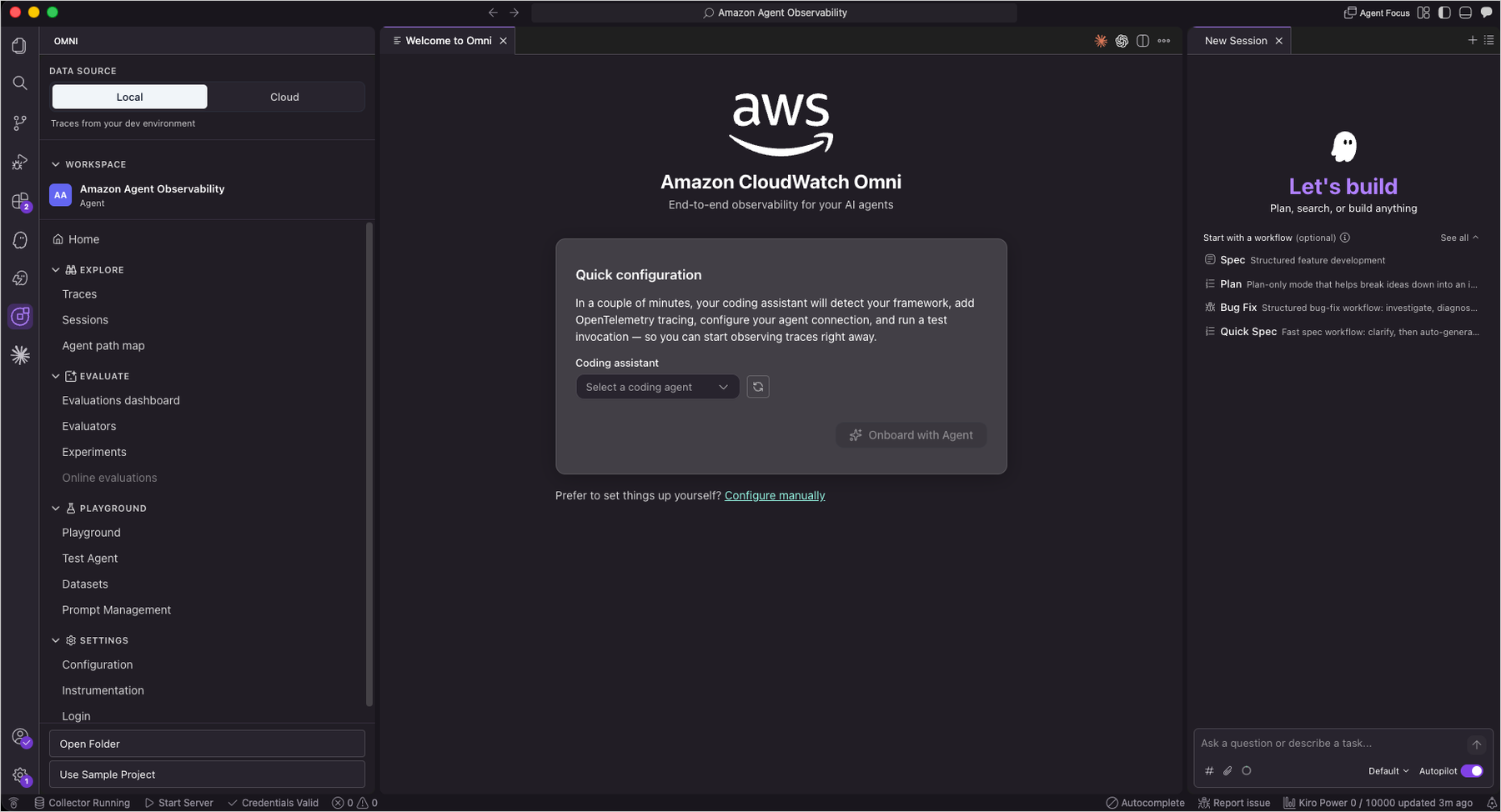
For developers, Omni provides a native extension for popular IDEs like VS Code and Kiro. This integration allows engineers to view traces in real-time as they run their agents, giving them immediate access to a "playground" for rapid testing and built-in evaluators that can score agent performance on the fly. This tight integration ensures that the loop between writing code, running a test, and analyzing the result is as short as possible.
For operations teams responsible for the health of a fleet of agents, Omni offers a standalone, browser-based web experience. Critically, this surface is entirely separate from the standard AWS Management Console. By leveraging single sign-on (SSO) and removing the need to navigate the broader AWS console, operators can focus specifically on agent monitoring, analytics, and investigation. Despite the separation, the underlying data remains identical; the trace a developer inspects while debugging in VS Code is the exact same trace an operator monitors in the web dashboard, fostering seamless collaboration between engineering and operations.
To facilitate this, the "Cloud Login" feature provides a secure, optional bridge between the local development environment and the user’s AWS account. Developers can work entirely in a local, offline mode while perfecting their agents and then choose to push telemetry data to Amazon CloudWatch when they are ready to transition into production monitoring. This flexibility allows for secure development without mandating constant cloud connectivity.
Evaluation as a Core Capability
Perhaps the most significant advancement introduced by CloudWatch Omni is its emphasis on evaluation-driven development. In the realm of AI, metrics such as latency and traditional error rates are insufficient to determine if an agent is truly "working." A system might respond with low latency but provide factually incorrect information.
Omni addresses this by including 17 built-in evaluators that measure critical quality dimensions, including coherence, helpfulness, retrieval quality, and routing correctness. By selecting traces from the Trace Explorer, teams can run these evaluators to obtain both per-example scores and aggregate metrics. This functionality effectively removes the need for teams to build their own custom evaluation frameworks from scratch.
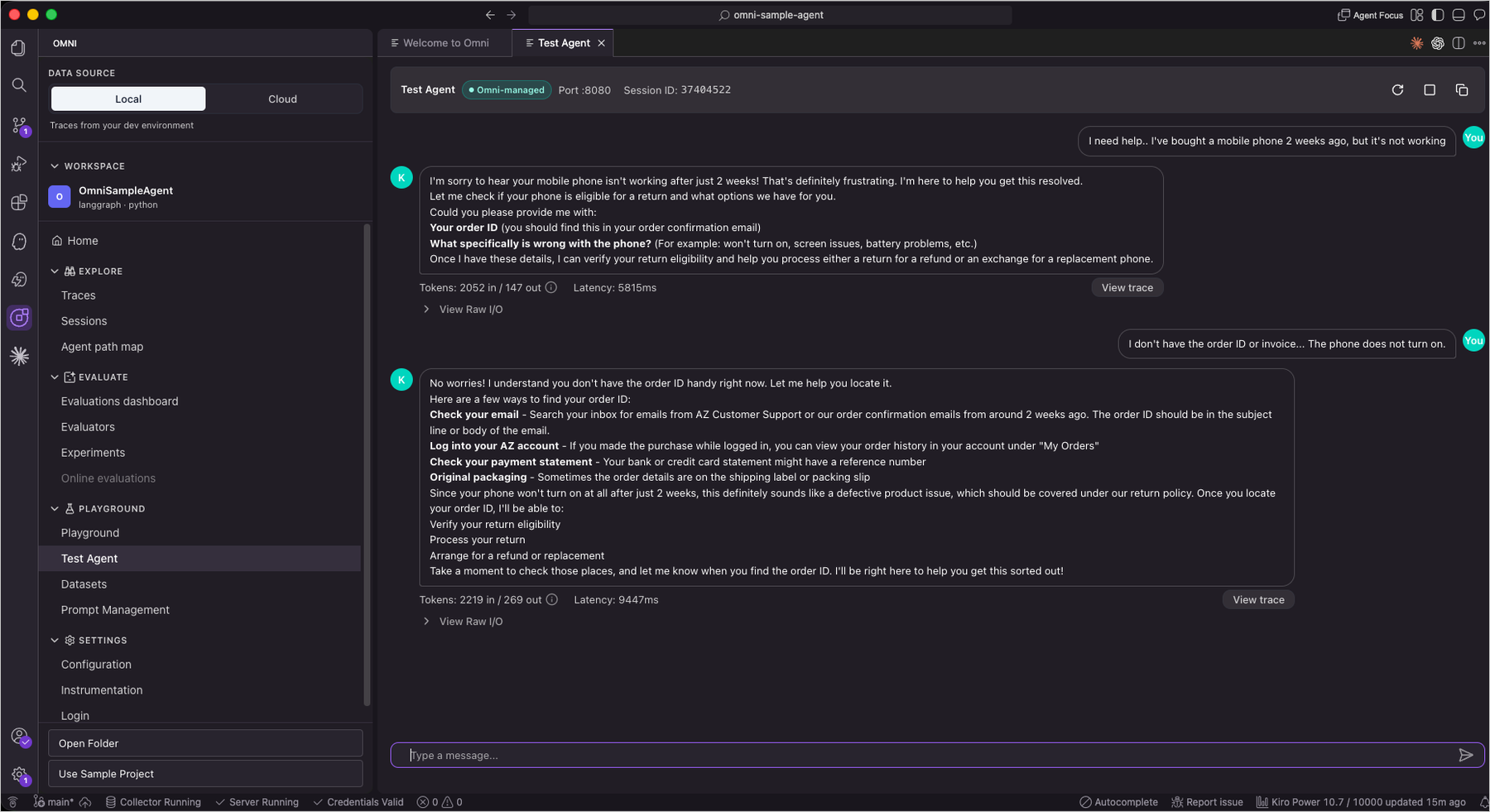
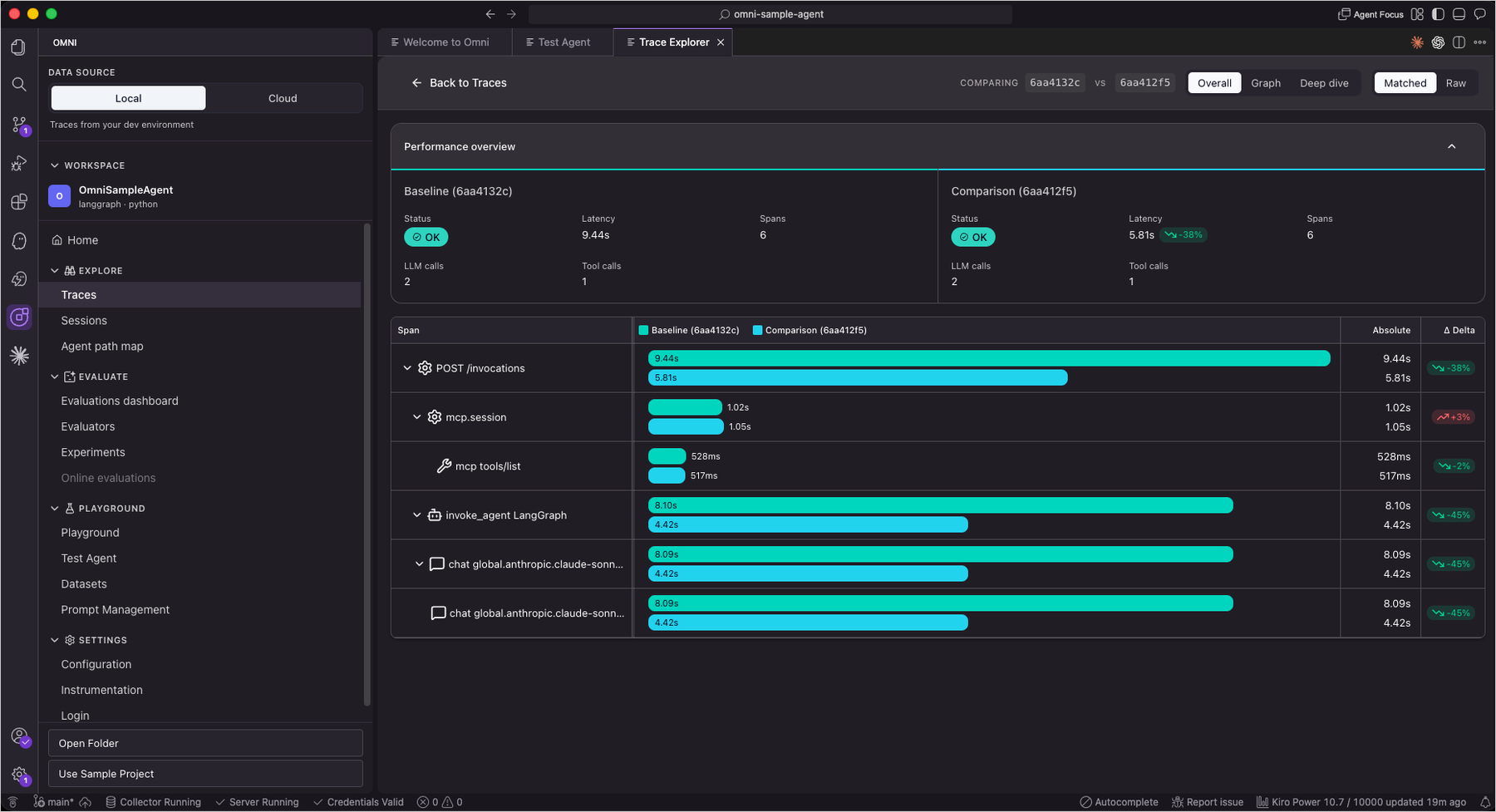
Furthermore, the platform’s "Compare" mode allows developers to perform side-by-side analysis of different traces. This is particularly valuable for debugging regressions; by comparing a successful trace against one where the agent performed poorly, developers can pinpoint exactly where the logic diverged. When combined with the "Ask Assistant" feature, which uses AI to summarize patterns and suggest reasons for agent behavior—such as why a specific tool was triggered twice—the time required to diagnose complex issues is reduced from hours to minutes.
Seamless Integration and Open Standards
CloudWatch Omni is built to be framework-agnostic. It integrates directly with the tools and libraries developers already favor, including LangChain, LangGraph, CrewAI, the OpenAI SDK, and the Vercel AI SDK, for both Python and TypeScript. It also provides deep, native observability for agents built with Amazon Bedrock’s AgentCore, utilizing that framework’s internal evaluation capabilities to provide a unified experience.
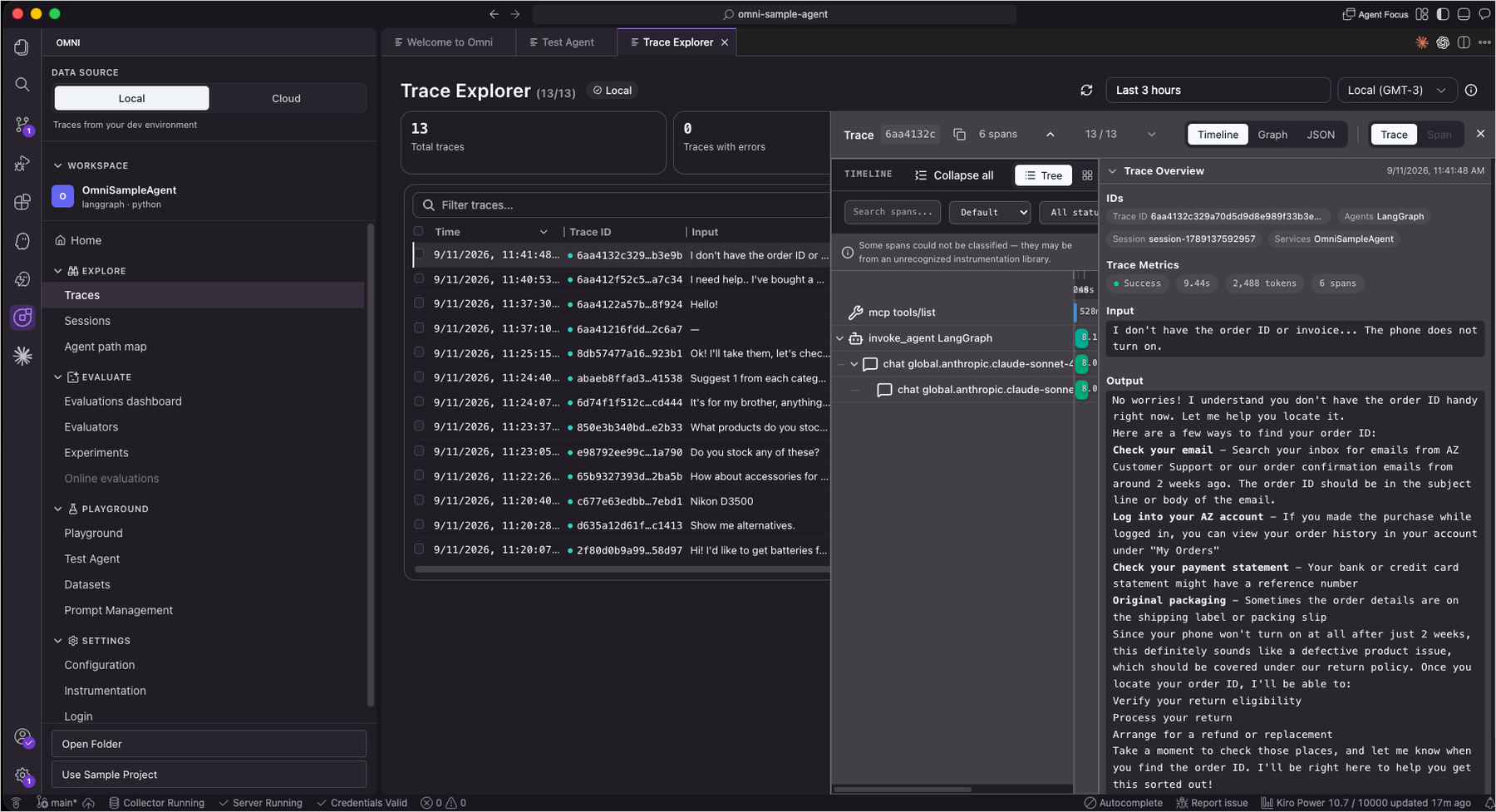
The system is grounded in open standards such as OpenInference and the AWS Distro for OpenTelemetry (ADOT). This ensures that regardless of where the agents are running—be it on AWS Lambda, Amazon ECS, EKS, or even third-party cloud environments—the observability data remains compatible and portable. There is no requirement for re-platforming, allowing teams to adopt Omni as a layer over their existing infrastructure rather than replacing it.
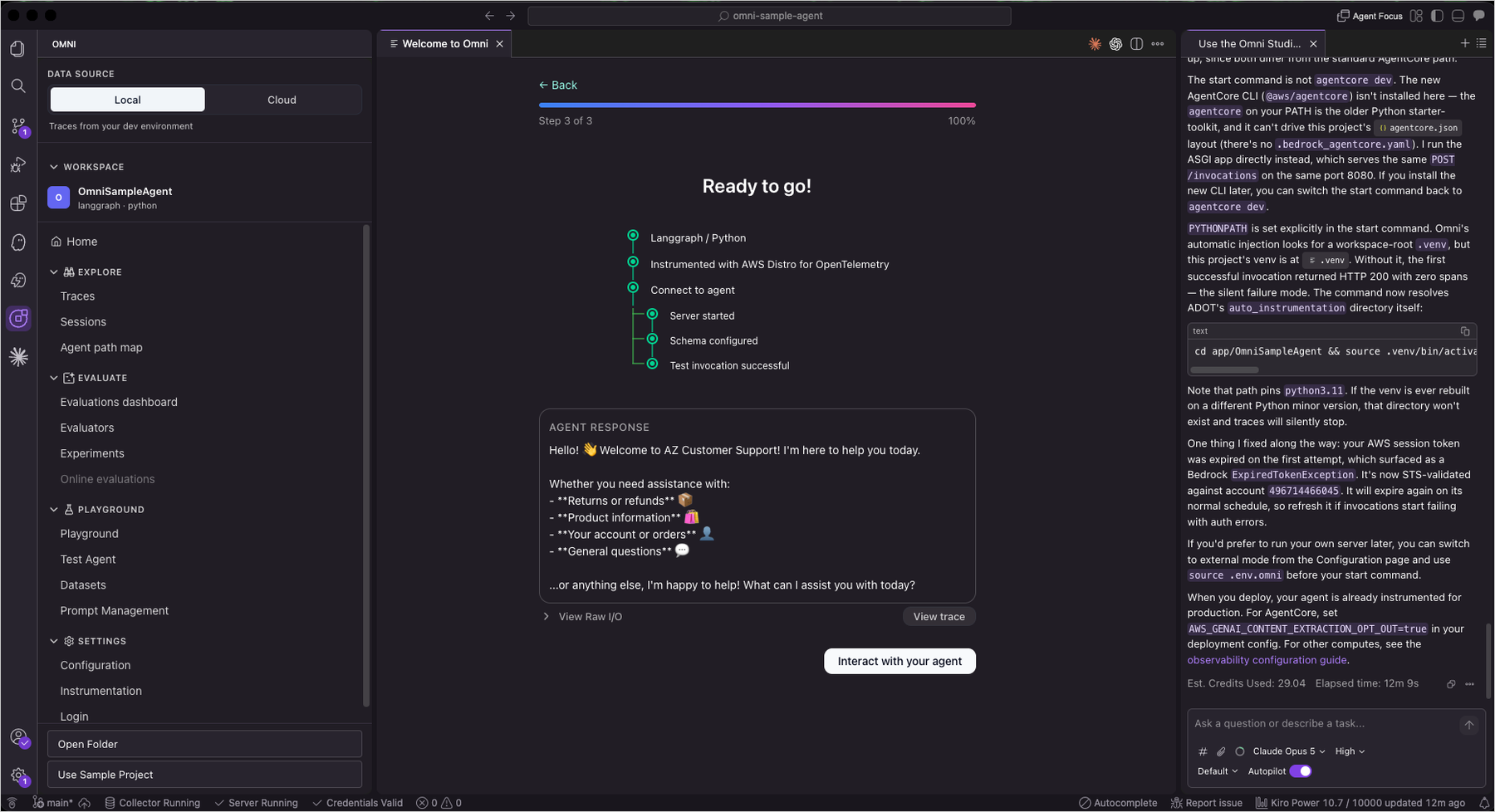
For those looking to get started, the process is streamlined through AI-assisted setup. Tools like Kiro, Claude Code, and Codex can now interact with the Omni extension to automatically configure development servers, install dependencies, and set up the necessary instrumentation. This allows developers to move from installation to running their first traced agent session in a matter of minutes.
Availability and Future Path
Amazon CloudWatch Omni is now generally available. The IDE extension is free for all users, requiring no AWS account to begin local development. AWS credentials are only necessary for users who wish to utilize Amazon Bedrock models or those who want to persist their telemetry data to the cloud for production monitoring.
As the industry continues to experiment with increasingly complex agentic systems, the ability to observe, evaluate, and iterate becomes the defining factor in successful deployment. By centralizing these capabilities into a single, cohesive experience, AWS is positioning CloudWatch Omni as the standard interface for the next generation of AI development. Whether through the local comfort of a code editor or the broad overview of a web dashboard, the tool provides the transparency necessary to turn the "black box" of AI agents into a manageable, reliable, and high-performing system. Developers and organizations interested in exploring these capabilities can find the extension on the VS Code Marketplace or visit the AWS Builder Center to see how Omni integrates into broader cloud operations.