









The way many modern organizations are rolling out artificial intelligence feels less like a calculated corporate strategy and more like an elaborate farce. If current enterprise implementations were adapted into a feature film, critics would likely dismiss the plot as completely unbelievable, arguing that no group of professionals could be quite that short-sighted. Yet, businesses everywhere are living through this reality, and the most frustrating element of the current landscape is that corporate leadership has walked this exact path before.
Back in 2014, digital strategist and author Paul Boag published Digital Adaptation, a book examining the systemic mistakes organizations routinely made while approaching digital transformation and outlining what they should have been doing instead. Today, looking at the current scramble to integrate artificial intelligence into the workplace, the similarities are striking. Revisiting the lessons of the digital transformation era provides a crucial lens through which modern enterprises can navigate the profound challenges of AI adoption.
Across both eras, the foundational error remains identical: approaching a monumental organizational shift purely as a technical challenge.

It’s About People, Not Technology
Undoubtedly, both digital transformation and the rise of artificial intelligence represent massive technological leaps forward, requiring some level of infrastructure implementation. However, installing software is merely the tip of a very large iceberg.
During the height of the digital transformation era, internal IT departments aggressively rolled out content management systems, customer relationship management software, and corporate intranets. Concurrently, customer-facing divisions rushed to launch websites, mobile applications, and early personalization engines. Despite the heavy investments, these organizations placed almost zero emphasis on understanding how actual human beings were going to interact with and utilize these new systems. Consequently, internal platforms remained notoriously difficult to use, while customers either felt indifferent toward the new digital offerings or actively wanted something entirely different.
A strikingly similar phenomenon is occurring today with AI. Senior management teams have bought heavily into the commercial hype, prompting IT departments to acquire enterprise-wide licenses for tools like Copilot Studio and promptly consider the job complete. Aside from a bit of generic, organization-wide training, little else is done to support the transition. Staff members are left wondering what they are actually supposed to do with these sophisticated new systems, all while feeling immense pressure to use them and instantly deliver measurable business results.
Organizations must finally recognize that artificial intelligence represents a profound cultural shift just as much as it is a technological one, and that cultural transition carries enormous implications for their staff. This time around, the stakes feel even higher for employees because they are genuinely fearful for their futures and their job security. Workers have consumed the exact same headlines and dystopian forecasts as senior executives, and no amount of generic reassuring promises from the C-suite is going to alleviate those underlying anxieties.
Why Would Staff Want To Adopt AI?
Examining the current push toward AI from an average employee’s point of view reveals a stark mismatch in incentives. Artificial intelligence offers very little tangible benefit to the individual worker, particularly when employees suspect management ultimately intends to use the technology to automate their roles out of existence.
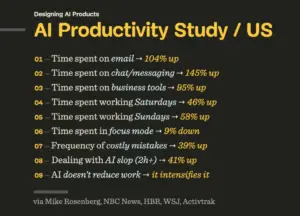
The primary driver behind senior management’s enthusiasm for artificial intelligence is the promise of enhanced productivity—the capability for people to produce more output in less time. Yet, this efficiency gain rarely translates into a direct benefit for the staff. Employees are still expected to work their standard hours, but now face unspoken expectations to accomplish significantly more within that exact same timeframe. They do not receive extra time back in their personal lives, nor do they see an increase in compensation. Under those conditions, questioning why employees might hesitate to embrace the technology is entirely reasonable.
Before demanding that staff incorporate AI into their daily routines, organizations need to address a fundamental question: how do they intend to genuinely motivate their workforce to do so?
One viable strategy involves helping staff identify the specific administrative tasks they thoroughly dislike, then demonstrating how AI can alleviate those burdens to make their jobs less painful. People naturally display much higher receptivity to change when leadership presents it as a genuine opportunity to improve their day-to-day working lives. Beyond merely streamlining tedious chores, organizations may ultimately need to consider offering concrete incentives for AI adoption, ranging from pathways for career progression and financial compensation to reduced working hours.
Staff Need Time And Support To Adopt AI
Furthermore, integrating artificial intelligence into a professional routine is far from a simple task. It requires challenging and dismantling virtually every working habit and mental shortcut an employee has built up over years, or in some cases, decades. All of that accumulated procedural knowledge must be consciously rebuilt. Asking anyone to undergo such a fundamental shift is a massive demand under the best of circumstances, and the reality is that most modern employees are far from operating in ideal conditions.
The vast majority of the workforce is currently overworked, overwhelmed, and constantly struggling just to stay on top of daily to-do lists. Employees simply do not have casual hours to spare to sit down, learn an unfamiliar tool, and independently figure out how it might fit into their existing workflows.
Adapting to AI requires more than just a passing familiarity; it demands dedicated time, careful consideration, and structured experimentation. Sending a staff member on a generic, one-size-fits-all training course is entirely insufficient for helping them unlock the technology’s full potential. At a bare minimum, organizations need to provide targeted training tailored specifically to distinct departmental roles.
Beyond initial formal instruction, companies must develop sophisticated, ongoing support programs that help staff across varied departments understand how artificial intelligence applies directly to their unique responsibilities. Employees require ongoing guidance and protected time to experiment safely to discover the most effective applications for their daily duties.
However, formal training programs alone will only take an organization so far. Experience shows that the most effective internal support typically comes from peers rather than top-down directives. Every organization features a small subset of enthusiastic individuals who are already experimenting with AI tools independently, often without any prompting from management. Bringing these early enthusiasts together, granting them the time and space to share what is successfully working for them, and letting their organic enthusiasm spread naturally to the wider team proves far more effective than any official memo.
During the digital transformation era, this peer-led approach yielded remarkable results. Internal conferences where staff showcased innovative digital projects to their colleagues consistently drove adoption rates higher than any executive mandate ever could. People are inherently more inclined to try a new methodology when they witness a peer in a similar role utilizing it successfully, rather than when senior leadership simply orders them to do so. Rather than trying to convert the most resistant staff members first, organizations should identify those already experimenting, give them a platform to share their insights, and let social proof do the heavy lifting.
Unfortunately, genuine experimentation inherently comes with a significant downside: mistakes will inevitably happen along the way.
It Needs To Be Safe To Fail
Many corporate cultures are unfortunately defined by an underlying climate of fear where mistakes are interpreted as direct evidence of professional incompetence. Yet, by its very nature, mastering a transformative new tool like artificial intelligence requires a learning curve populated by trial, error, and missteps. When a company culture penalizes mistakes, that fear becomes a massive barrier to enterprise-wide adoption.
Similar dynamics played out during the digital transformation era. Senior management would loudly demand comprehensive digital change while remaining entirely confused when progress stalled. They frequently failed to realize they were sending conflicting messages to their teams. On one hand, leadership demanded digital innovation, but on the other hand, they continued enforcing the exact same rigid key performance indicators and meticulously penalized any errors during annual performance reviews. There was no institutional space left to fail because the unrelenting pressure to deliver perfection remained absolute.
In the current AI landscape, those same restrictive dynamics often appear amplified. Corporate horror stories routinely emerge of staff members being formally reprimanded for consuming too many software tokens just weeks after leadership urged them to aggressively adopt AI tools. In other instances, employees receive so many warnings and restrictions regarding what they are permitted to do that they become paralyzed by the fear of making a mistake. Ultimately, sticking to comfortable, legacy ways of working feels far safer than risking disciplinary action through innovation.
If management genuinely expects staff to embrace artificial intelligence, they must cultivate an environment where employees feel safe to experiment. Leadership must actively adjust key performance indicators, revise how employee performance is reviewed, and temporarily relax strict governance measures while the workforce learns the capabilities of the technology.
Handle Governance With Care
Of course, introducing enterprise-grade artificial intelligence cannot happen in a complete vacuum; some level of institutional governance is undeniably necessary. However, governance is historically an area that organizations manage exceptionally poorly.
During the peak of digital transformation, organizational governance swung wildly between two extremes: it was either completely nonexistent or so suffocatingly strict that it entirely stifled creative innovation. Today, that exact same pendulum swing is visible in corporate AI adoption strategies.
Staff certainly require a clear governance framework to understand where they stand, what is expected of them, and the boundaries of permitted behavior. Yet, organizations frequently implement policies so restrictive that employees find it infinitely easier simply to avoid using the tools altogether. Volumes of dense instructions detailing what data can and cannot be shared with an AI model only serve to generate the pervasive corporate fear mentioned earlier.
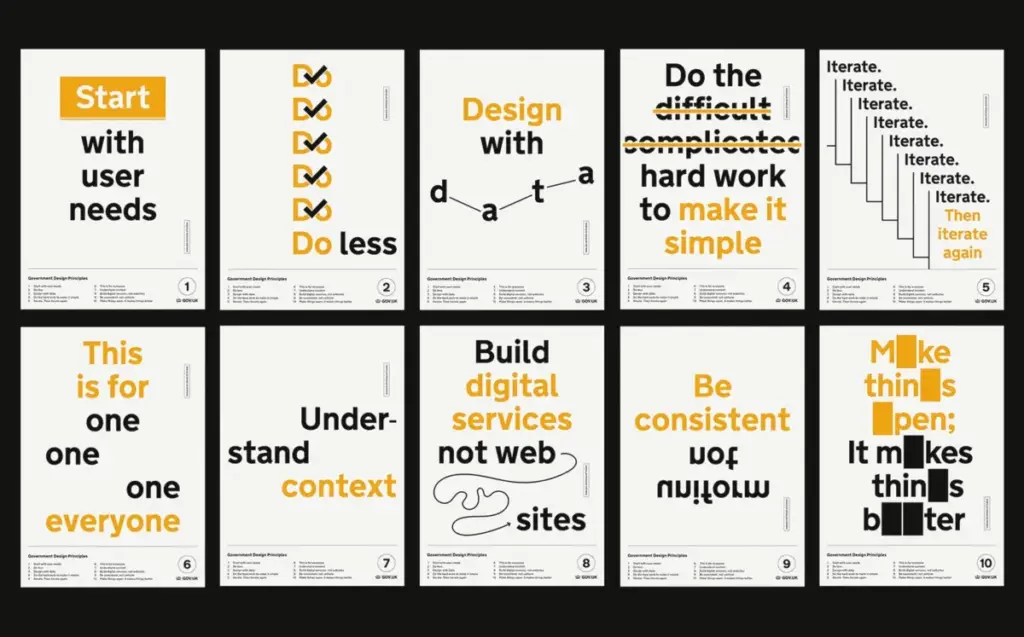
Organizations would be far better served by establishing a concise set of core principles that could easily fit onto a few physical posters, similar to successful government design templates. Beyond those foundational guardrails, leadership needs to demonstrate a baseline level of trust in their employees’ professional common sense. Mistakes will inevitably occur as the workforce learns to navigate the technology, but that friction is simply the inevitable cost of organizational evolution. Companies must accept this reality and account for it when planning their technology rollouts.

Adaptive Technological Rollout
At the same time, organizations must exercise caution regarding how they manage AI deployment from an IT perspective. Once again, the temptation to lock down infrastructure entirely and inadvertently strangle AI adoption remains high.
Back in 2014, overstretched IT departments frequently selected a rigid suite of technologies and pushed them organization-wide with little or no consultation from the actual end-users. Any software falling outside that pre-approved catalog was forced to navigate a complex, bureaucratic approval process typically overseen by a slow-moving steering committee. The resulting glacial pace of change proved to be a primary contributor to the high failure rate of early digital transformation initiatives.
Today, identical bottlenecks are emerging. IT teams purchase enterprise licenses for standardized platforms and consider their responsibilities finished, ignoring the reality that generic solutions often fall drastically short of departmental needs.
When official corporate tools fail to support specialized workflows, employees do not simply wait around for bureaucratic steering committees to grant approval. Much like the shadow IT phenomenon of the digital transformation era—where staff turned to unsanctioned services like Dropbox and Google Docs because official intranets were inadequate—modern workplaces are now seeing the rise of shadow AI. When internal corporate software restricts employees from doing their jobs efficiently, they simply open a personal ChatGPT or Claude account on their personal smartphones or home laptops and bypass corporate restrictions entirely.
This workaround behavior introduces risks far greater than the issues the initial restrictions were designed to prevent. Sensitive company data ends up flowing into external tools entirely outside the organization’s control, lacking oversight and leaving no institutional record of what information was shared.
The instinctive corporate reaction is often to clamp down even harder with stricter firewall policies, blocked web domains, and threats of disciplinary action. However, such punitive measures rarely succeed; they merely drive the behavior further underground. Shadow AI should be viewed as a symptom rather than a standalone crime—and a useful one at that, because it accurately highlights precisely where official corporate tools are failing to meet operational demands.
Rather than attempting to aggressively stamp out shadow AI through punitive measures, organizations should learn from it. Management should talk directly to staff to discover what tasks they are using personal accounts for and identify the specific limitations of the official enterprise AI tools. Those insights should then directly shape the next phase of technological rollout.
Admitting that a messy, decentralized technology stack can feel uncomfortable is entirely fair, and an uncontrolled environment is certainly not ideal. Nevertheless, during the early stages of a profound technological shift, organizations must often tolerate a degree of operational chaos while employees explore the boundaries of what is possible and establish common, practical use cases.
Companies must grant staff the flexibility to explore different AI applications and varied toolsets to discover what genuinely suits their specific roles. Leadership can always tighten governance later once actual organizational requirements become clearer.
A Dangerous Time
Undoubtedly, embracing an open, exploratory approach to artificial intelligence feels risky to many corporate leadership teams. The natural desire is to centrally control the entire adoption process and ensure nothing goes wrong. Change, however, inherently carries risk, and the danger of moving far too slowly in a shifting technological landscape ultimately outweighs the risks of moving too quickly.
The far greater danger lies in organizations treating this transition purely as a technological challenge while completely overlooking the human dimension. Adopting artificial intelligence is not simply a matter of installing new software licenses. Just like the digital transformation era before it, it is fundamentally a challenge concerning people, culture, and thoughtful change management. The sooner organizations recognize the true scope of what they are dealing with, the better prepared they will be to navigate the future.