








Engineering teams looking to modernize their infrastructure face a complex challenge when transitioning critical financial workloads across cloud providers. A comprehensive new technical blueprint details the exact methodology required to migrate a production-grade payments application—featuring a React user interface and an Express API—from a single Amazon Web Services (AWS) EC2 instance to Google Kubernetes Engine (GKE), while keeping PostgreSQL securely housed on Amazon RDS.
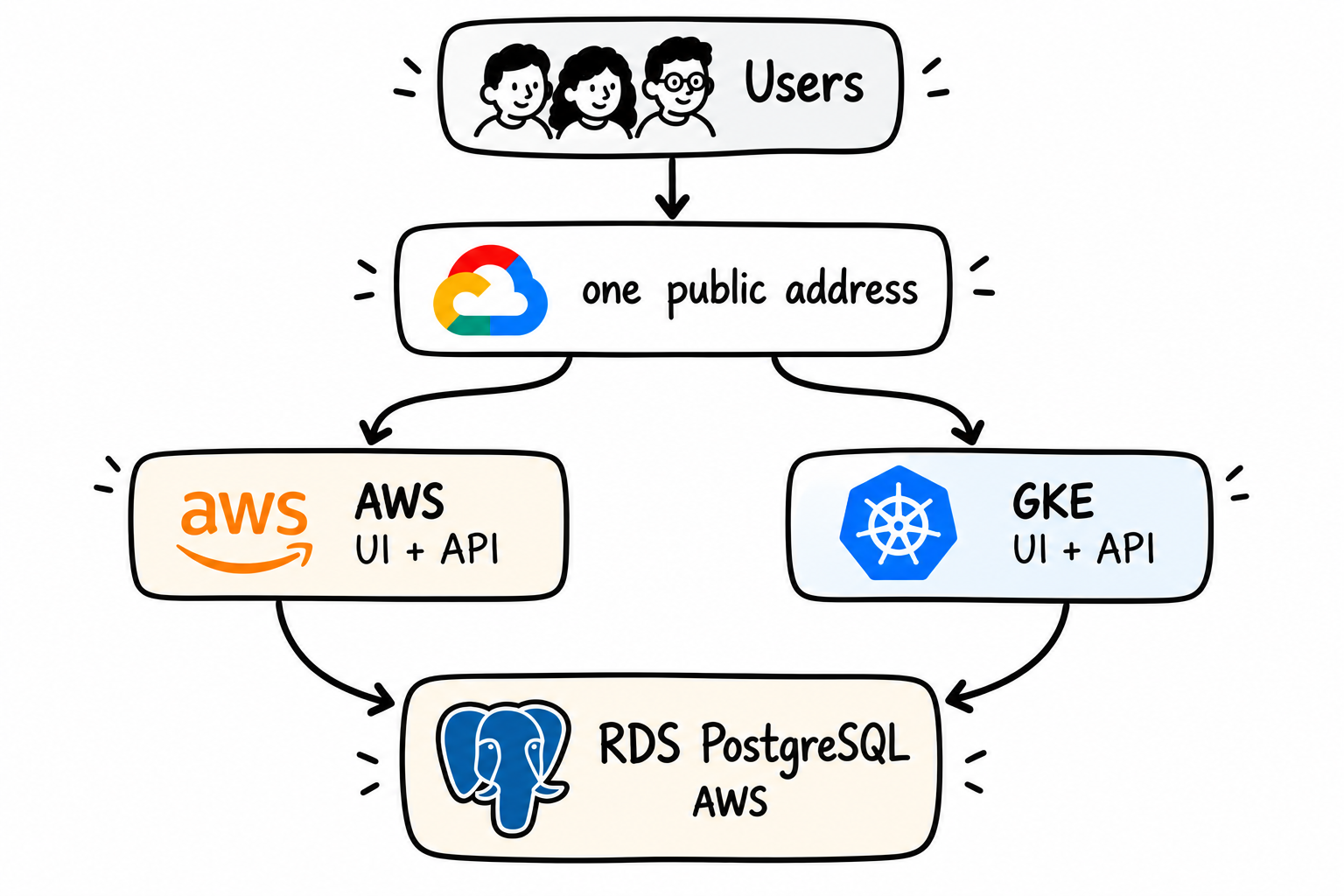
The guided migration strategy addresses a common enterprise dilemma: how to shift containerized workloads to a new orchestration platform without ever interrupting public service or forcing a disruptive all-or-nothing cutover. By decoupling the application tier from the database layer and utilizing a weighted global load balancer, teams can incrementally migrate traffic from AWS to GKE by fractional percentages, carefully monitoring error rates, latency metrics, and transactional integrity along the way.
Establishing the Baseline and Architecture
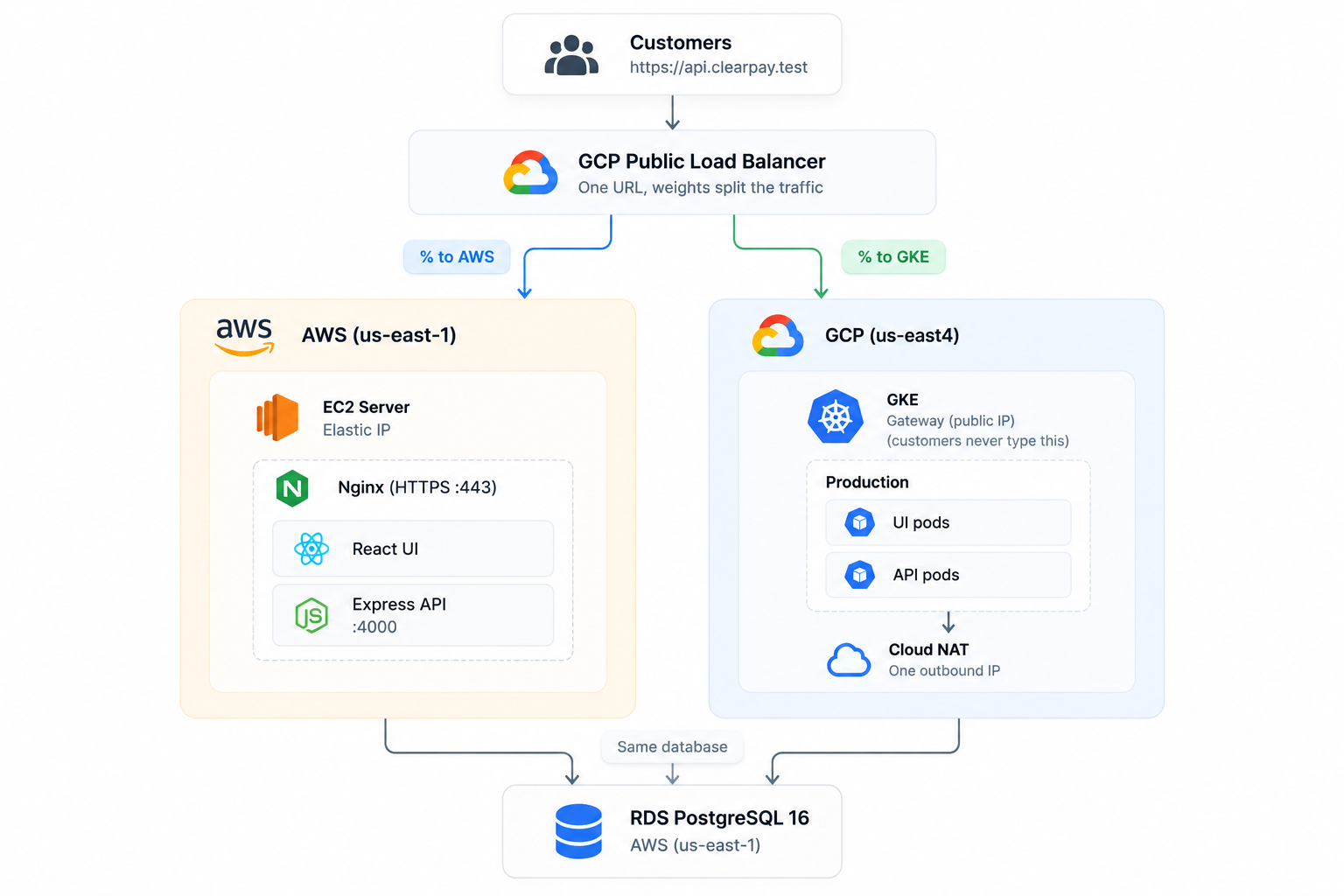
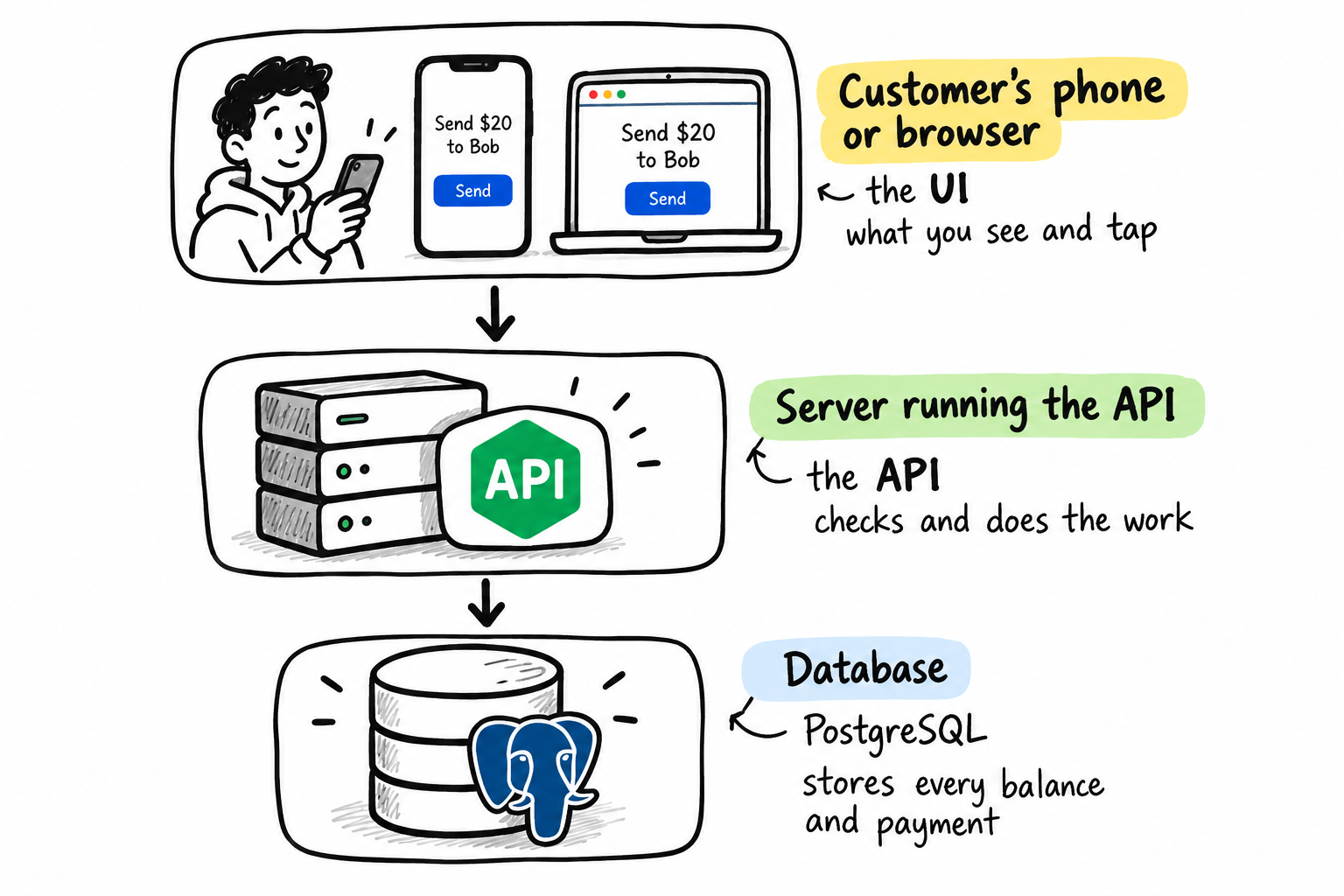
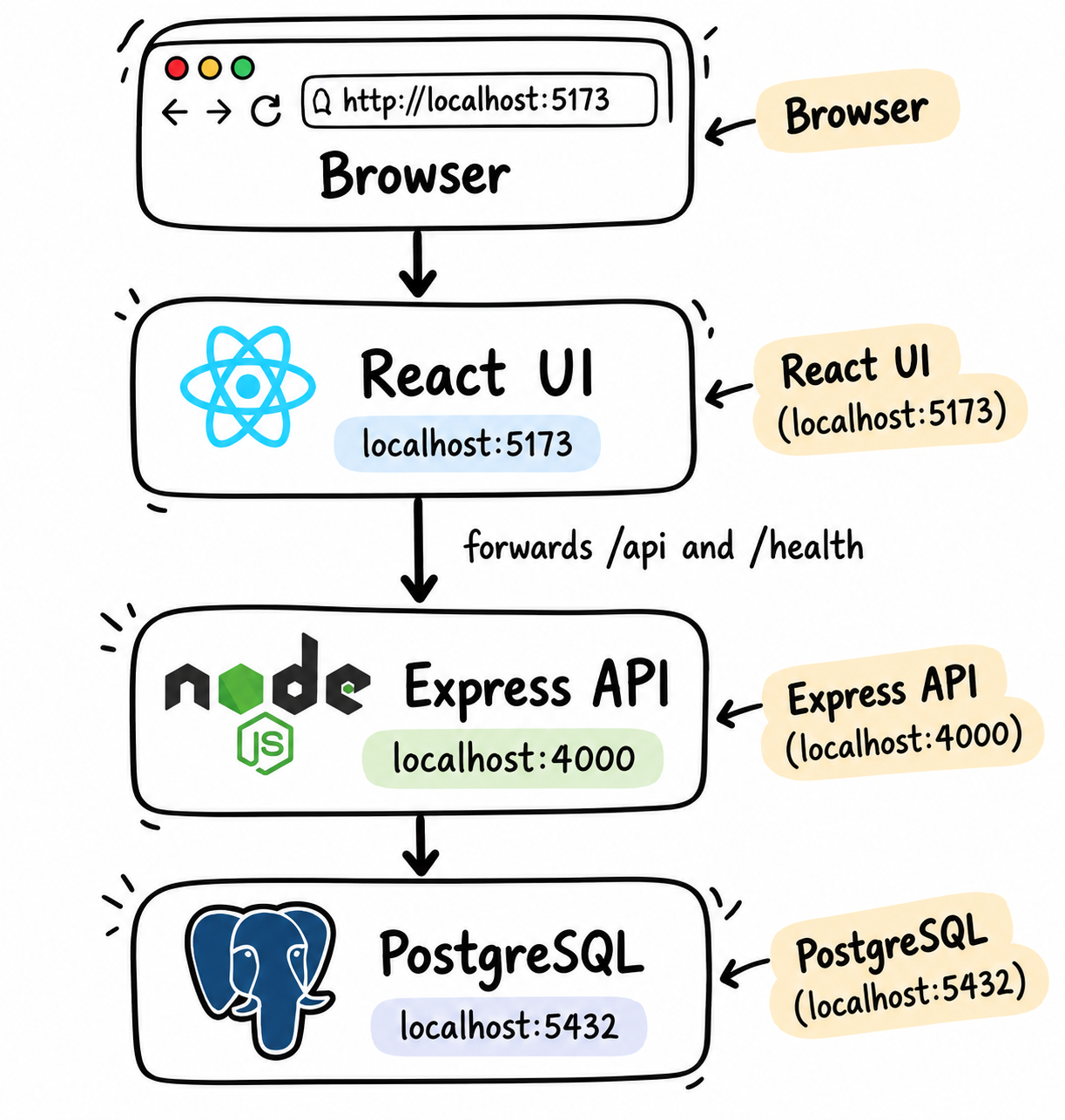
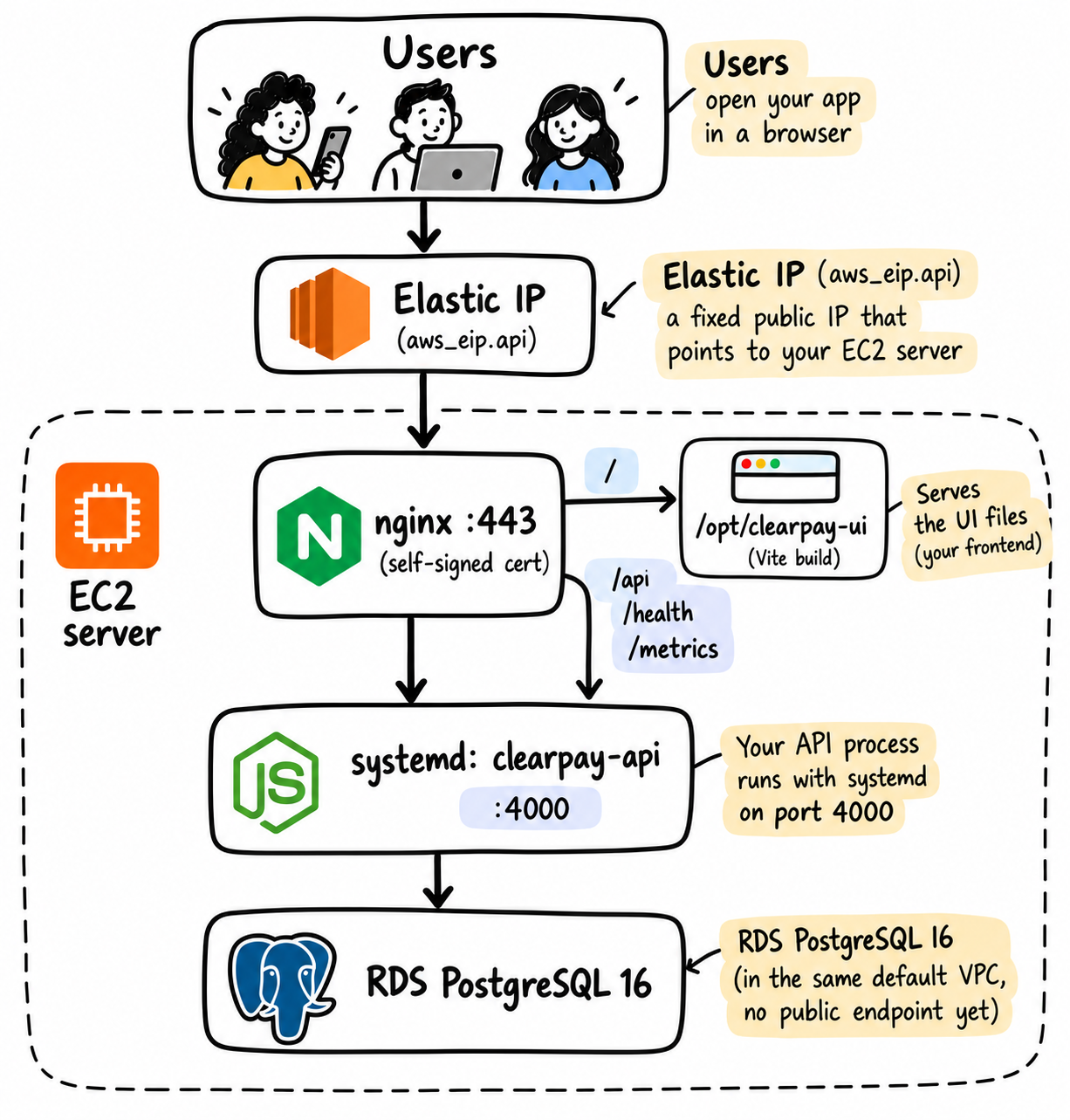
Before touching any cloud infrastructure beyond the initial source environment, the migration framework emphasizes the necessity of establishing a trusted baseline. The reference application, ClearPay, relies on a three-tier design where the frontend user interface communicates with the Express API, which in turn coordinates with a PostgreSQL database.
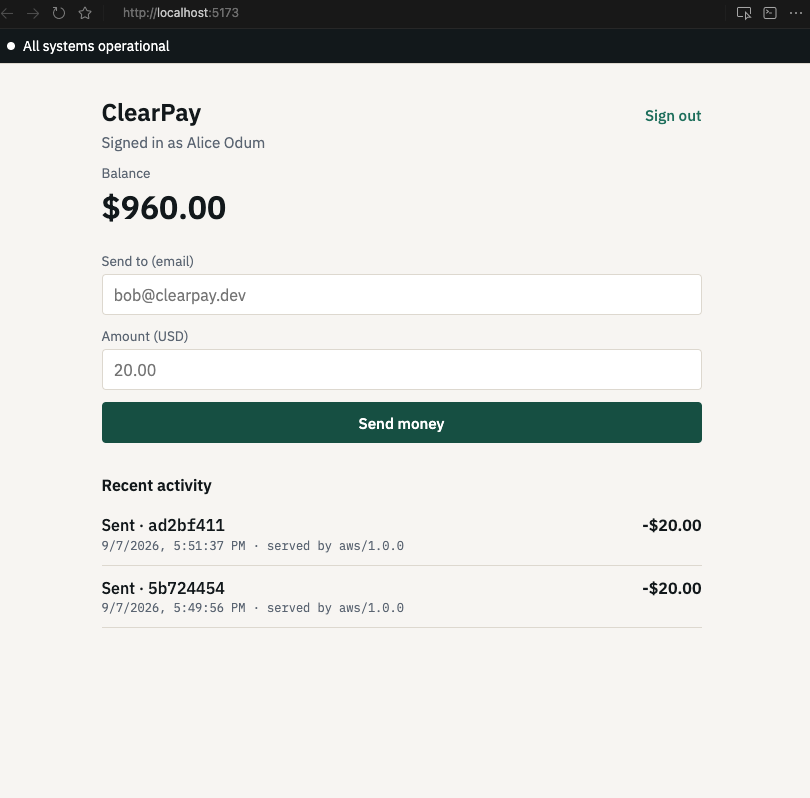
The initial state reflects a common small-business footprint: a single Ubuntu virtual machine running the application processes via systemd alongside an Nginx reverse proxy handling SSL termination. To ensure absolute reliability during the eventual cloud transition, engineers must first run the application locally using Docker Compose, execute comprehensive test suites, and measure baseline performance metrics. Specifically, teams record p50, p95, and p99 latency figures, throughput limits, and error rates using automated load-testing tools. Furthermore, critical transactional safeguards—such as idempotency keys that prevent double-charging users during network retries—must be rigorously verified before any cloud-to-cloud migration planning begins.
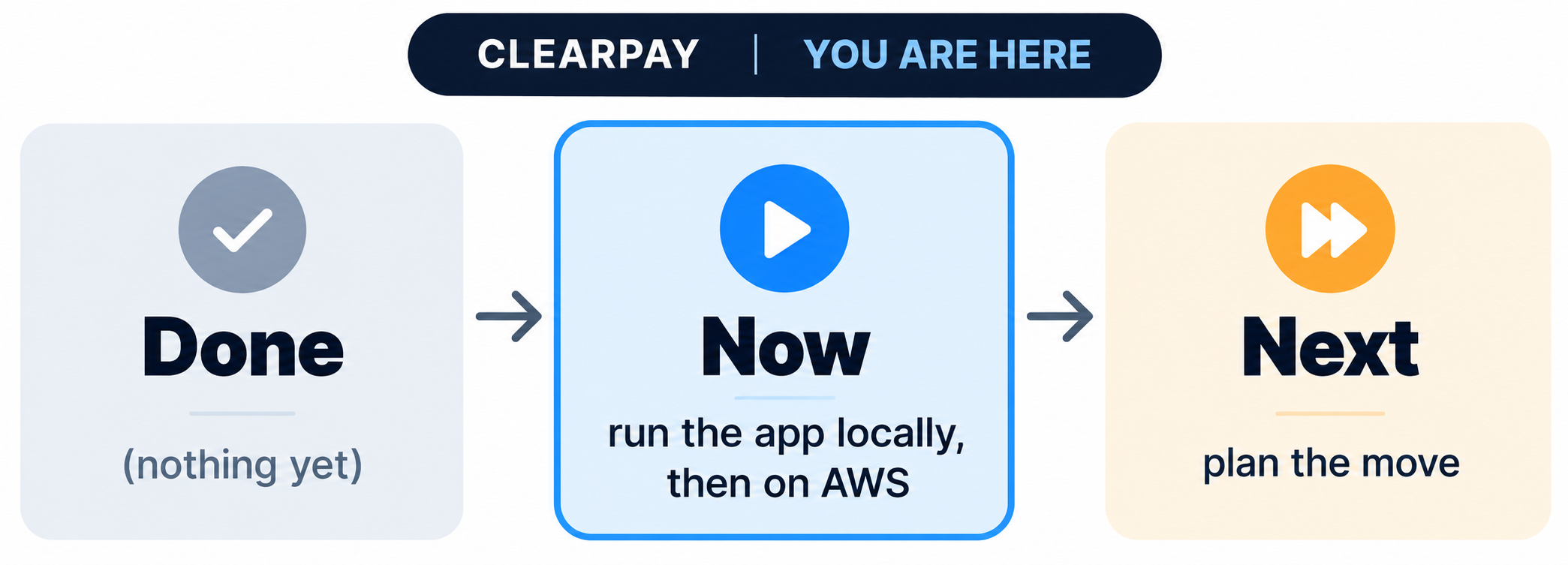
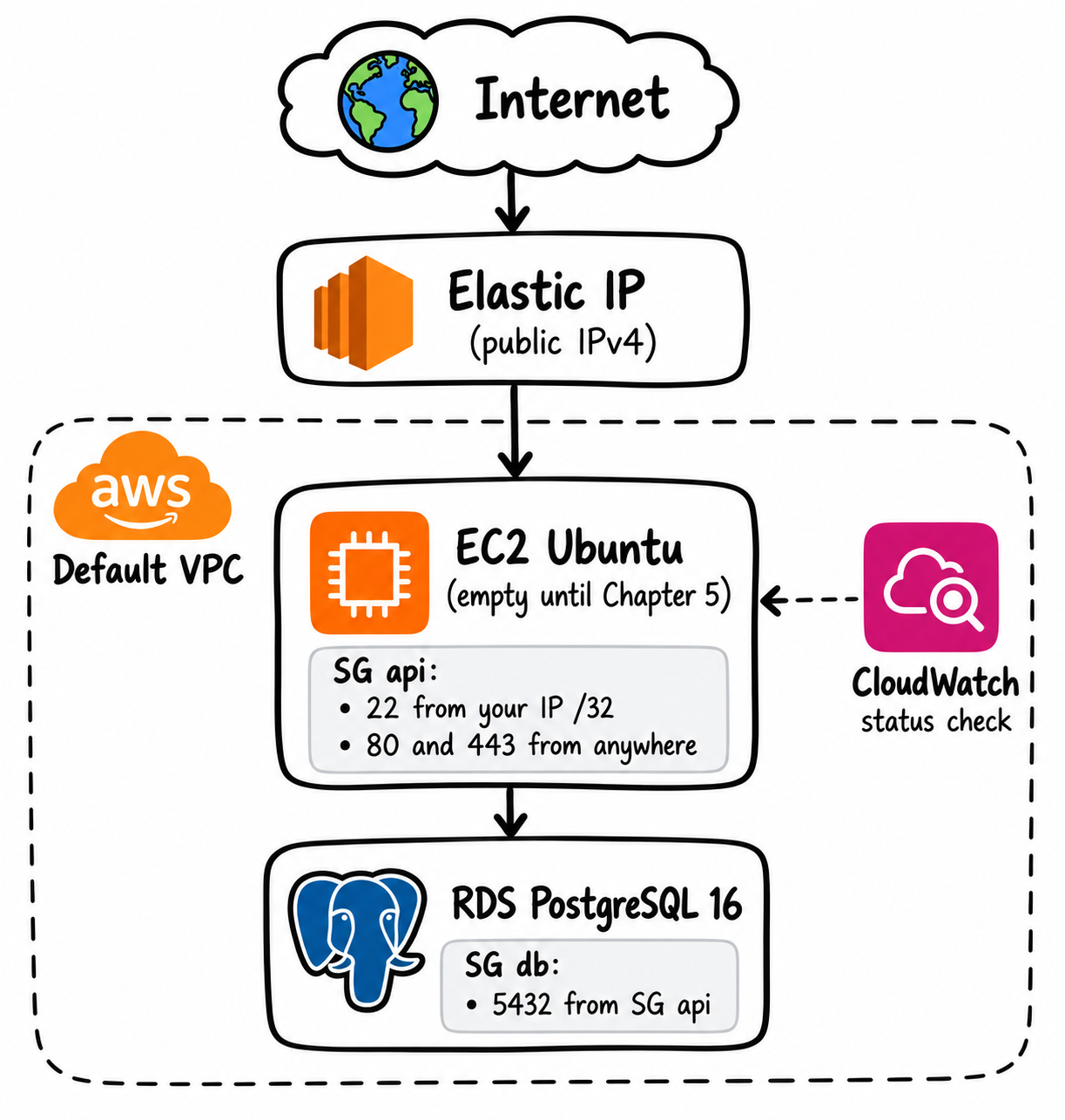
Once the baseline metrics are documented and an AWS EC2 instance is successfully provisioned via Terraform to mirror the production setup, the migration strategy shifts toward building the destination environment in Google Cloud Platform (GCP).
Constructing the GCP Destination via Terraform
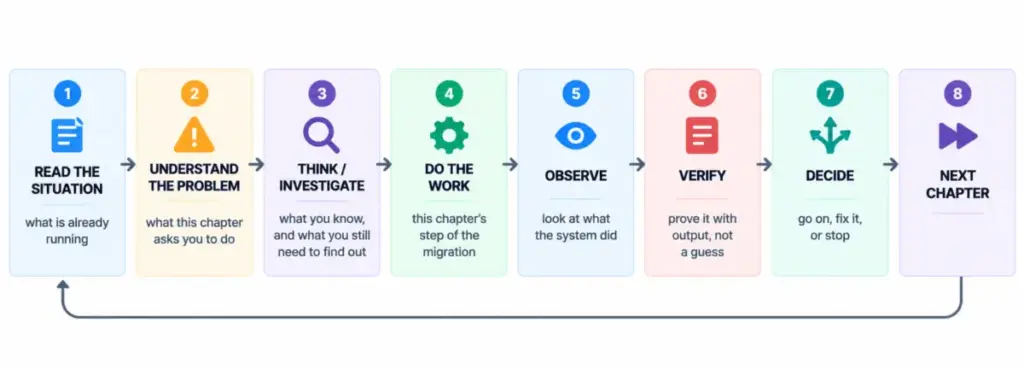
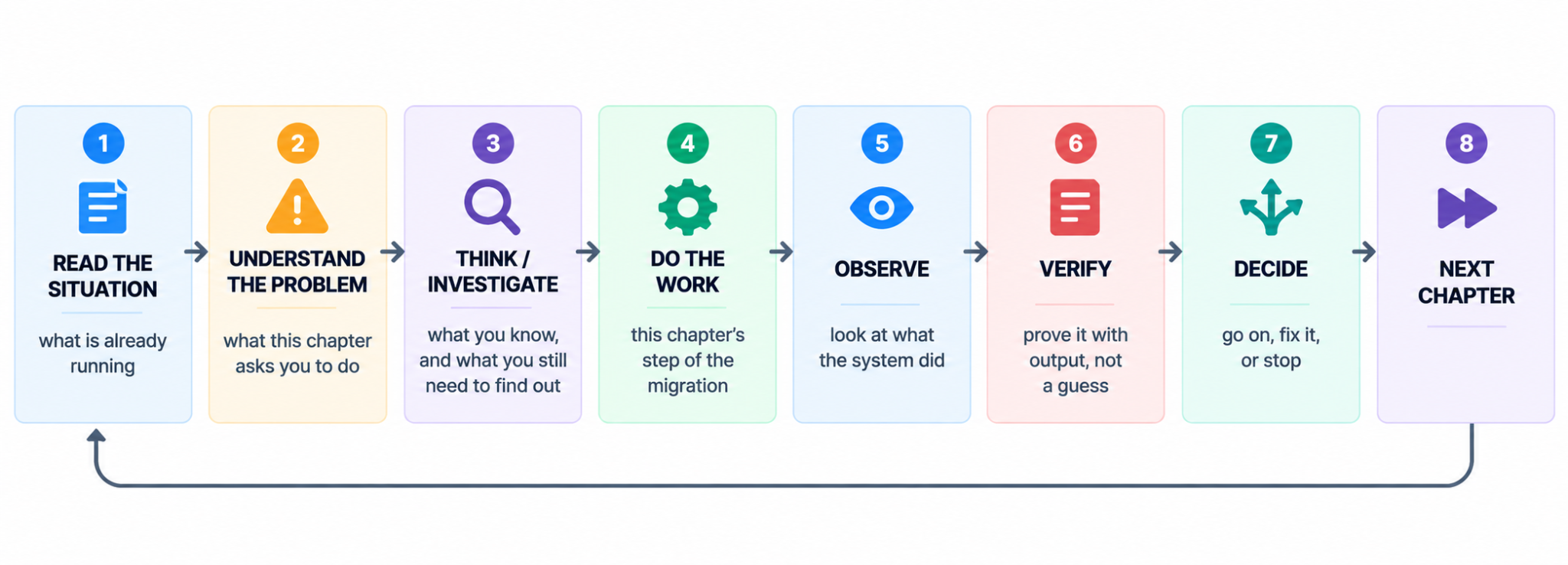
Rather than attempting a monolithic deployment, the Google Cloud infrastructure is systematically provisioned across eight distinct, modular Terraform stages. This granular approach ensures that any configuration error can be isolated and resolved immediately rather than becoming buried within an opaque, monolithic deployment script.
The provisioning sequence begins by enabling the necessary Google APIs, such as the Kubernetes Engine API and Secret Manager, followed by the creation of a dedicated Virtual Private Cloud (VPC) network and subnet equipped with Cloud NAT. This network design ensures that the underlying GKE cluster nodes operate entirely on private IP addresses, utilizing Cloud NAT for secure outbound internet access and establishing targeted network rules to securely communicate with the remote AWS database over encrypted TLS connections.
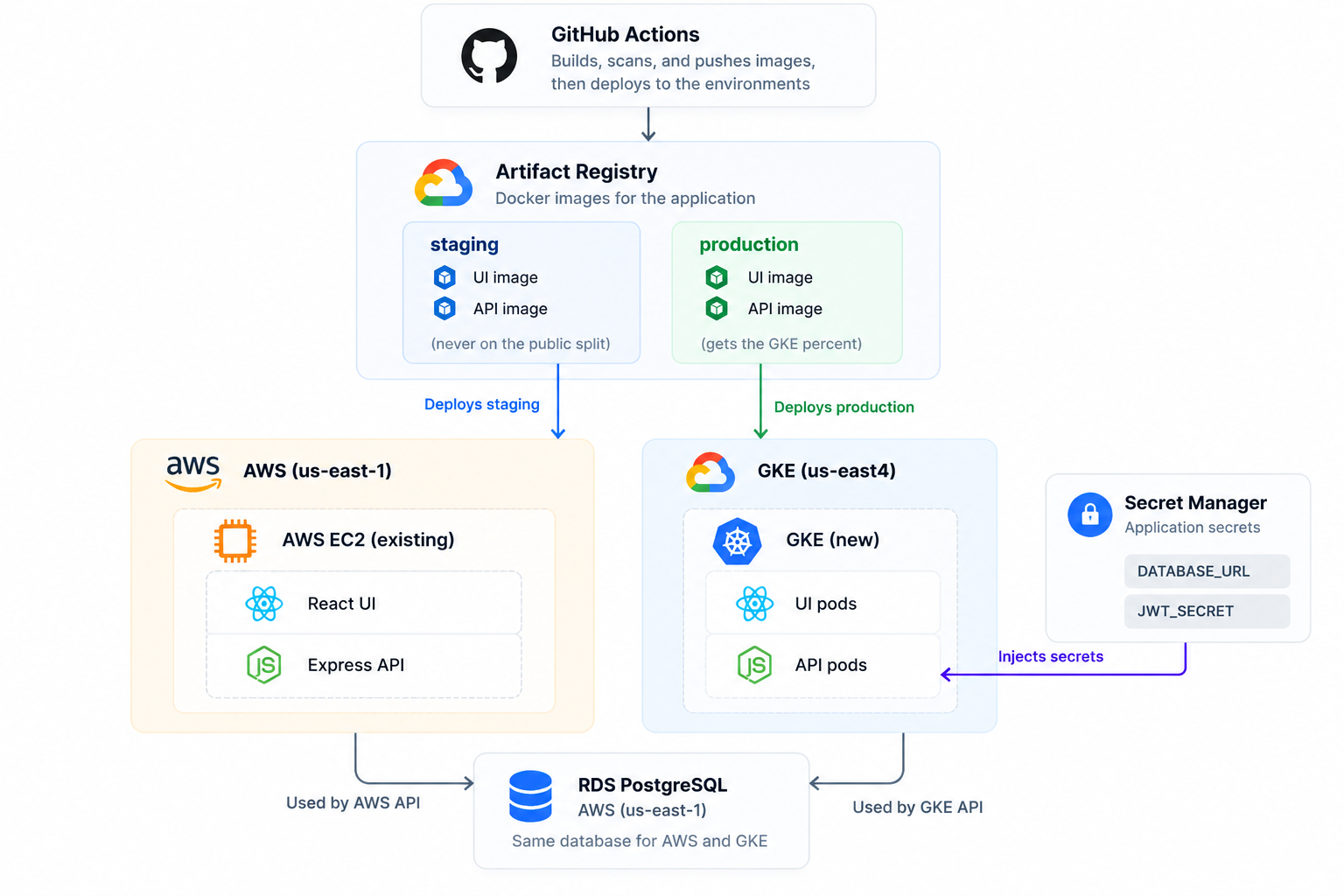
Subsequent Terraform stages establish a private Artifact Registry for container images, configure secure Workload Identity federation bindings to eliminate the security risks associated with long-lived service account key files, and provision Secret Manager parameters mirroring the application’s required environment variables. Observability is integrated early through log-based error metrics and alerting policies, culminating in the final stage: the deployment of a global HTTP(S) external load balancer configured with a flexible traffic-splitting map.
Implementing Zero-Downtime Traffic Shifting
With the destination cluster and front-end load balancer fully operational, the pipeline takes charge of building, scanning, and deploying the application code into private staging and production namespaces within GKE. Security scanners inspect container images for vulnerabilities prior to deployment, and automated promotion gates execute a strict suite of functional checks—validating database connectivity, user authentication, and transaction idempotency—before any code is cleared for live traffic.
The most delicate phase of the migration involves shifting customer traffic from the legacy AWS infrastructure to the new GKE environment. Rather than relying on DNS changes, which suffer from propagation delays and client-side caching issues that complicate emergency rollbacks, the architecture utilizes weighted routing configurations at the global load balancer level.
Operations teams initiate the migration by routing just one percent of live traffic to GKE while keeping ninety-nine percent on AWS. Continuous automated synthetic monitoring checks track HTTP status codes and response latencies in real time. If error rates remain flat and latency parameters stay within pre-defined thresholds, engineers incrementally scale the traffic distribution through intermediate milestones—such as ten, twenty-five, fifty, and seventy-five percent—before ultimately reaching full parity at one hundred percent GKE distribution.
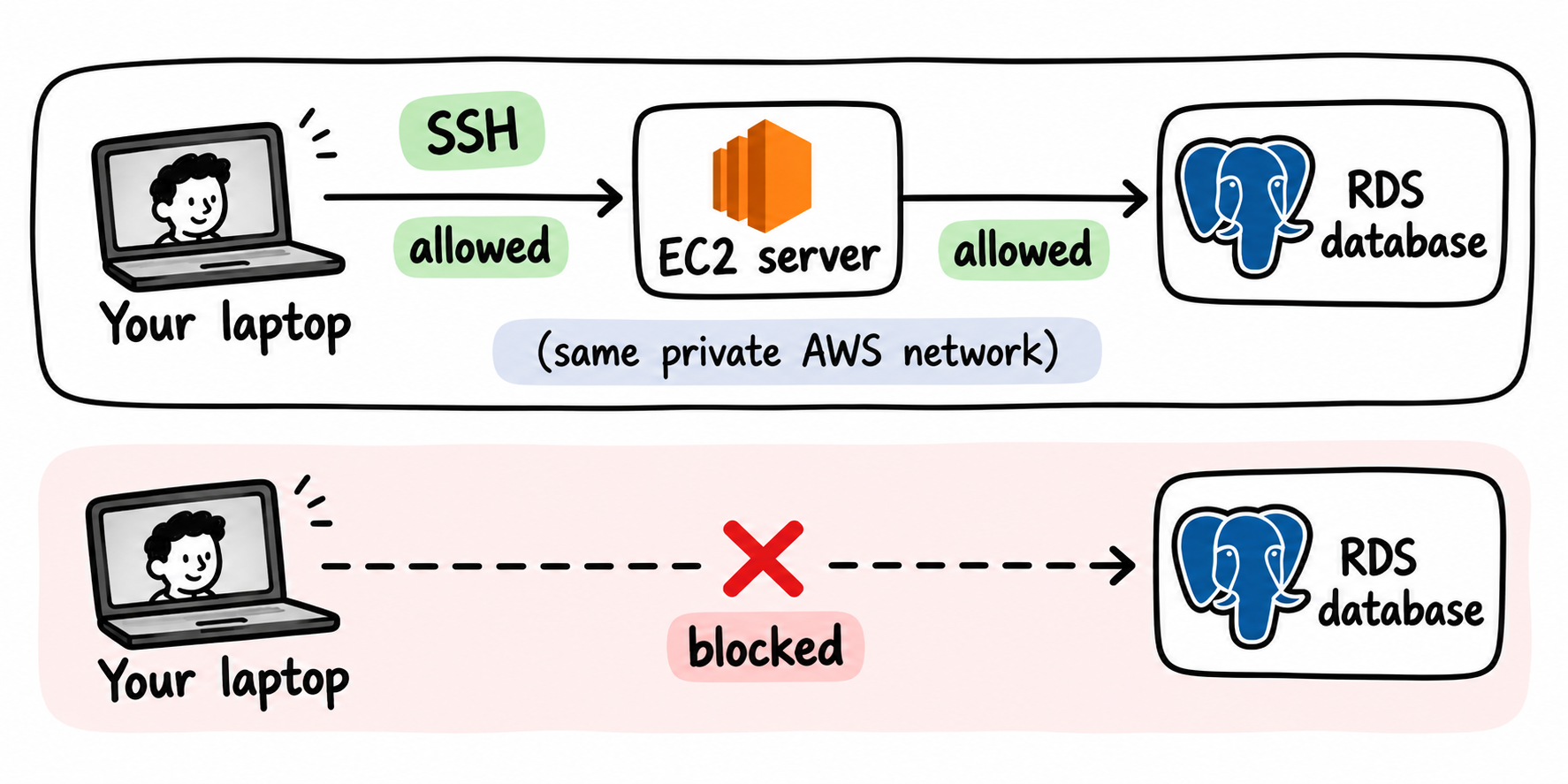
Throughout this gradual rollout, engineers must continuously monitor database connection pools. Because both the legacy AWS deployment and the scaling GKE pods simultaneously access the same backend PostgreSQL database, cumulative connection counts must be strictly managed against the database server’s maximum connection limits to prevent resource exhaustion and request timeouts.
Finalizing the Cutover and Retiring Legacy Infrastructure
When GKE successfully handles one hundred percent of production traffic and sustained monitoring confirms structural stability, the legacy AWS EC2 instance transitions from an active server to a priced safety net. During this verification window, automated rollback scripts remain fully primed to redirect traffic back to AWS instantly should any unexpected anomalies arise.
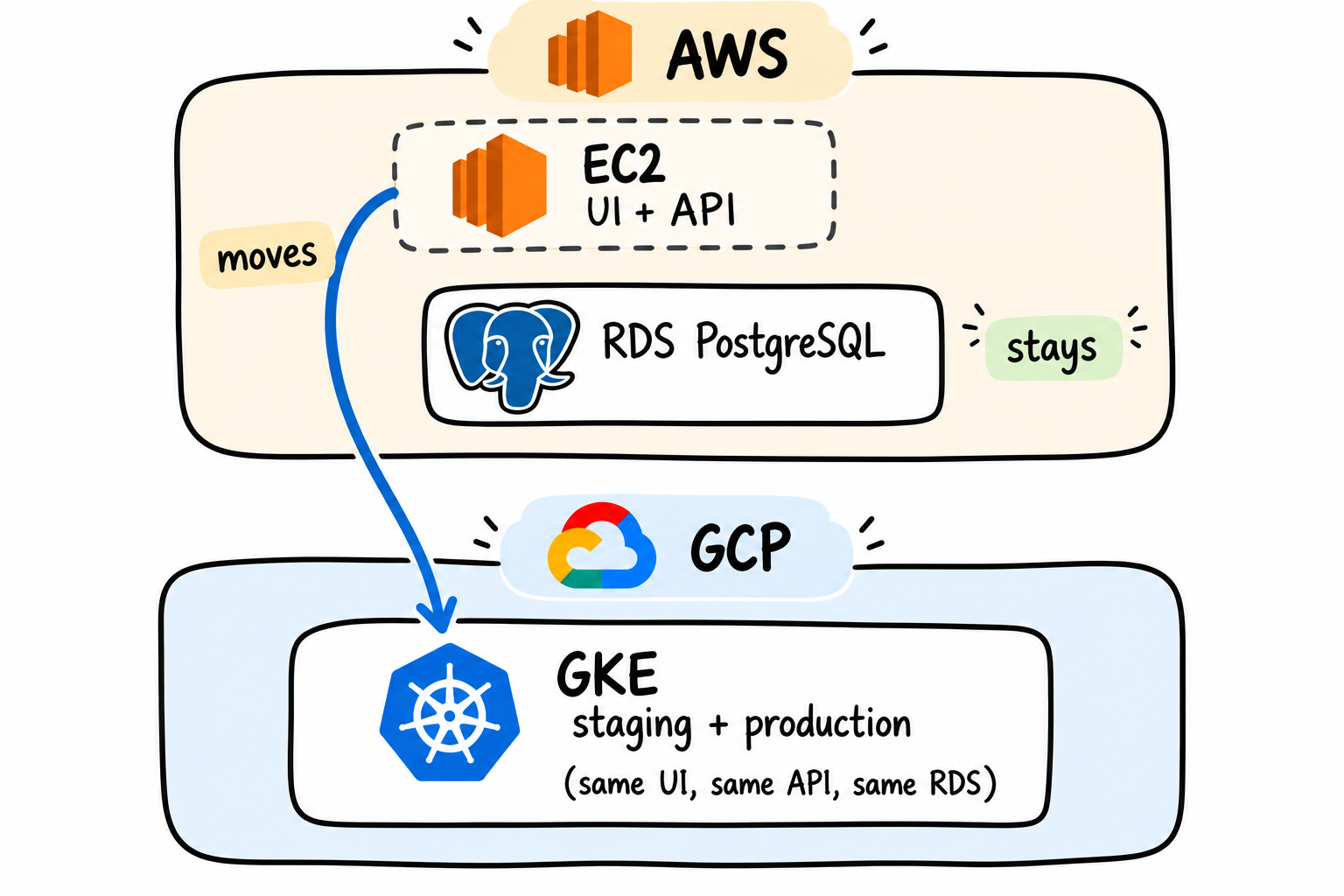
Once the observation period concludes and operational confidence is established, teams execute the final decommissioning phase. The AWS EC2 compute resources, security groups, and elastic IP addresses are safely torn down via targeted infrastructure scripts, while the core PostgreSQL database remains untouched on Amazon RDS as the permanent system of record.
Ultimately, the successful migration proves that complex architectural transitions can be achieved smoothly through rigorous baseline measurement, modular infrastructure-as-code provisioning, and incremental, data-driven traffic shifting that protects the end-user experience from disruption.