








At two in the morning, when a critical payments service fails, an engineer’s most pressing question is rarely just about fixing the immediate fault. The true emergency question is systemic: if this component is broken, what else is about to fail across the enterprise? Every fact required to answer that question typically exists somewhere within an organization’s ServiceNow instance, carefully recorded by employees performing their daily routines. Yet, extracting and synthesizing that data often requires twenty minutes of manually opening isolated records, leaving engineers uncertain whether their list of dependencies is complete.
![How to Build a GraphRAG System with Python, Neo4j and ServiceNow [Full Book]](https://cdn.hashnode.com/uploads/covers/5e1e335a7a1d3fcc59028c64/3a3e0991-8574-4569-91b3-b68fbc58a210.png)
A comprehensive new technical book addresses this operational gap by guiding developers through the process of building, evaluating, and measuring a Graph Retrieval-Augmented Generation (GraphRAG) system. Utilizing a free ServiceNow developer instance populated with thousands of servers, services, incidents, changes, problems, and knowledge articles, the project demonstrates how to model an enterprise IT estate as a graph in Neo4j and rigorously score multiple retrieval strategies against a frozen set of operational questions.
![How to Build a GraphRAG System with Python, Neo4j and ServiceNow [Full Book]](https://cdn.hashnode.com/res/hashnode/image/upload/v1789301199426/70d6fade-897e-499b-be30-66a4ff189313.png)
The Architectural Challenge of Enterprise CMDBs
The difficulty in answering complex dependency questions quickly does not stem from a flaw in platforms like ServiceNow. Configuration Management Databases (CMDBs) store facts as individual rows, where a service is one row, an application is another, and the relationship between them is a third row in a dedicated link table. This relational design is highly effective for maintaining flexibility, but it introduces significant friction when executing queries that span multiple rows of unknown depth.

![How to Build a GraphRAG System with Python, Neo4j and ServiceNow [Full Book]](https://cdn.hashnode.com/res/hashnode/image/upload/v1789306589377/f759c8ed-2d82-457e-b9d6-14713ffbad13.png)
When an engineer attempts to manually trace dependencies, they must perform an open-ended "self-join" across records. While relational databases can handle recursive queries using standard constructs, reading, verifying, and ensuring the correct direction of these queries under high-stress conditions remains exceptionally difficult. A misconfigured relationship direction can silently invert dependency graphs, turning an impact analysis tool into a generator of plausible, confident misinformation.
![How to Build a GraphRAG System with Python, Neo4j and ServiceNow [Full Book]](https://cdn.hashnode.com/res/hashnode/image/upload/v1789301203880/3030e0f2-13fb-4a7c-9d2f-c1bdea594188.png)
To overcome these structural limitations, the project integrates three distinct technologies into a unified pipeline. Raw records are extracted from ServiceNow via Python scripts, transformed into a graph structure within Neo4j to manage multi-hop relationships natively, and finally queried using natural language interfaces powered by local language models.
![How to Build a GraphRAG System with Python, Neo4j and ServiceNow [Full Book]](https://cdn.hashnode.com/res/hashnode/image/upload/v1789306599893/0eb3a431-5b41-4677-b5ed-4165d34fbb5f.png)
Evaluating Retrieval Strategies Against Real-World Data
Rather than presenting a idealized demonstration, the research emphasizes rigorous measurement. The underlying dataset consists of nearly 12,000 configuration items, tens of thousands of relationship rows, and 60,000 synthetic incidents complete with work notes and resolution details. By freezing a set of thirty-nine evaluation questions before writing any retrieval code, the project ensures that the testing framework remains entirely objective.
![How to Build a GraphRAG System with Python, Neo4j and ServiceNow [Full Book]](https://cdn.hashnode.com/res/hashnode/image/upload/v1789306591773/b6211374-846e-448e-a523-2644198477ec.png)
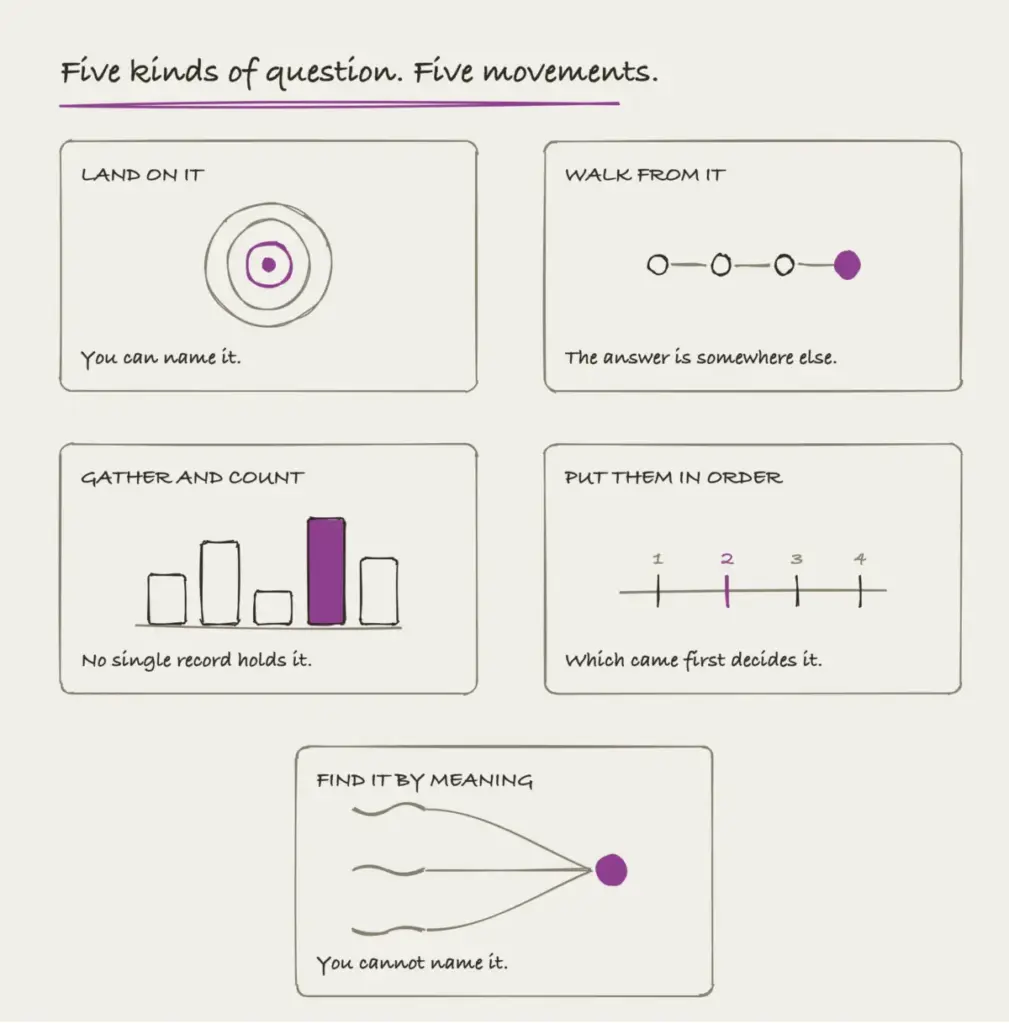
The evaluation compares traditional keyword search, semantic vector search, hybrid approaches, and graph-traversal strategies against distinct categories of operational queries. The findings highlight the distinct trade-offs inherent in modern retrieval architectures. While keyword search excels at precise lookups involving rare identifiers like specific ticket numbers, it struggles significantly with relational traversals and open-ended semantic queries. Conversely, graph-based traversals successfully navigate complex dependency chains but require pristine, well-maintained relationship data to avoid propagating stale or incorrect conclusions.
![How to Build a GraphRAG System with Python, Neo4j and ServiceNow [Full Book]](https://cdn.hashnode.com/res/hashnode/image/upload/v1789301208634/6f190337-9c86-4240-927a-6f5628e10cb2.png)
Furthermore, the research measures the operational cost of data degradation. By artificially removing dependency edges from the graph, evaluations show that even a minor five percent data staleness results in a substantial percentage of impact analysis answers quietly returning incomplete results that appear entirely correct. This highlights a critical operational truth: a lightly stale CMDB is frequently more dangerous than an obviously broken one, as it generates confident, incorrect failure predictions without triggering platform errors.
![How to Build a GraphRAG System with Python, Neo4j and ServiceNow [Full Book]](https://cdn.hashnode.com/res/hashnode/image/upload/v1789693051482/d7d0a593-e8b5-47dc-822f-5b541791e7d0.png)
Privacy, Self-Hosting, and Enterprise Viability
A core consideration in enterprise AI deployment is data privacy. Incident work notes frequently contain sensitive operational data, including internal hostnames, customer identifiers, and occasionally accidental credential pastes. Consequently, transmitting enterprise incident corpora to external, hosted model APIs violates standard security review requirements.
![How to Build a GraphRAG System with Python, Neo4j and ServiceNow [Full Book]](https://cdn.hashnode.com/res/hashnode/image/upload/v1789306596414/d3c51b3c-bf03-49b6-bb0d-33b82a2335b0.png)
To address these compliance hurdles, the implementation details a self-hosted architecture utilizing local hardware. By provisioning a dedicated GPU instance, developers can simultaneously run an embedding model for vector generation and an instruction-tuned language model for response synthesis. This configuration ensures that sensitive incident text never leaves infrastructure controlled directly by the organization.
![How to Build a GraphRAG System with Python, Neo4j and ServiceNow [Full Book]](https://cdn.hashnode.com/res/hashnode/image/upload/v1789301217818/0b1934ea-72c4-41d4-b023-b0feea4091df.png)
Performance benchmarks on these self-hosted GPU setups demonstrate high throughput for batched processing, making overnight summarization and indexing tasks highly cost-effective. However, the operational overhead of managing local model servers, monitoring GPU utilization, and ensuring strict security group configurations underscores the complexity of modern AI engineering.
![How to Build a GraphRAG System with Python, Neo4j and ServiceNow [Full Book]](https://cdn.hashnode.com/res/hashnode/image/upload/v1789301219819/21764afc-24eb-4c55-941a-db1deac346b6.png)
Ultimately, the project provides developers and platform engineers with a realistic framework for assessing whether human-maintained graphs genuinely improve upon traditional text indices. Rather than declaring an absolute victor, the findings offer a nuanced, measurable perspective on the capabilities and limitations of combining enterprise databases with graph-powered language model retrieval.