










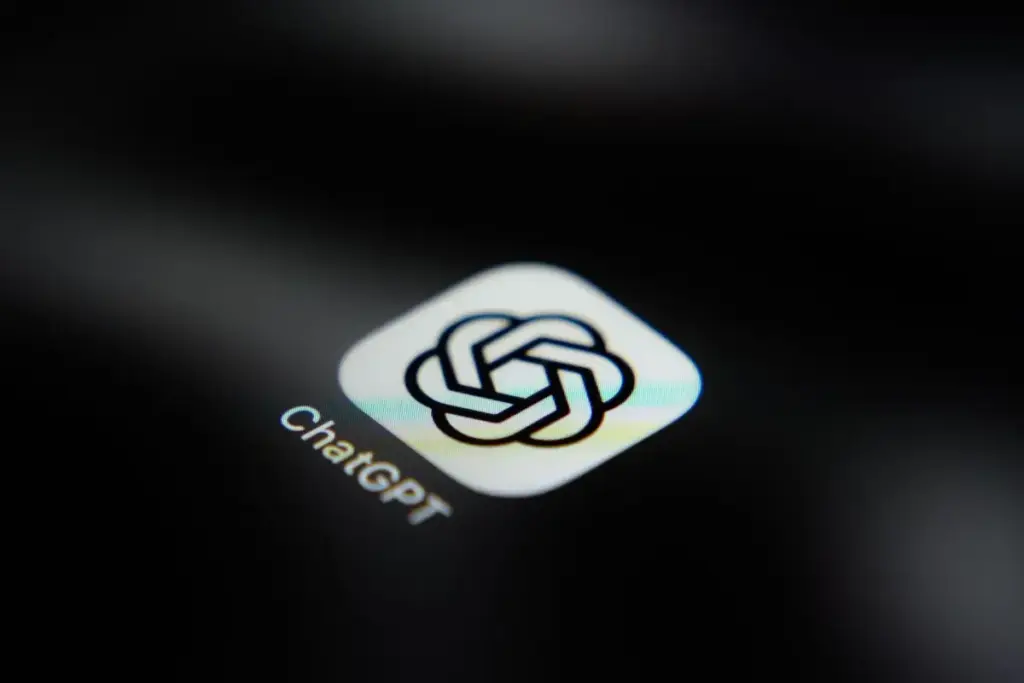
OpenAI announced on Monday that it is taking a significant step toward transparency in the artificial intelligence landscape by introducing invisible watermarking for text generated by its flagship models, ChatGPT and Codex. This initiative, detailed in a company blog post, is primarily designed to ensure compliance with the European Union’s landmark AI Act. The move marks a shift in how one of the world’s most prominent AI developers handles the provenance of machine-generated content, attempting to balance the demand for accountability with the technical realities of generative models.
The European Union’s AI Act, which officially entered into force on August 2, establishes a comprehensive regulatory framework for artificial intelligence. A key pillar of this legislation is the mandate for transparency, requiring AI developers to mark content generated by their systems in a manner that allows other digital systems to reliably identify its origin. OpenAI’s decision to adopt these measures is a direct response to these regulatory requirements, signaling a broader industry trend toward standardization in AI labeling.
According to the company, the rollout of this watermarking technology will occur over the coming weeks. Initially, the feature will be available to eligible ChatGPT and Codex users specifically within the European Union. However, OpenAI is also providing an opt-in mechanism for developers globally. Those utilizing the company’s API can choose to enable the watermarking feature for specific models starting today. Crucially, the technology is currently turned off by default for API users, and OpenAI has confirmed that it does not intend to make text watermarking a global, mandatory default at this stage.

Understanding the Mechanism: How ‘textGrain’ Works
The technology behind this initiative, which OpenAI has branded "textGrain," is a departure from traditional, visible watermarks like digital stamps or logos. Instead, it functions at the structural level of the language itself. The watermark is not a symbol, but rather a subtle, mathematical shaping of the model’s word choices. By introducing a specific pattern into the probability distribution of the next-word predictions, the system creates a signature that remains invisible to human readers but is detectable by specialized software.
Because this watermark is embedded within the fabric of the text, it is highly portable. Unlike metadata that can be stripped away when a file is moved or converted, the textGrain watermark persists even when the text is copied, pasted, or reformatted across different platforms. OpenAI has emphasized that the implementation does not involve identifying individual users, nor does it appear to cause any degradation in the performance or "intelligence" of the underlying models.
To bolster transparency regarding this technical approach, OpenAI published a detailed report co-authored by researchers from the University of Pennsylvania and Yale. The report explains that the method relies on a secret key, which is used to guide the model’s selection of words during the generation process. By aggregating hundreds of these subtle linguistic nudges, a dedicated detector can verify whether a passage originated from an OpenAI model by comparing the text against that secret key.
Technical Limitations and Evolving Challenges
While the technology offers a promising path toward verification, OpenAI has been candid about its current limitations. The company’s own internal testing indicates that the watermark is not entirely tamper-proof. In scenarios where a user significantly edits the AI-generated text, the efficacy of the detector drops markedly. Specifically, the company reported that replacing just 10% of the words in a generated passage with synonyms resulted in the detection rate plummeting from approximately 92% to 66%.

Furthermore, the technology faces inherent difficulties with certain types of content. Short, concise passages, mathematical computations, and translated text are notably more challenging for the detector to identify correctly. Recognizing these technical constraints, OpenAI has opted to restrict access to the detection tools for the time being. "These limitations contribute to our decision to provide initial detector access only to approved researchers and expert organizations, who can help us evaluate reliability and responsible uses," the company stated.
OpenAI also cautioned against viewing the absence of a watermark as definitive proof of human authorship. A "negative" result from a detector could occur for several reasons: the text might have been too heavily edited, the passage might be too short for a reliable reading, or the text could have been generated by a competing AI model that does not use the textGrain system. As the company noted, watermarks can indicate that an OpenAI system generated or processed part of a passage, but they cannot quantify the level of human judgment, editing, or creative input involved in the final output.
The Broader Industry Landscape
The decision to implement these measures follows a broader move toward industry-wide transparency. Two months prior to this announcement, Anthropic—a major competitor in the large language model space—announced that it would begin watermarking text generated by its Claude models on a global scale. That decision sparked significant debate among users, with some expressing frustration over the potential for these tools to be used in monitoring or "policing" their workflows, particularly in academic or professional settings where they feel they have provided the core instructions and context, while the AI merely served as a tool for expression.
OpenAI’s path to this point has been deliberate and, at times, cautious. Reports from 2024, including those from The Wall Street Journal, suggested that the company had developed text-watermarking technology previously but chose to delay its deployment. A significant factor in that decision was the concern that users might migrate to rival platforms that did not implement such restrictions, creating a competitive disadvantage for companies that prioritized transparency.
Despite these competitive pressures, a coalition of major AI developers—including OpenAI, Anthropic, Google, Meta, and Microsoft—has committed to following the European Union’s code of practice regarding the transparency of AI-generated content. As the regulatory landscape continues to solidify, particularly within the EU, the implementation of watermarking is likely to become a standard operating procedure for major AI firms.
As this technology matures, it remains to be seen how the public, educators, and regulators will adapt to a world where the provenance of written information is increasingly subject to automated verification. For now, OpenAI’s adoption of textGrain represents a calculated move to satisfy legal obligations while navigating the complex, often contentious, intersection of AI capabilities and user autonomy. The company’s focus remains on refining the technology and collaborating with experts to ensure that these tools are used as a means of building trust in an era of rapidly advancing artificial intelligence.