









Twenty years ago today, the landscape of global information technology shifted irrevocably when Jeff Barr published a modest blog post introducing the Amazon EC2 Beta. At the time, the concept was revolutionary in its simplicity: a service providing resizable Linux virtual servers in the cloud, billed strictly by the hour. Initially limited to a single instance type—the m1.small—and a single geographic Region in the United States, that initial launch offered a glimpse into a future where compute power could be treated as a utility rather than a capital-intensive physical asset. What began as a minimal, experimental offering has since become the bedrock of the modern internet, fundamentally changing how developers, startups, and global enterprises conceptualize and deploy computing infrastructure.
In 2021, on the service’s fifteenth anniversary, Jeff Barr reflected on the history and the pivotal milestones that defined the first decade and a half of Amazon EC2. Now, as the service hits its twentieth-year milestone, it is clear that AWS has not merely maintained its momentum; it has accelerated it. Over the past five years, AWS has pushed the boundaries of cloud computing, moving beyond standard virtualization to build custom silicon tailored for specific general-purpose and AI-driven workloads. This evolution has expanded EC2 into new form factors and deployment models that would have been unimaginable to the engineers and customers who first accessed the beta in 2006.
A Legacy of Foundational Milestones
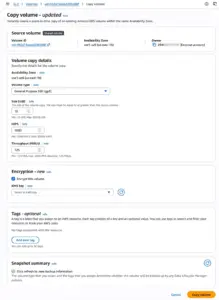
To understand the scale of what EC2 has become, one must look at the building blocks laid over the past two decades. The service did not remain a static utility; it grew through a series of strategic innovations that allowed customers to build increasingly complex and reliable architectures. In 2008, the introduction of Amazon Elastic Block Store (EBS) solved a critical hurdle by providing persistent, high-performance block storage, effectively decoupling data from the lifecycle of the instance itself.

The year 2009 served as another major turning point, introducing the capabilities that truly enabled the era of web-scale applications. The launch of Elastic Load Balancing, Auto Scaling, and Amazon CloudWatch provided the tools necessary to ensure that applications could remain highly available and responsive to fluctuating traffic demands. Simultaneously, the introduction of Amazon Virtual Private Cloud (VPC) gave customers the ability to carve out logically isolated networks, providing the security and architectural control required for enterprise adoption.
As the decade progressed, the innovation cycle intensified. The development of the AWS Nitro System in 2017 marked a departure from traditional virtualization overhead, offloading network, storage, and management functions to dedicated hardware. This shift not only enhanced security but allowed for significantly faster innovation in instance design. A year later, in 2018, AWS introduced its custom Graviton processors. Designed specifically for cost-sensitive, scale-out workloads, these ARM-based processors challenged the industry status quo and highlighted the company’s commitment to optimizing performance at the silicon level.
Global Scale and Diverse Specialization
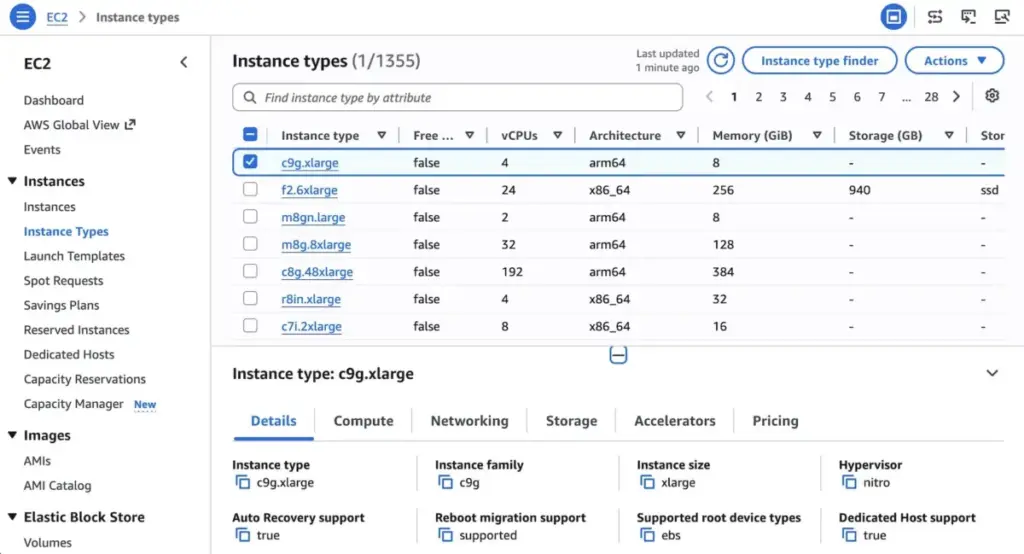
The evolution of EC2 is best illustrated by its sheer diversity. From the singular m1.small instance of 2006, the service has expanded to offer more than 1,200 distinct instance types. This breadth is intentional, designed to meet the highly specialized requirements of modern computing, including general-purpose, compute-optimized, memory-optimized, storage-optimized, and accelerated computing families. These options have been further bolstered by the rise of high-performance computing (HPC) needs, which now demand purpose-built instances capable of handling massive parallel processing tasks.

The physical footprint of this compute capacity has seen an equally dramatic transformation. EC2 has grown from a single Region to a global network of 39 Regions, ensuring that compute power can be placed closer to end-users worldwide. However, the definition of "the cloud" has also evolved to extend beyond the walls of traditional data centers. Through initiatives like AWS Outposts, launched in 2018, customers can now run EC2 instances locally in their own facilities. This has been complemented by the expansion into AWS Local Zones, which bring compute resources to major metropolitan hubs, and AWS Wavelength, which integrates compute power directly into the 5G telecommunications carrier networks. These advancements ensure that latency-sensitive applications, such as real-time gaming, augmented reality, and autonomous systems, can perform at peak efficiency regardless of their physical proximity to a main cloud Region.
The Underlying Value of Compute
Despite the immense complexity and the technological leaps taken over twenty years, the core value proposition of Amazon EC2 has remained remarkably consistent. It was built on the premise that customers should be able to provision secure, resizable compute capacity in minutes, pay only for what they consume, and scale their infrastructure on demand without the burden of long-term financial commitments. This flexibility, which was a disruptive idea in 2006, is now the industry standard for digital agility.
This flexibility has proven particularly vital in the current era of artificial intelligence. Today, the same foundational principles that powered simple web servers two decades ago are being applied to support the training and deployment of complex AI models. At a scale that was entirely unanticipated at the service’s inception, EC2 now serves as the primary engine for the modern AI stack.

Indeed, EC2 remains the foundational compute layer upon which almost all other AWS services are built. Whether a customer is using Amazon ECS or EKS for container orchestration, Lambda for event-driven functions, Fargate for serverless compute, or specialized services like Amazon EMR for big data, AWS Batch for massive-scale processing, or the advanced generative AI capabilities of Amazon SageMaker and Amazon Bedrock, the underlying reality remains the same: these services are ultimately running on EC2 capacity. Every major architectural pattern developed over the last twenty years—from simple websites to trillion-parameter foundation model training clusters—begins with the fundamental decision to launch an instance.
Looking Toward the Next Two Decades
Reflecting on the journey since 2006, it is clear that the strategic decisions made by the early AWS team provided a robust framework for long-term growth. By focusing on services that were "minimal-yet-useful," the team created an environment where they could launch quickly and iterate rapidly based on direct customer feedback. This methodology remains the guiding philosophy for how new features and capabilities are brought to market today.
The past twenty years have seen compute evolve from a static, physical requirement into a dynamic, fluid, and globally distributed resource. As the industry looks toward the next twenty years, the demands placed on cloud infrastructure will undoubtedly evolve in ways that are currently difficult to foresee. However, the role of Amazon EC2 appears firmly established as the reliable foundation upon which these future workloads will be built. Whether the next decade brings advancements in quantum computing, edge-based neural processing, or entirely new paradigms of distributed architecture, the strategy of providing scalable, on-demand, and secure compute remains the heartbeat of AWS. For those interested in exploring the current state of this foundational technology, the Amazon EC2 product page and the "what’s new" channels continue to serve as the primary gateways to the ongoing evolution of the service.