








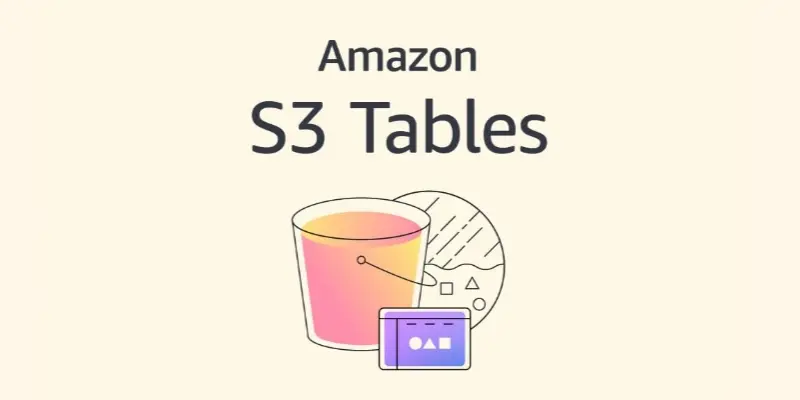
Amazon S3 Tables has officially announced comprehensive support for the full suite of data types and capabilities outlined in the Apache Iceberg V3 specification. This major update, which allows users to create new V3-compliant tables or seamlessly upgrade existing V2 tables, marks a significant evolution in how large-scale analytics datasets are managed, stored, and queried within the AWS ecosystem. By adopting V3 features—including advanced deletion vectors, built-in row lineage, and native support for complex data types—AWS is addressing some of the most persistent bottlenecks that data engineering teams face when managing petabyte-scale data lakes.
Apache Iceberg has solidified its position as the industry-standard open table format for large-scale analytics. Its ability to provide database-like features—such as schema evolution, time-travel queries, and partition management—while maintaining data in open-source Parquet files on object storage like Amazon S3, has made it a cornerstone of modern data architecture. Amazon S3 Tables is purpose-built to host these Iceberg tables, offering managed performance and cost-optimization features such as automatic compaction, maintenance, and Intelligent-Tiering. However, as datasets grow, teams have frequently encountered operational friction inherent in the older V2 specification.
Addressing the Challenges of Data Scale and Complexity
For many organizations, the transition to V3 is a direct response to the limitations of V2 in high-volume, high-churn environments. A common scenario involves large-scale compliance requests, such as the need to delete thousands of specific user records from a table containing billions of rows. In the V2 era, such operations frequently resulted in the creation of numerous small positional delete files. These files, while functional, often created significant overhead, forcing analytics engines to perform extensive "merge-on-read" operations that degraded query performance until a resource-heavy compaction process could be completed.

Furthermore, modern data pipelines are increasingly forced to handle semi-structured information, such as JSON-encoded event streams, alongside traditional tabular data. Previously, engineers were often required to store this semi-structured data as raw strings or integers, necessitating constant, compute-intensive parsing during every query execution. This approach not only inflated storage costs but also introduced latency and increased the complexity of data pipelines. The introduction of V3 addresses these issues head-on by providing native support for semi-structured data, geospatial types, and higher-precision timestamps, effectively eliminating the need for expensive workarounds.
New Features in the Apache Iceberg V3 Specification
The V3 specification introduces several critical improvements designed to simplify data governance and enhance performance. Among the most notable is the transition to deletion vectors. By replacing the older positional delete files with a compact, binary-format deletion vector, the system can handle record deletions with significantly reduced metadata overhead. A single deletion vector file can now represent thousands of individual row deletions, drastically reducing the impact on query performance and making the background compaction process more efficient.
Equally important is the introduction of native row lineage. By automatically appending unique identifiers—specifically a _row_id and a _last_updated_sequence_number—to every record, Iceberg V3 provides a built-in mechanism for tracking data changes. This feature is particularly transformative for downstream data pipelines, which can now perform incremental processing by querying only the rows that have been modified since a specific sequence number, rather than scanning the entire table.
The V3 specification also expands the supported data types to include variant, nanosecond-precision timestamps, geometry, geography, and unknown types. The "variant" data type is perhaps the most impactful for modern analytics, as it allows for the storage of semi-structured data in a columnar format. When data is written in the variant type, the engine automatically shreds the information into hidden columns and collects statistics. At query time, these statistics allow the engine to perform "file pruning," significantly reducing the amount of I/O required and providing a performance profile that far exceeds that of parsing raw JSON strings.
Implementation and Operational Flexibility
For teams looking to integrate these capabilities, Amazon S3 Tables provides a streamlined path. New tables can be initialized with V3 specifications, or existing V2 tables can be upgraded in place. The upgrade process is atomic and designed to minimize disruption, as AWS maintains backward compatibility to ensure that existing readers can continue to access data while the system migrates to the new format. Once a table is upgraded, subsequent modifications automatically utilize the new deletion vectors, and row lineage fields are initialized upon the next data update.
The flexibility of the V3 implementation allows developers to configure their write modes to suit specific use cases. For example, by setting a table to "merge-on-read" mode, users can perform compliance deletions that generate efficient deletion vectors rather than rewriting entire data files. The S3 Tables service then manages the lifecycle of these deletion vectors during its standard maintenance cycles, effectively automating a task that previously required significant manual oversight.
Broad Integration Across the AWS Ecosystem
The power of the V3 update is amplified by the deep integration of Amazon S3 Tables with the broader AWS analytics stack. AWS has ensured that the V3 specification is supported across its core services, including Amazon EMR for Spark-based processing, AWS Glue for data integration and cataloging, and Amazon Redshift for high-performance SQL analytics. This ecosystem-wide support ensures that data managed in S3 Tables remains interoperable, regardless of which engine is performing the analysis.
Furthermore, the support for the Iceberg REST Catalog (IRC) API across both S3 Tables and AWS Glue ensures that organizations are not locked into a single proprietary catalog endpoint. This commitment to open standards reinforces the utility of Iceberg V3 as a truly portable format, allowing teams to leverage the specific strengths of various AWS services while maintaining a unified, highly performant storage layer.
Moving Forward with Apache Iceberg V3
The adoption of Apache Iceberg V3 represents a shift toward a more intelligent, performant, and self-managing data lake architecture. By offloading the burden of schema evolution, row-level lineage tracking, and complex data type management to the storage layer itself, organizations can dedicate more resources to derive insights rather than maintaining infrastructure.
Amazon S3 Tables support for all V3 data types is currently available in all AWS Regions where S3 Tables are supported. The implementation of V3 capabilities comes at no additional charge beyond the standard pricing for S3 Tables. Organizations interested in exploring these features can find detailed documentation through the Amazon S3 user guide, while those looking to integrate these updates into automated workflows can leverage the AWS MCP Server and various plugins to interact with the service through AI-driven development tools. As data volumes continue to climb and the demand for real-time, complex analytics grows, the transition to V3 offers a robust foundation for building the next generation of data-driven applications on AWS.