In a significant development that has sent shockwaves through the cybersecurity and cyber-insurance sectors, federal agents have arrested the co-founder of a prominent Canadian cybersecurity firm in connection with an ongoing investigation into the notorious hacking collective known as ShinyHunters. The group, which has been linked to massive data breaches, recently drew the ire of federal authorities by allegedly siphoning sensitive, personal information regarding thousands of FBI agents and personnel.
Multiple sources familiar with the matter have confirmed to KrebsOnSecurity that the arrest took place on Thursday. While official channels have remained relatively tight-lipped regarding the specific identity of the individual, reports from The New York Times and statements issued by FBI Director Kash Patel confirm that a Canadian national was taken into custody in Pennsylvania on suspicion of providing material assistance to the ShinyHunters operation.
The Intersection of Conference and Custody
The circumstances surrounding the arrest suggest a carefully coordinated effort by federal authorities. Sources close to the investigation revealed that the suspect had traveled to Philadelphia specifically to participate in the Cyber Risk Summit, a high-profile industry event held at the Loews Philadelphia Hotel between October 5 and October 7. The suspect’s firm is well-known within the industry for its specialized services, which include acting as intermediaries in high-stakes ransomware negotiations—a field where professionals often walk a fine line between legal advisory services and the facilitation of criminal payments.

The investigation into the ShinyHunters group has recently seen a shift in operational focus, with sources indicating that the lead on the case has been centralized at an FBI field office in Texas. This shift coincides with a broader, more aggressive push by federal law enforcement to dismantle the infrastructure supporting the prolific hacking syndicate.
According to the official website of the Cyber Risk Summit, one of the event’s largest sponsors was the Canadian security firm Cypfer. Publicly available professional records on LinkedIn identify Edward Dubrovsky as a co-founder of Cypfer. Dubrovsky, who is currently associated with another Canadian security firm and conference sponsor known as CyberSteward, had explicitly stated in a LinkedIn post approximately one month ago that he intended to attend the Philadelphia summit alongside his colleagues.
In a recent post, Dubrovsky highlighted his professional focus, writing, “Looking forward to continuing conversations around strategy & compliant driven coercive (ransomware, extortion) advisory, negotiations and settlement services that are global and truly agnostic.”

Legal Proceedings and Allegations
Federal court records reveal that an individual named Edward Dobrovsky—noting a slight variation in the spelling of the surname—was arrested in Pennsylvania on October 8. He faces serious charges, including conspiracy to threaten to impair the confidentiality of information with the intent to extort money, and interference with commerce by threats. While a significant portion of the court documentation, including the primary complaint, remains under seal, filings indexed at Courtlistener.com confirm the nature of the allegations.
Records from the U.S. Bureau of Prisons indicate that a 54-year-old Edward Dubrovsky is currently being held at a federal facility in Philadelphia. However, the legal trajectory of the case appears to be moving rapidly; a notice filed on October 9 indicates that the proceedings are being transferred to the Eastern District of Texas, the current hub for the federal government’s multi-pronged probe into the ShinyHunters group. The FBI has declined to provide further comment on the specifics of the arrest or the ongoing investigation.
At the time of this report, it appears that the defendant has not yet secured private legal counsel, and the court has not officially appointed a public defender.
Expert Insight or Criminal Facilitation?
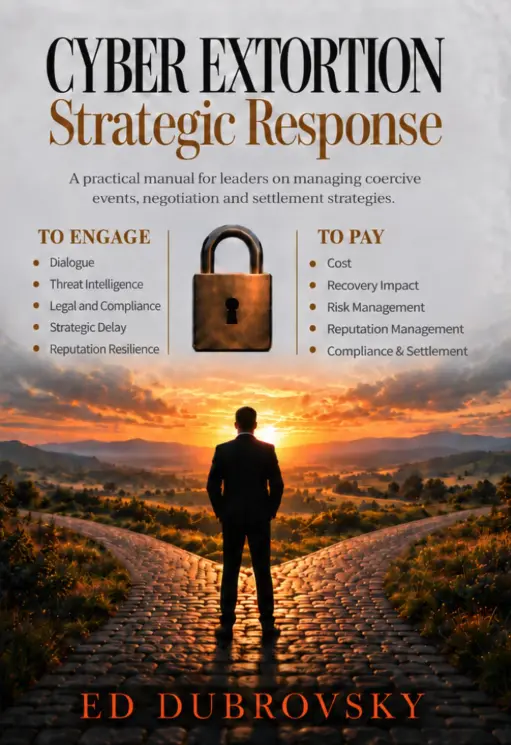
The arrest has drawn attention to the complex role played by firms that specialize in "ransomware response." Dubrovsky is the author of Cyber Extortion Strategic Response, a 252-page professional guide that claims to provide insight into the decision-making processes organizations must navigate when they become victims of digital extortion.
The book’s promotional material highlights the fine line that practitioners in this space must tread. “At the heart of the book is a critical distinction: communicating with a criminal is not the same as negotiating a payment, and negotiating is not a commitment to pay,” an excerpt from the Amazon listing reads. “Engagement can serve other objectives, including testing claims, gathering information, creating time, and preserving options while the organization evaluates its next move.”
Federal investigators appear to be testing the limits of these "objectives." If the allegations hold true, the case will serve as a landmark test for the legal boundaries of professional ransomware negotiation.

The Shadow of ShinyHunters
ShinyHunters has established a reputation for aggressive data theft, typically utilizing phishing campaigns and the exploitation of stolen credentials to breach corporate accounts at software-as-a-service (SaaS) providers. Once inside, the group threatens to leak or sell sensitive data unless a ransom is paid. According to the FBI, the group’s operations have been exceptionally lucrative, with estimates suggesting they have extorted more than $70 million from victims within this year alone.
The investigation into the group has been gaining momentum for weeks. Sources tell KrebsOnSecurity that the FBI has been conducting an exhaustive forensic analysis of digital devices seized last month during the arrest of Pepijn van der Stap, a convicted cybercriminal apprehended by Dutch police. This development has reportedly provided investigators with a roadmap of the group’s internal communications and operational structure, leading to expectations that further charges against executives at other ransomware negotiation firms may be imminent.
The atmosphere surrounding the group grew even more hostile following Van der Stap’s arrest. A member of the collective known as “Rey” took control of the group’s communications and began openly taunting the FBI, specifically mocking the agency regarding the theft of sensitive data from its own online recruitment portal. This stolen cache included highly sensitive details, such as the units and specializations of personnel, as well as medical and psychiatric records—a breach that intensified the pressure on federal agents to secure arrests.
Last week, Reuters reported that the individual known as “Rey,” identified as a teenager named Saif Al-din Khader, had been detained and was actively cooperating with federal authorities. Investigations into the group’s history suggest a pattern of escalating targets, including a notable extortion attempt against a navigation and digital aviation unit divested by Boeing in late 2025. As the federal investigation continues to expand, the arrest of a veteran of the ransomware negotiation industry marks a pivotal chapter in the government’s efforts to neutralize the threat posed by ShinyHunters.
Given the sensitivity of the evidence and the high-profile nature of the targets involved, the case is expected to develop rapidly. Further updates regarding the proceedings in the Eastern District of Texas are anticipated as the investigation unfolds.