In a move that promises to significantly streamline the development lifecycle for web and AI-driven applications, Vercel has announced a major expansion of its AWS integration. Developers utilizing the Vercel ecosystem can now provision and manage Amazon Simple Storage Service (Amazon S3) resources directly from within the Vercel Marketplace and through v0, the company’s generative AI-powered development tool. This native integration brings the industrial-grade durability, scalability, and performance of Amazon S3 into the familiar Vercel provisioning workflow, effectively bridging the gap between high-level web development and cloud-native infrastructure management.
Unifying the Application Stack
For years, the process of integrating enterprise-grade storage into a modern web application often required a disjointed developer experience. Building a performant, scalable application on Vercel typically meant managing the frontend and API layers within one environment, while simultaneously navigating the AWS Management Console to configure S3 buckets, set up IAM policies, and manage security credentials. This context switching introduced friction, potential for misconfiguration, and a higher barrier to entry for developers who wanted to leverage AWS power without the overhead of manual cloud infrastructure management.
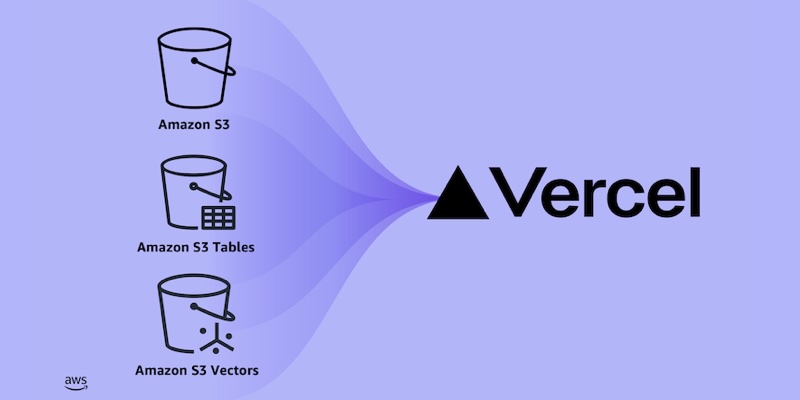
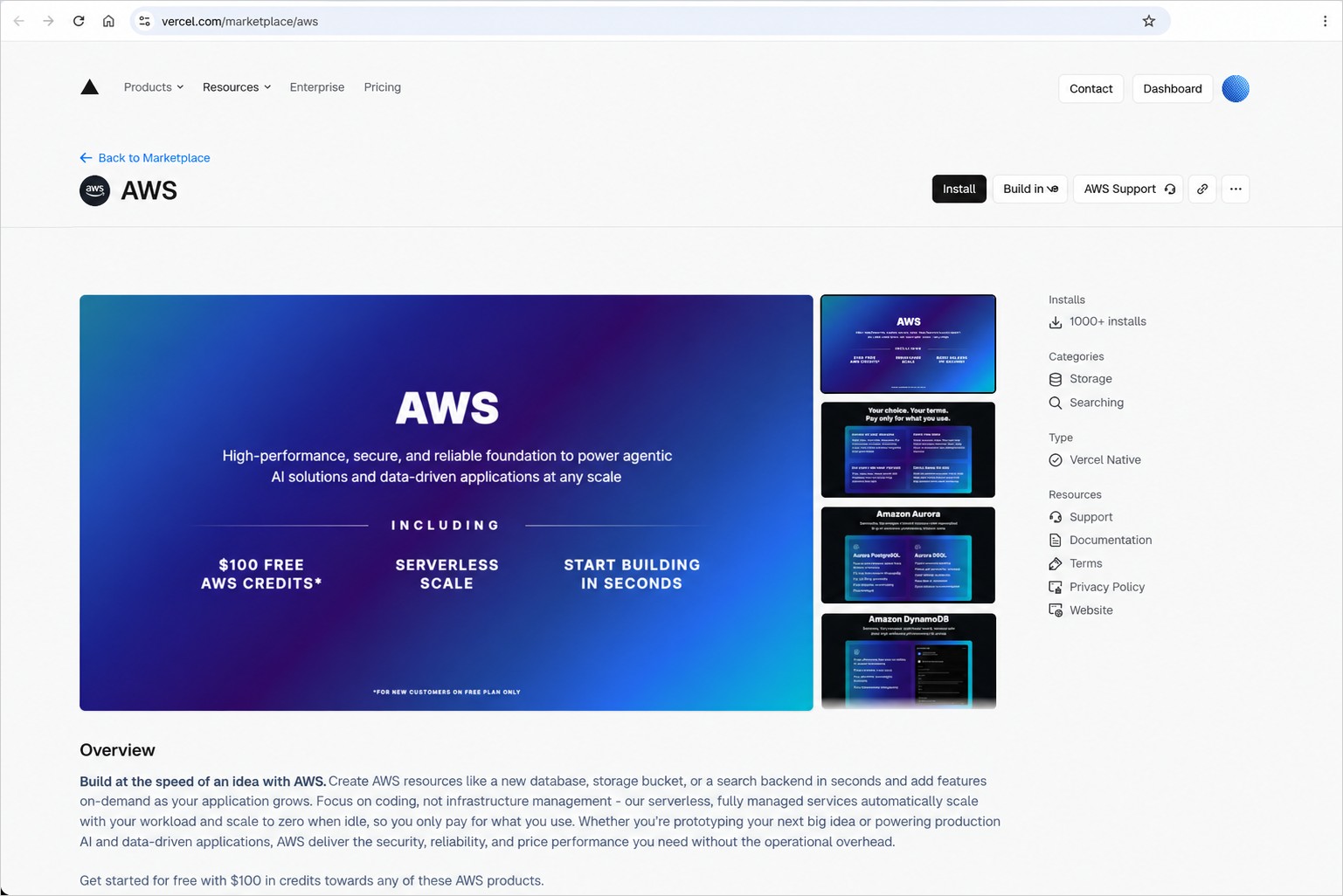
The new integration changes this paradigm by embedding Amazon S3—including specialized features like S3 Tables and S3 Vectors—directly into the Vercel dashboard. This initiative aligns with Vercel’s existing support for Amazon Aurora, Amazon DynamoDB, and Amazon OpenSearch Serverless, completing a comprehensive application stack. By centralizing these services, developers can now deploy a database layer, object storage, and vector search capabilities while maintaining a unified billing experience under a single AWS account. The shift is designed to ensure that the infrastructure supporting an application is as agile as the code being deployed, all while maintaining the security and reliability standards expected of AWS.
Streamlined Provisioning and Enhanced Security
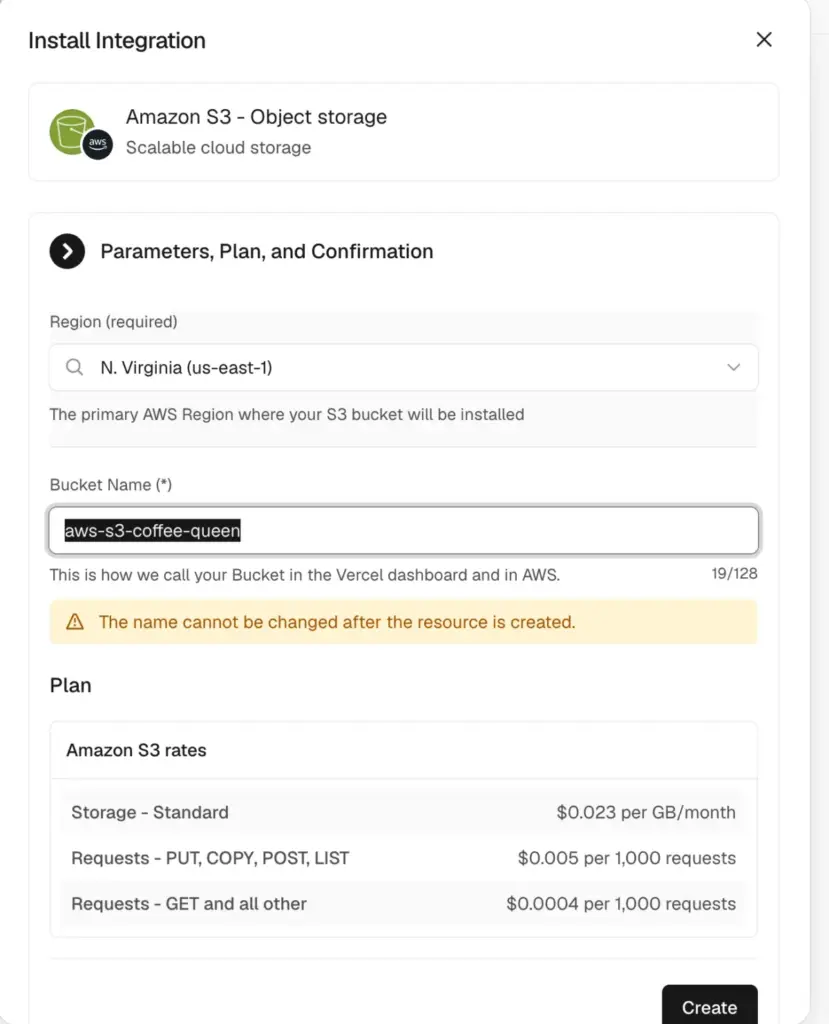
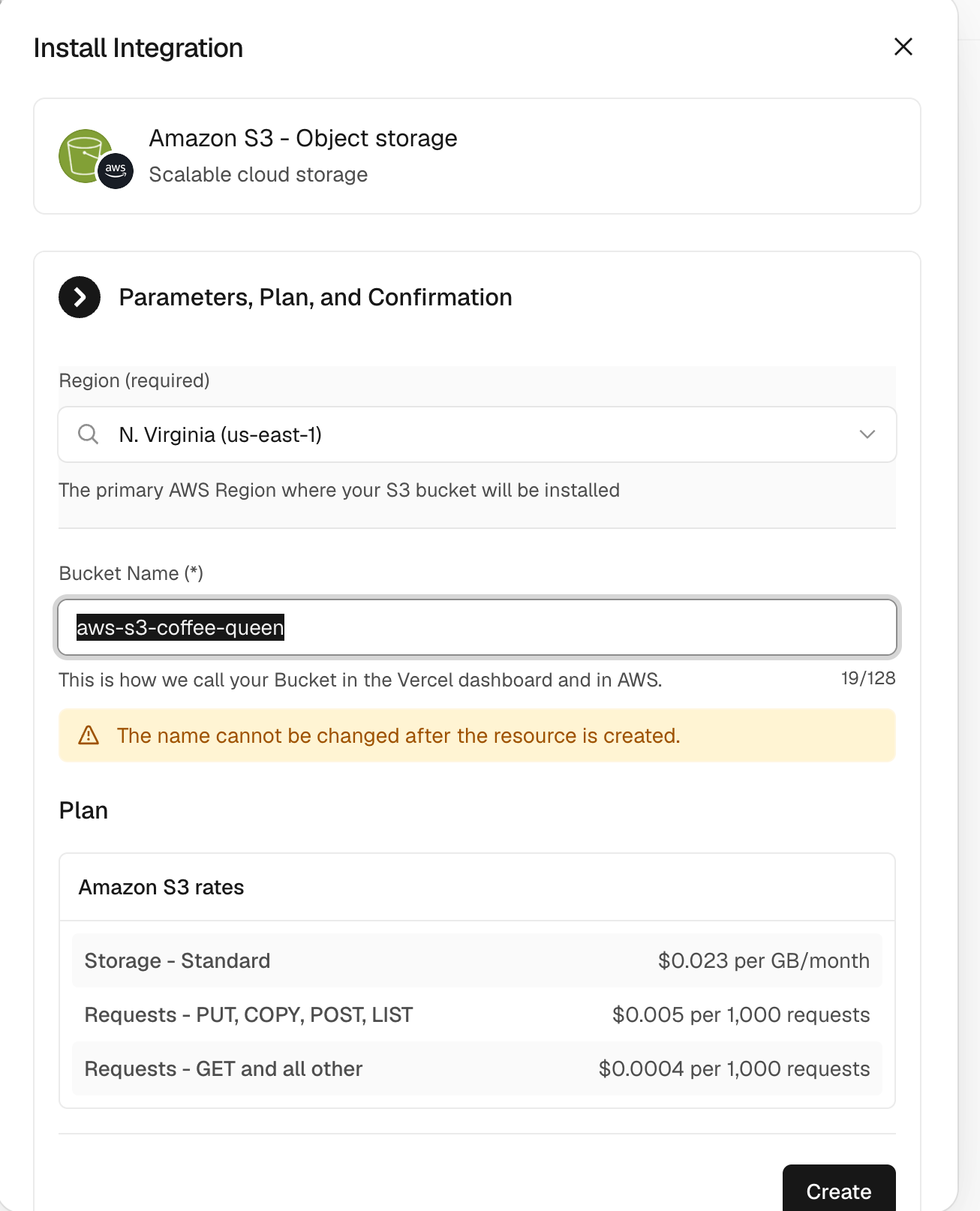
The operational workflow for integrating S3 has been designed for simplicity. Within the Vercel dashboard, developers can navigate to the Storage tab, select the AWS integration, and provision a new S3 bucket by specifying a bucket type and a region. The provisioning process, which once required careful orchestration across multiple AWS console screens, is now reduced to a few seconds of interaction.
Security remains a primary concern when connecting third-party platforms to cloud infrastructure. To address this, the integration utilizes OIDC (OpenID Connect) tokens. When a Vercel project is linked to an S3 bucket, the integration automatically injects the necessary environment variables—such as AWS_REGION, AWS_ROLE_ARN, and the resource identifiers—into the project. At runtime, the awsCredentialsProvider function from @vercel/functions/oidc handles the secure exchange of these tokens with the AWS Security Token Service (AWS STS). This mechanism provides the application with temporary, short-lived credentials scoped specifically to the required resource, eliminating the need to store static, long-term access keys that could potentially be compromised.
Diversified Storage Workloads
The integration is not limited to generic object storage; it provides native support for three distinct, high-demand workloads: everyday object storage, analytics, and AI-driven vector search.

For general-purpose object storage, the integration allows developers to handle file uploads and retrieval with minimal boilerplate. Using the AWS SDK for JavaScript, developers can instantiate an S3Client configured with the automatically provided environment variables, enabling seamless interaction with buckets for tasks like user content uploads or media hosting.
The inclusion of S3 Tables represents a significant advancement for developers handling data-intensive tasks. Designed for analytics, S3 Tables provide a fully managed environment for Apache Iceberg tables, which include automated maintenance and data compaction. By allowing developers to use tools like DuckDB within Vercel Functions, the platform enables lightweight, high-performance analytics directly on the stored data. This functionality is particularly useful for applications requiring real-time insights or complex data aggregation without the need to stand up a separate, dedicated data warehouse.
Furthermore, the introduction of S3 Vectors is a direct response to the surge in AI development. S3 Vectors provide a purpose-built, cost-optimized storage layer for AI agents and semantic search. By supporting native storage and querying of vectors, developers can implement Retrieval-Augmented Generation (RAG) pipelines or advanced search features by connecting their models to the S3 storage layer. Because these vectors are stored alongside other application data, the architecture becomes significantly more cohesive, reducing latency and complexity in the AI inference chain.
Intelligent Development with v0
Perhaps the most transformative aspect of this update is its integration with v0 by Vercel. By leveraging natural language prompts, developers can now describe the architecture they need, and v0 will handle the heavy lifting. For example, a request for a "photo gallery where users upload images" will automatically provision the correct S3 bucket, while a request for a "support bot that answers questions from my PDFs" will trigger the setup of S3 Vectors.
This level of abstraction allows developers to focus on the application logic and user experience rather than the underlying infrastructure. v0 not only provisions the resources but also configures the connections and generates the boilerplate code required to interact with the AWS services, significantly accelerating the path from concept to deployment.
Flexibility and Ecosystem Integration
Vercel maintains a flexible approach to account management. Developers can choose to create a new AWS account through the Vercel platform, which includes a $100 credit for new users to facilitate testing and development, or they can link an existing AWS account. This ensures that organizations with established cloud footprints can retain their current billing structures and administrative controls. When an existing account is linked, Vercel respects the existing environment, focusing its integration efforts on the new buckets created via the platform. This coexistence ensures that while Vercel simplifies the management of new resources, the developer retains full access to AWS-native tools for audit, monitoring, and compliance.
The ability to combine these S3 features with existing AWS database offerings further amplifies the utility of this update. For instance, a common pattern involves storing file metadata in Amazon Aurora while keeping the binary data in S3, or pairing document text in DynamoDB with vector embeddings in S3. Because these services share the same authentication and account model, these complex architectural patterns can be implemented with minimal configuration, allowing teams to build more sophisticated applications with less operational overhead.
For developers seeking to integrate these new capabilities, the integration is available immediately in all commercial AWS regions supported by Vercel. As the ecosystem continues to evolve, Vercel and AWS have encouraged users to engage with the broader developer community through channels like the AWS MCP Server and the AWS re:Post forums, ensuring that feedback and best practices continue to shape the evolution of these native cloud-web integrations. By removing the traditional barriers between web development and cloud infrastructure, this update marks a significant step forward in the movement toward more unified, efficient, and intelligent application development.