









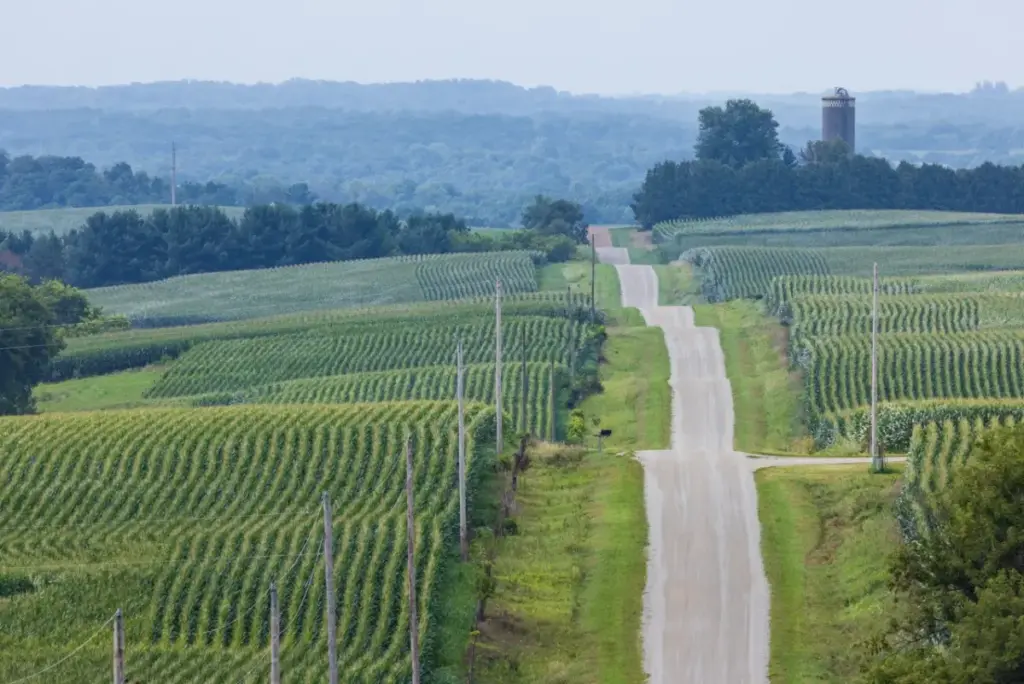
For anyone tracking the evolution of rural telecommunications, a major milestone arrived quietly when the Federal Communications Commission granted the ARA testbed at Iowa State University a prestigious Innovation Zone designation. Spanning five years of experimental spectrum rights across Ames and the surrounding rural farmland—including two municipal airports and a designated drone control band—the initiative aims to tackle a modern agricultural paradox: advanced machinery is generating data at unprecedented volumes, yet the rural networks supporting America’s heartland are fundamentally unequipped to carry it.
The implications of this mismatch are visible in every direction across the surrounding corn and soybean fields. Modern agricultural equipment, most notably massive machinery produced by industrial giants like John Deere, produces vastly more data than traditional terrestrial rural networks can handle. As agriculture rapidly adopts technologies that demand constant, high-bandwidth connectivity, the journey from academic research laboratories to commercial deployment on actual farms has become increasingly complicated.
Broadband Urgency
To understand the scope of the rural broadband gap, industry observers often look to John Deere Chief Technology Officer Jahmy Hindman. Rather than describing an immediate operational crisis, Hindman offers a more nuanced view of the current landscape. According to Deere’s internal metrics, approximately seventy percent of agricultural acreage across the United States and Canada enjoys terrestrial cellular coverage. For the remaining thirty percent, satellite solutions like SpaceX’s Starlink have largely bridged the gap, delivering bandwidth ten to twenty times greater than terrestrial cellular networks at comparable latency, all while utilizing hardware that continues to shrink in physical size.
"I’m bullish on our ability to get every acre connected," Hindman said, noting that the industry is remarkably closer to total connectivity today than it was just three years ago.
Rather than waiting passively for the persistent digital divide to close completely, Deere has aggressively baked resilience into its hardware architecture. Than Hartsock, John Deere’s vice president for precision upgrades and its artificial intelligence data accelerator, explained that the company now integrates satellite connectivity as base equipment straight from its factory in Brazil, where rural cellular coverage is notoriously sparse, while offering it as an optional upgrade in the United States.
Crucially, these systems are engineered to function effectively even when a reliable network link is entirely absent. The company’s advanced See & Spray system computes locally at the edge, while Deere’s autonomous tractors are built to operate without continuous connectivity by storing and forwarding critical operational data.
"We’ve also designed our systems to not require continuous connectivity," Hartsock noted, pointing out a stark reality: even just a short drive southwest of their current location, active agricultural fields exist without reliable, continuous cellular connectivity. Notably, these remarks were delivered while standing well within the newly established boundaries of the FCC’s experimental zone.
Despite this architectural resilience, the sheer volume of data generated by modern farm fleets threatens to outpace even the most elegantly designed local storage systems. While executives have shown commendable candor about the looming technological wall, guaranteed, high-capacity connectivity remains the ultimate goal. Continuous, reliable connections would fundamentally change how engineers approach farm machinery design, allowing developers to balance computing power between the machine itself and off-site cloud architectures.
While the ARA initiative and John Deere are actively exploring collaborative efforts, exact project details remain closely guarded. ARA principal investigator Hongwei Zhang confirmed ongoing discussions, noting that specific questions raised by Deere personnel during recent workshops directly mirror the collaborative research topics currently underway at the university testbed.
Bureaucracy Now
Securing an Innovation Zone designation is an intensive exercise in regulatory coordination. Every experimental operation within the zone must be meticulously registered, coordinated through the National Science Foundation, and subjected to strict notification windows. The ultimate output of this rigorous process is a collection of empirical measurements, refined engineering techniques, and, ideally, commercially viable products that technology vendors can eventually bring to market.
Yet bridging the notoriously difficult gap between academic research and commercialization remains a formidable challenge. Amanda Toman, who directs the Public Wireless Supply Chain Innovation Fund at the National Telecommunications and Information Administration, addressed these hurdles during a remote appearance at an ARA workshop. Reflecting on the evolution of Open RAN technology, Toman offered a frank assessment of the timeline.
"I don’t know that Open RAN adoption has been as wildly successful as I would have hoped, probably three years ago when I started," Toman told the audience. Nevertheless, she emphasized that the technology has served as a critical stepping stone, positioning the United States to reclaim global leadership through virtualized, AI-native network architectures.
For Toman and federal funding agencies, modern agriculture represents a prime candidate for a transformative "killer application"—a compelling use case that clearly demonstrates the practical utility of next-generation networks. Specifically, federal initiatives are looking to finally realize the unfulfilled promises of 5G, particularly ultra-reliable, low-latency communication capable of supporting massive Internet of Things sensor arrays across vast geographic areas. While the NTIA’s funding notices remain agnostic regarding specific use cases, sectors like agriculture, heavy industry, and transportation are viewed as ideal proving grounds.
The scale of modern farming operations underscores this potential. A single agricultural fleet might consist of 1,500 advanced sprayers simultaneously making split-second, millisecond-level decisions across a single month of operations, generating an immense demand for real-time data processing.
Erwin Gianchandani, the NSF’s assistant director for technology, innovation, and partnerships, noted that Platforms for Advanced Wireless Research programs represent roughly $50 million in federal funding matched by an equal investment from more than thirty industry partners. Newer funding mechanisms, including programs known as RINGS, VINES, and Breaking Low, are specifically designed to push research findings further along the pipeline toward the broader technology and telecommunications industries.
While the NSF is explicitly not in the business of consumer product development, Gianchandani explained that the agency’s role is to "grease the skids" between basic academic research and commercial translation—a notoriously perilous phase often referred to in technology circles as the "valley of death."
Other academic leaders have been equally direct about these systemic hurdles. During workshop presentations, researchers highlighted the persistent lack of robust translational pathways between university laboratories and commercial markets, noting that pursuing commercial applications remains a remarkably complex and burdensome task for academic researchers who are primarily trained as engineers rather than commercial product developers.
ARA’s Next Evolution
Looking beyond the initial five-year Innovation Zone designation, researchers view the ARA testbed not merely as a finished product, but as an evolving instrument for ongoing discovery.
"The past five years, it has been great progress," Zhang reflected. "Now we have this tool. It’s a great tool for the two ecosystems to effectively use to collaborate. However, the tool also has to evolve."
According to Zhang, the immediate future requires a dual focus: actively building out the surrounding user community to ensure the testbed is fully utilized, and continuously sharpening the technical capabilities of the platform itself. This continuous evolution highlights a fundamental difference between rural electrification efforts of the past century and the broadband challenge of today.
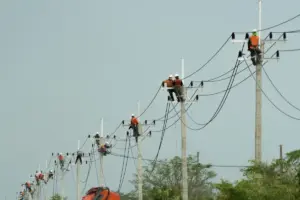
Rural electrification was largely a one-time capital infrastructure problem—utility providers strung copper wire across the countryside, and that physical wire remained an adequate solution for decades. Broadband, by contrast, is defined by relentless technological regeneration. When the ARA project first commenced, non-terrestrial satellite networking was a minor factor, and the integration of artificial intelligence into telecommunications was barely conceptualized. Today, both elements must be natively designed into the core platform, necessitating the seamless integration of terrestrial and satellite links alongside pervasive AI architectures.
As the tech and agricultural sectors work to synchronize their internal timelines, the operational discrepancies remain stark. While John Deere is already actively shipping advanced tools like FurrowVision, autonomous field vehicles, factory-integrated satellite modems, and early-access AI assistants designed to consume every available byte of operational data, the public research infrastructure moves at the deliberate pace of academic grant cycles and federal regulatory approvals.
Having formally filed its spectrum application in late 2023 and secured approval in late 2024, the ARA-NRDZ initiative now possesses a critical five-year window to demonstrate what a telecommunications network looks like when it is custom-designed from the ground up for agricultural production rather than urban consumer streaming habits. Backed by industry heavyweights including AT&T, Ericsson, Collins Aerospace, and Keysight, the testbed continues to forge incremental partnerships project by project.
For Zhang and other project leaders, the broader justification for these investments rests on a simple premise: treating rural communities and agricultural applications as an afterthought during technology development is a missed opportunity for the entire tech sector. By confronting and solving the most extreme technical constraints—such as maintaining high-speed connectivity across remote, rugged terrain—engineers can mature foundational capabilities that ultimately benefit the entire telecommunications industry, ensuring that the unique innovations born in rural America are fully integrated into the next generation of global technology.