For the better part of three decades, the professional life of a software engineer has been defined by a familiar, ritualistic setup: a mechanical keyboard, a high-resolution mouse, a sprawling integrated development environment (IDE), a terminal window, and an ever-expanding collection of browser tabs that serve as both reference material and a testament to the complexity of modern stack development. While the specific tools have evolved—shifting from text editors to feature-rich IDEs, and from local environments to cloud-based repositories—the fundamental relationship between the human and the machine has remained static. Developers have spent their careers learning syntax, memorizing intricate command-line shortcuts, and meticulously adapting their cognitive processes to the rigid requirements of the machine.
This era of "speaking computer" is now undergoing a profound transformation. The rise of artificial intelligence is not merely offering a way to write code faster; it is fundamentally altering the nature of the developer’s role. We are moving away from an era of operating tools toward an era of expressing intent.
The Shift from Commands to Intent
The current shift is driven by a new breed of AI systems that do not simply provide code snippets or autocomplete suggestions. Modern AI agents possess the capability to analyze an entire repository, understand complex dependency chains, select the appropriate models for a specific task, plan a multi-step workflow, execute commands, inspect for failures, and iterate within boundaries set by the developer.

This capability represents a significant leap in productivity and workflow. Developers can now articulate a desired outcome—such as refactoring a module or implementing a new feature—and allow tools like GitHub Copilot to gather the necessary context, edit files, run tests, and revise the implementation accordingly. Within the IDE, "agent mode" creates an interactive loop that feels less like a conversation with a chatbot and more like a collaboration with a tireless assistant.
For instance, a GitHub Copilot coding agent can take an issue, isolate it within a GitHub Actions-powered environment, perform the necessary work, and return a polished pull request for human review. This is not just a marginal increase in speed; it is a structural change in the craft. The developer is no longer burdened with the mechanics of every single keystroke. Instead, the developer’s primary responsibility is to make that intent executable. The human still retains full ownership of the final outcome, but the labor required to reach that outcome has become significantly more abstract and strategic.
The New Value Proposition for Developers
As the chain of events required to build software compresses, the daily rhythm of the developer’s work changes. There is less time spent navigating the minutiae of tool management and significantly more time spent setting high-level direction, defining constraints, supplying necessary context, and reviewing the evidence provided by the AI.
This shift elevates the importance of the human element in software engineering. In a world where an agent can generate three potential implementations before a developer finishes their morning tea, the raw act of writing code is no longer the primary bottleneck. Instead, the value of the developer is increasingly defined by judgment and taste. It is the human who must decide if a specific abstraction is appropriate, whether a database migration is truly safe, if the test suite provides meaningful coverage, and whether the end result genuinely solves the problem for the end user.
This is arguably the most significant change to the craft: the developer remains the ultimate authority and is held accountable for the final outcome, even as the mechanics of execution are delegated to intelligent systems. The goal is to embed AI into the fabric of the workflow rather than treating it as a peripheral tool. This "ambient intelligence" requires a seamless integration where the AI, the repository, and the developer operate in concert.
Achieving this requires a sophisticated architecture of "portable context." Tools like the Model Context Protocol (MCP) are essential here, as they connect agents to the various tools and services they need to function. When combined with repository instructions, predefined coding conventions, and automated policy enforcement, the interface between the developer and the system becomes thinner and more intuitive. This ecosystem consists of three distinct layers: a modality layer that captures the developer’s intent, a harness layer that plans and acts, and a control plane that allows for inspection, redirection, and final approval.
Physical Controls and the Return to Ambient Interfaces
As agentic coding moves beyond the traditional terminal, there is a growing interest in how physical hardware can facilitate this new workflow. The maker community has long been experimenting with ambient control devices—ranging from repurposed picture frames to custom ESP32-based hardware—to create interfaces that exist outside the confines of the screen.
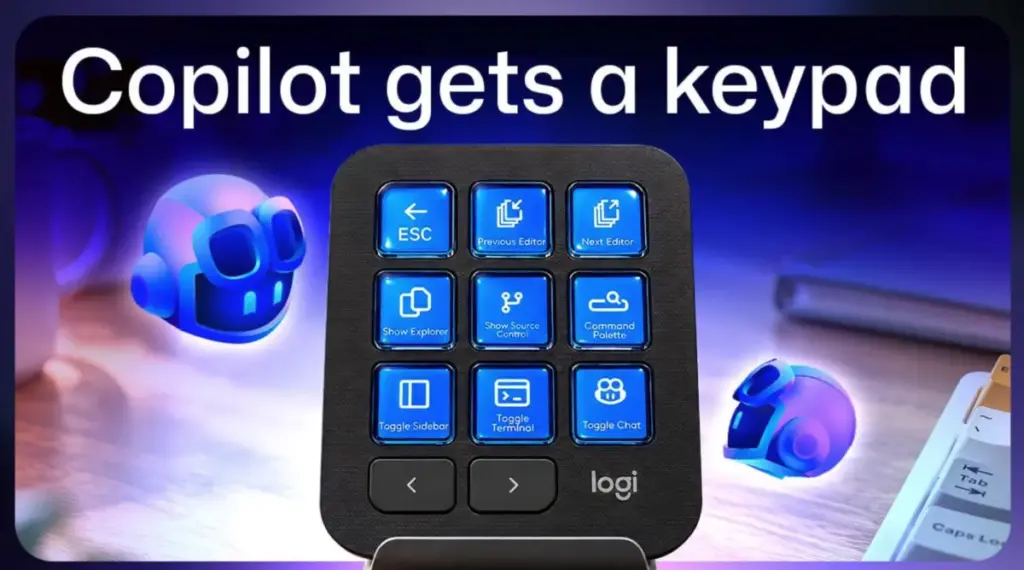
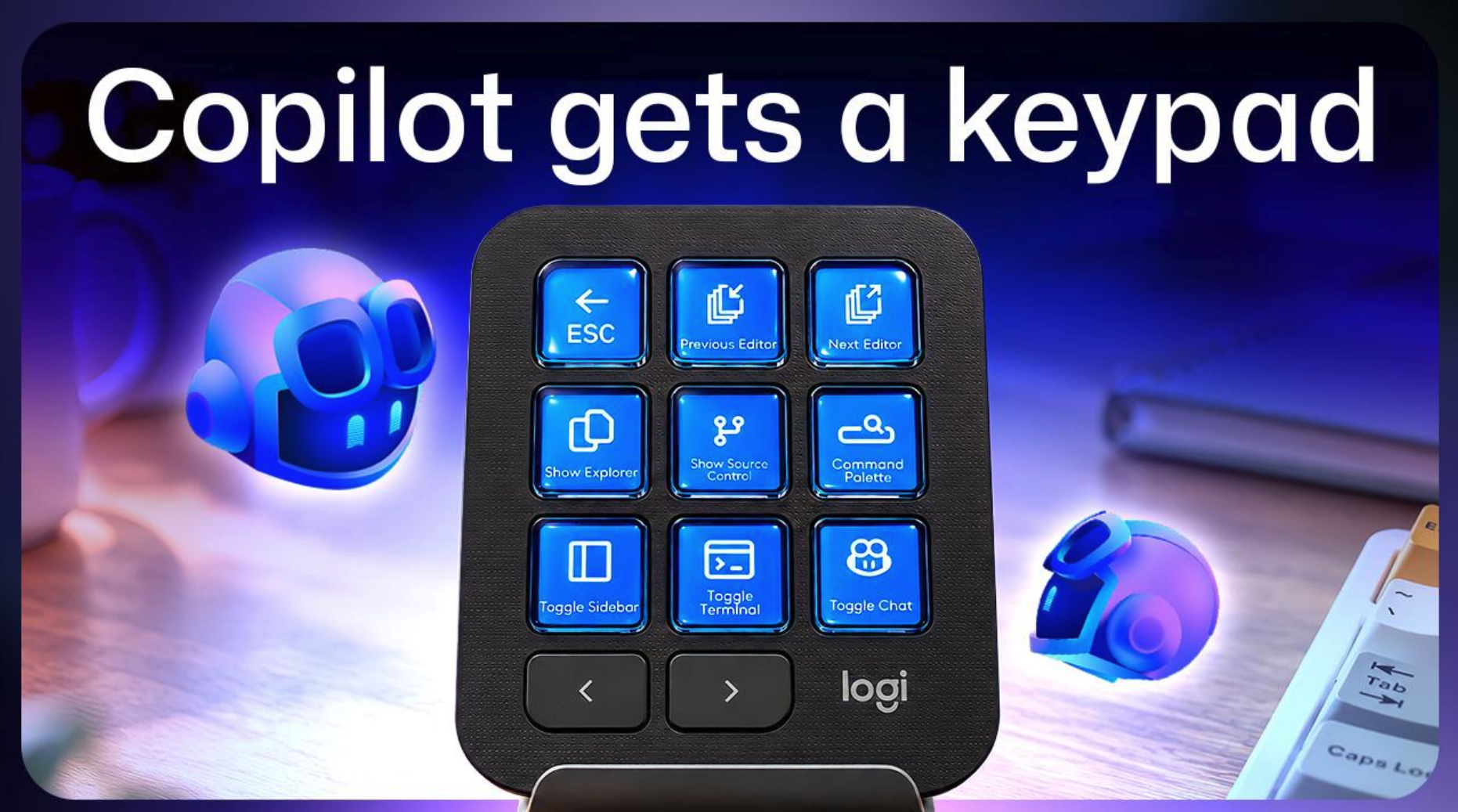
This exploration into physical controls is a response to the need for faster, more tactile interaction. Over the past 18 months, there has been a concerted effort to explore how hardware like the Logitech MX Keypad can augment the developer experience. The goal is to turn repetitive, high-frequency developer actions into programmable inputs that are ambient and contextual.
For example, through the GitHub Copilot app, a physical key can be mapped to trigger a complex, multi-step sequence: submitting a parameterized prompt, resuming a dormant Copilot session, or invoking an IDE command. Hardware becomes valuable only when it removes enough friction to allow the developer to maintain their flow state. It is not about adding another gadget to the desk; it is about providing a way to perform frequent actions without breaking concentration. Not every action requires a physical shortcut, but when a task is repeated dozens of times a day, the ability to offload that task to a dedicated key can preserve the mental energy needed for deep, creative problem-solving.
This represents the next logical step in the evolution of user interfaces. The Graphical User Interface (GUI) made software visual; the mouse simplified navigation; the web made development connected; and mobile devices introduced touch. Today, AI agents are adding "intent and action," and the user interface is expanding to include ambient, physical control.
Building Software That Matters
GitHub’s recent collaboration with Logitech to integrate the GitHub Copilot app directly into the MX Keypad experience serves as a practical experiment in this space. By allowing developers to run agentic workflows and map their own shortcuts, the industry is gathering data on how best to steer and resume AI work without losing focus.
However, this transition is still in its infancy, and many important engineering questions remain unanswered. Developers and platform architects are currently grappling with how much context an agent should retain, which tool calls should be automated versus human-verified, and how to properly scope network access and credentials. There is also the challenge of coordination: as multiple agents work on a single codebase, the industry must develop better ways to prevent duplication of effort or the creation of conflicting pull requests.
Ultimately, the goal is not to remove the developer from the equation, but to remove the friction that currently surrounds the work. For decades, developers have had to "speak computer," memorizing complex syntax and wrestling with the limitations of their tools. As computers get better at meeting us halfway, the best interface will not be the one with the most panels, widgets, or AI-generated buttons. It will be the one that understands the context, preserves the developer’s agency, and effectively gets out of the way, allowing engineers to focus on the only thing that truly matters: building software that solves real-world problems. By pairing tools like the MX Keypad with the latest AI capabilities, the community is moving toward a future where the interface is invisible, and the focus is entirely on the craft of creation.