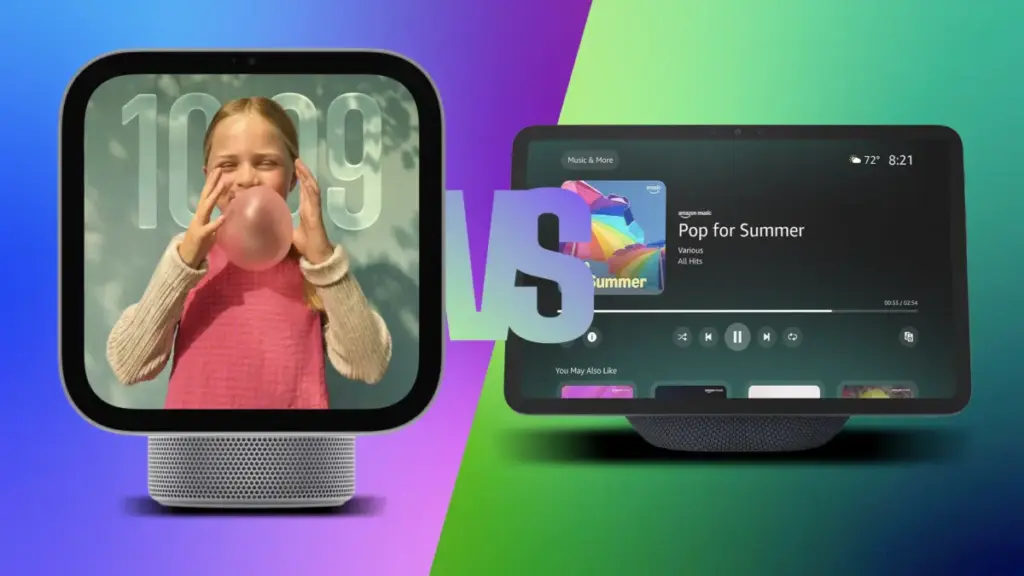
Apple is stepping into uncharted territory with the introduction of the HomeView, the tech giant’s first-ever smart home display designed to serve as a centralized hub for controlling connected household devices and interacting with Siri AI. Announced on Tuesday and slated to hit the market on November 13, the new device arrives with plenty of sleek aesthetic appeal and the promise of tight ecosystem integration. However, navigating the smart display market will not be a walk in the park for Apple. Competitors like Amazon and Google have been refining their hardware and software offerings for nearly a decade, leaving Apple with significant ground to cover.

Industry experts and long-time reviewers who have spent years tracking the evolution of smart home technology note that Amazon launched its pioneer Echo Show back in 2017, followed quickly by Google introducing its Nest Hub lineup—originally known as the Google Home Hub—in 2018. Over the intervening years, both competing brands have iterated through multiple generations of smart speakers and displays, aggressively adding features, sunsetting unpopular tools, and occasionally abandoning entire product categories altogether.
This rich history means that Apple’s stylish new entry has the distinct advantage of learning from the missteps of its predecessors. By observing what worked and what failed in models like the Echo Show 11 and the 10-inch Google Nest Hub Max, Apple has carved out a unique design language for the HomeView. Yet, after getting a firsthand look at the device during Apple’s recent press briefing, tech analysts and reviewers have raised critical questions about whether the HomeView can truly dethrone established market leaders.
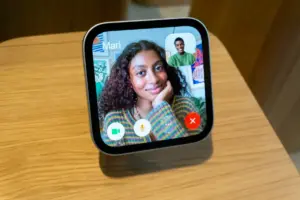

Nuts and Bolts: Apple’s Stylish Display Faces a Challenge
From a purely aesthetic standpoint, the HomeView looks impressive. Its physical design immediately evokes memories of the Echo Show 11, featuring a modern screen mounted securely atop a low-set, domed base that houses the internal speakers. Notably, Apple opted against copying Amazon’s experiment with the discontinued Echo Show 10, which featured an auto-rotating base designed to track users around a room—a function that frequently drew criticism from users whose devices bumped into nearby objects. Sticking with a stationary design is a pragmatic choice, but the physical dimensions of the HomeView introduce a surprising new debate.

At just 7 inches, the HomeView is remarkably tiny. Industry observers who evaluated the device at the Apple launch event quickly pointed out that the screen feels restrictive, especially when compared to competitor models built for identical living spaces. While the Liquid Retina display delivers vibrant colors and crisp details, packing a screen of this size into a $299 tabletop device feels puzzling to veterans of the smart home space. Such dimensions are traditionally reserved for bedroom smart clocks rather than multi-purpose kitchen or living room hubs.
This compact scale directly impacts the device’s utility in everyday scenarios. Smart displays are heavily relied upon for media consumption, such as streaming video content or following step-by-step cooking tutorials, as well as maintaining face-to-face video connections with family members. While Apple demonstrated media streaming capabilities on the HomeView, practical experience suggests that users will struggle to appreciate detailed visuals on a 7-inch panel from halfway across a room. Industry consensus shows that screens measuring under 8 inches fail to deliver a satisfying viewing experience unless the user remains within arm’s reach.

To mitigate placement limitations, Apple is also offering wall-mounting options for the HomeView, a versatile approach that outpaces Google’s current offerings, though Amazon has long provided similar capabilities with select Echo Show models. While wall mounting creates a clean, sophisticated look, it introduces practical hurdles. Achieving a seamless aesthetic requires professional installation to conceal the wired power connection, pushing the total cost well beyond the initial $300 hardware price. Furthermore, Apple’s entry-level wall-mounting kit demands an additional $60 investment. Even on a wall, a 7-inch display struggles to compete against much larger alternatives, such as the 21-inch Echo Show, which functions more like a secondary television set.
The Battle of Voice Assistant AIs

Voice assistant integration remains a battleground for smart display supremacy, and opinions remain divided on how Apple’s Siri AI stacks up against established rivals like Amazon’s Alexa Plus and Google’s Gemini for Home. Gemini offers a reliable, albeit conservative, performance, while Siri excels at lightning-fast execution of local smart home commands. However, Amazon’s Alexa Plus continues to win over many power users due to its conversational depth and unique features, including a selection of distinct AI personalities.
Alexa Plus stands out through its advanced third-party app integration, allowing users to execute complex tasks like ordering food delivery from GrubHub or Uber Eats, booking rides, purchasing event tickets through Ticketmaster, or securing restaurant reservations via OpenTable without lifting a finger. Currently, there is no indication that Siri AI on the HomeView matches this expansive third-party marketplace, with Apple noting limited support for compatible audio and video apps transferred directly from an iPhone.

Conversely, Siri AI carves out a distinct advantage by leveraging personal context across a user’s ecosystem. Demonstrations indicate that Siri can naturally search through personal email and messaging applications to retrieve specific information, recipes, or notes—a capability that competing assistants struggle to replicate seamlessly on stationary hardware. Additionally, Apple offers robust accessibility features, allowing users to customize Siri’s voice speed to suit personal preferences.
Smart Home Controls Are Where Apple’s Ecosystem Shines

Managing a heterogeneous smart home network using the universal Matter standard can frequently prove frustrating. Users frequently report wonky interfaces, missing devices that require constant re-pairing, and voice assistants failing to recognize previously reliable commands. Here, Apple’s notoriously walled garden offers a distinct operational advantage.
The HomeView’s integration with the Apple Home ecosystem allows the device to discover and pair with compatible hardware with the effortless precision of setting up a new pair of AirPods. Siri AI further streamlines the experience by recognizing specific users through facial recognition or manual profile creation. Features like content handoff between iPhones and the display, alongside instant localizations using the Find My network, create a level of operational fluidity that rivals often struggle to match.

The primary limitation of Apple’s ecosystem approach remains hardware compatibility. While Apple has recently expanded its product portfolio to include proprietary security cameras, smart locks, and smart thermostats designed explicitly to work with Apple Home, third-party support for auxiliary items like smart bulbs and general-purpose security cameras lags behind the expansive networks built by Amazon and Google. Choosing Apple’s platform may require consumers to navigate self-imposed hardware restrictions.
Always Double-Check Your Streaming Capabilities

Audio performance on the HomeView punches above its weight class, featuring two custom full-range drivers, a down-firing woofer, and two passive radiators. While it may not match the acoustic fidelity of a full-size HomePod, it easily fills a standard room with sound, holding its own against competitors like the Echo Show 11 and Nest Hub Max.
However, true satisfaction with a smart display often hinges on supported music and video streaming services. While Apple Music integration is guaranteed, Apple has remained notably tight-lipped about broader third-party audio support for the HomeView. Historically, Apple’s smart speakers have offered limited native compatibility outside of a select few services, whereas competing Echo Show and Nest Hub devices support an extensive array of platforms, including Spotify, Tidal, Pandora, and SiriusXM.

A similar caveat applies to video streaming. The HomeView is heavily optimized for Apple TV, leaving the availability of other popular streaming platforms uncertain. By contrast, Google Nest Hubs utilize Google Casting to support a wide range of video services, while larger Echo Shows incorporate native Fire TV platforms, granting users access to nearly every major streaming application available on the market.
Pricing Is Comparable, But Apple’s Display Costs the Most

Aside from premium pricing on certain peripheral hardware like its standalone floodlight security camera, the HomeView’s $299 price tag places it squarely in line with contemporary flagship smart displays. Amazon’s Echo Show 11 starts at $250, though it frequently sees promotional holiday discounts, an avenue Apple traditionally avoids. Upgrading to wall-mounted alternatives like the Echo Show 21 elevates costs to $500, while Google’s Nest Hub Max typically retails between $230 and $250 where available. While the HomeView sits at the higher end of standard tabletop displays, the price premium is relatively modest by historical Apple standards.
One final alternative worth considering for consumers embedded in the Apple ecosystem is the iPad. Proppped up with a folding cover case, an iPad can easily fulfill many of the same domestic roles as a HomeView while offering a larger screen, superior multitasking capabilities, and full access to the broader App Store. While iPads carry a higher entry cost—starting around $750 for an iPad Air or $600 for an iPad Mini—and lack the dedicated acoustic engineering of a HomeView, they provide a flexible alternative for households looking for maximum utility out of a single screen.

As the smart home market prepares for the HomeView’s November launch, consumers face a familiar choice between the expansive openness of established ecosystems and the seamless, premium integration of Apple’s expanding hardware family.