For over half a century, the Peanuts comic strip has served as a mirror for the human condition, reflecting our deepest insecurities, our fleeting joys, and our persistent, often quiet, struggles. While Charles Schulz’s creation is populated by a cast of iconic characters—from the philosophical Linus to the cynical Lucy—the heart of the strip has always been the perpetual underdog, Charlie Brown. He is a character defined not by his victories, but by his failures, and yet, there is a profound, accidental brilliance in the way he navigates a world that seems perpetually tilted against him.
Many of the most celebrated Peanuts quotes are moments of accidental wisdom. They are lines that, while masterfully penned by Schulz, appear to emerge from the characters without their own full realization of the depth they are expressing. They are observations made in the moment, reflecting a raw, unvarnished reaction to the world. A perfect example of this is the poignant observation: "Nothing takes the taste out of peanut butter like unrequited love!" It is a line that perfectly encapsulates the visceral, physiological sensation of romantic rejection. For the reader, it is a masterclass in emotional shorthand; for Charlie Brown, it is simply a miserable observation about his lunch. He is reacting to the world without any intention of providing a grand philosophical statement.
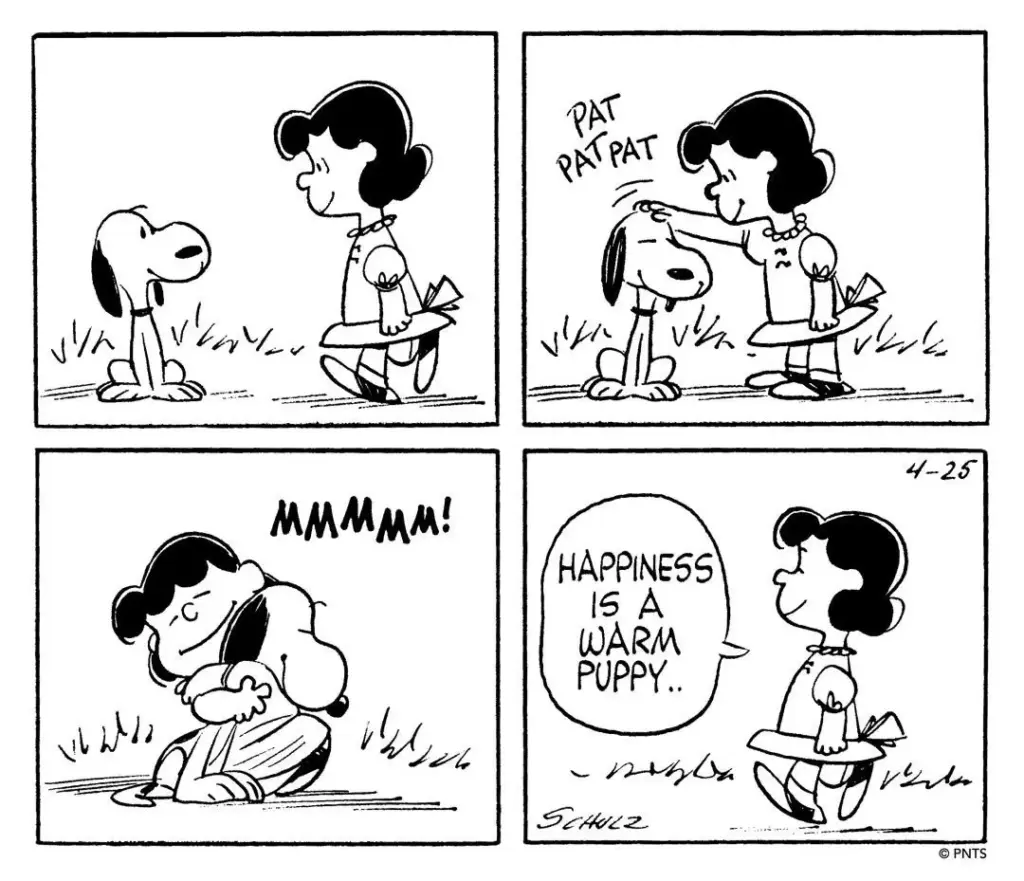
Similarly, Lucy van Pelt’s famous assertion that "Happiness is a warm puppy" resonates on a profound level, distilling the complexity of human joy into a simple, tangible reality. But when we look for the defining quote of Charlie Brown himself—the one that captures his essence—we are looking for something different. We are looking for self-awareness. We are looking for a moment where the character looks at his own life, understands his place in it, and articulates his philosophy with clarity.


To understand why a specific line stands above the rest, one must first come to terms with who Charlie Brown actually is. He is a character who lacks a massive social circle, yet he remains deeply loyal to the few friends he has. He is a dedicated pet owner to Snoopy and, despite the frequent indignities he suffers, he remains remarkably kind to those around him. But, to be blunt, Charlie Brown is a loser. In the context of his world, he is a mediocre student, he is perpetually unlucky in love, and he rarely "wins" at anything.
This is exactly why he remains one of the most relatable characters in the history of the medium. Many people, at various points in their lives, feel as though they are not "winning." We are all, in some capacity, that kid with the football. We have all experienced the sensation of having the goalposts moved just as we are about to make our move, and we have all felt the sting of the rug being pulled out from under us. Charlie Brown is the avatar of the everyday struggle.
However, the defining trait of Charlie Brown is not his failure; it is his persistence. He returns to the football again and again. He runs toward it with the genuine belief that "This time, I’ll get it." This is an act of profound optimism, even if that optimism is consistently unrewarded. It is this specific brand of persistence—the willingness to try, to hope, and to face the inevitable failure once more—that makes us root for him. He is a sad sack, yes, but he is an endearingly persistent one.

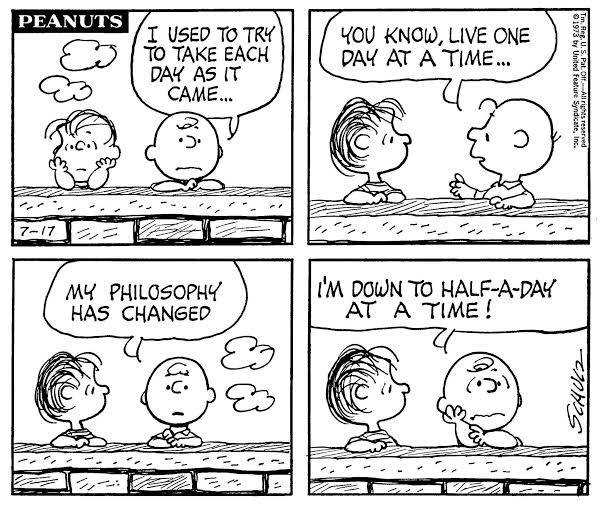
When searching for a quote that synthesizes this bleak outlook with his quiet, stubborn endurance, one must move past the incidental remarks and look toward his philosophical declarations. There is a classic strip from 1973 where Charlie Brown, leaning against his signature brick wall with his friend Linus, remarks: "I used to try to take each day as it came… You know, live one day at a time… My philosophy has changed. I’m down to half-a-day at a time!"
It is a fantastic line, but it carries a risk of misinterpretation. In isolation, it could be read as a "live life to the fullest" mantra, a piece of advice about focusing on the present moment. Without the visual context of the profound, weary resignation on Charlie Brown’s face, the nuance of his misery is lost. To find his true philosophy, we must look to an earlier, similar interaction from 1966.
In this earlier iteration, also set against that same brick wall, Linus poses a heavy question: "Life is difficult, isn’t it, Charlie Brown?"

"Yes, it is," Charlie Brown replies.
Then, he delivers the line that stands as perhaps the most significant in the comic’s fifty-year history: "But I’ve developed a new philosophy… I only dread one day at a time."
This single sentence is a masterpiece of character writing. It is the perfect distillation of the Charlie Brown experience. It acknowledges the inherent difficulty of life, accepting that obstacles are inevitable and that the "football" will likely be yanked away. But it also reveals his mechanism for survival. He is not giving up; he is simply narrowing his focus to make the burden of existence manageable. He is taking it one day at a time, not out of a sense of zen-like mindfulness, but out of a pragmatic need to endure.
The resonance of this line is evidenced by its longevity. It was so potent that it was included in the 1969 animated special A Boy Named Charlie Brown. The special, written by Charles Schulz himself, features the exact same exchange between Linus and Charlie Brown at the same brick wall. The fact that Schulz chose to immortalize this specific line on screen three years after it appeared in the print medium suggests that it was a sentiment that carried significant weight for the creator as well.
It remains a defining moment because it strips away the artifice. It isn’t a joke about a baseball game or a kite-eating tree. It is a moment of total transparency where a cartoon boy admits that he is struggling, that the world is hard, and that his best strategy is to keep moving forward, one day of dread at a time. For anyone who has ever felt the weight of the world, it is a line that does not just describe a character; it describes a way of getting through the day. It is this blend of honesty, humility, and the quiet refusal to stop trying that cements Charlie Brown’s place as a timeless figure of human resilience.