










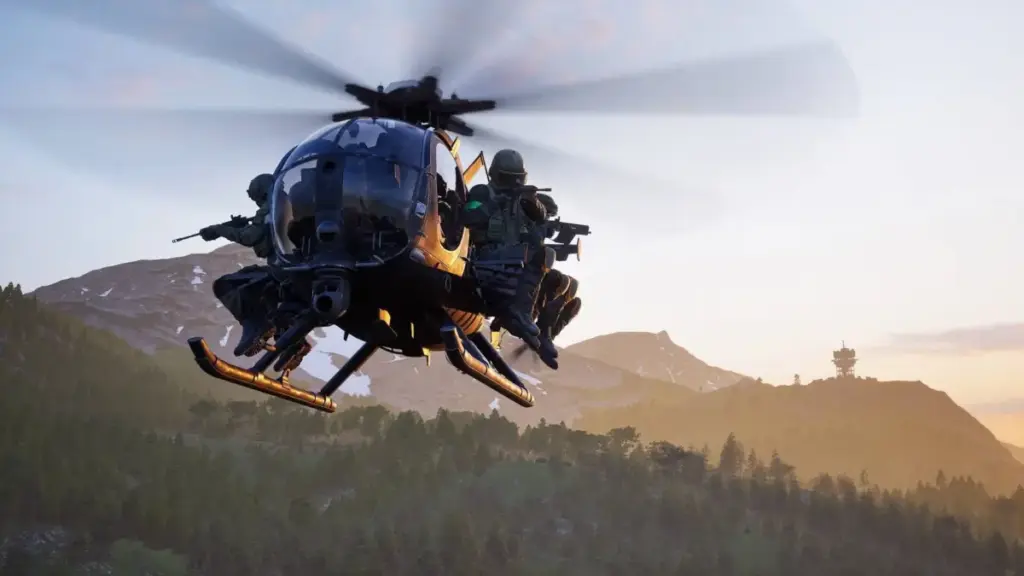
The year 2026 has already established itself as a grueling gauntlet for video game protagonists. Players have spent the last several months white-knuckling their controllers while navigating the high-stress environments of the industry’s most demanding titles. We have faced the terror of fleeing from the massive, grotesque monstrosities pursuing Grace Ashcroft in Resident Evil Requiem, engaged in claustrophobic, tactical firefights in the sewers of 007 First Light, and fought for survival while clinging to the sheer, unforgiving rock faces of Cairn. Yet, for all the adrenaline-fueled moments the year has provided, there is one experience that stands apart in its ability to induce genuine, palm-sweating anxiety: the act of piloting a helicopter in Wardogs.
It is an assumption easily made by any seasoned gamer: flying a helicopter in a first-person shooter should be a straightforward, even routine affair. In the grand scheme of modern military games, the aircraft is a utility—a means to an end designed primarily to ferry squads from a spawn point to the heart of the battlefield. Having spent years piloting air support in titles like Grand Theft Auto 5, navigating the chaotic, open-theater skirmishes of the Battlefield series, and even handling the more arcade-leaning flight models found in the Just Cause franchise, I approached Wardogs with a sense of seasoned confidence. That confidence, it turns out, was misplaced.
Wardogs operates under a different philosophy entirely, one that prioritizes mechanical depth and punishing authenticity over the pick-up-and-play accessibility found in many of its contemporaries. The difference is not merely aesthetic or cosmetic; it is baked into the very physics engine of the game.

During a discussion at Gamescom 2026, Kane Allard, a senior producer at Bulkhead, shed light on the design philosophy driving this intense experience. According to Allard, the development team made a conscious decision to move away from the traditional, simplified flight models that define much of the genre. To achieve the level of immersion they desired, Bulkhead brought in a professional aeronautical engineer to oversee the design of the game’s rotary-wing aircraft.
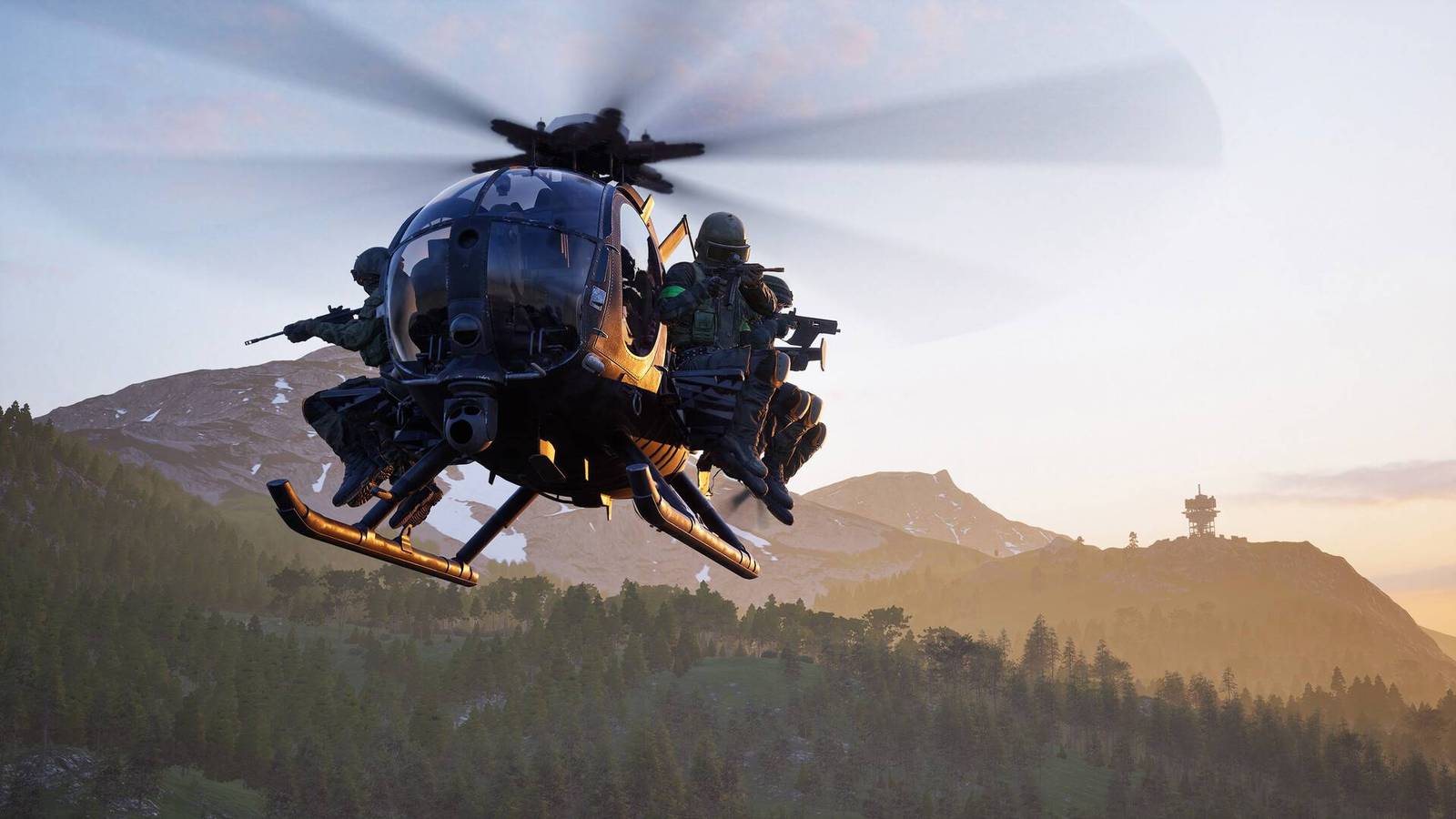
"A big part of the game is vehicles, and we wanted them to feel as realistic and authentic as possible," Allard explained. "The way we achieved that was by bringing in an aeronautical engineer to design the base layer of our helicopters, just to make them feel realistic and give them weight and make them feel fun. And it gives them that skill level where you can learn and become a better pilot."
The result of that collaboration is immediately apparent from the moment the rotors begin to spin. These are not nimble, gravity-defying toys; they are heavy, temperamental machines that demand respect. For a player used to the forgiving, almost magnetized flight controls of other shooters, the learning curve in Wardogs is steep.
The most significant hurdle, as I discovered during my time with the game, is the landing sequence. While keeping the bird in the air and traversing the map is a skill that can be mastered with patience and practice—I eventually found myself capable of transporting allies with a semblance of grace after spending hours in the firing range—the act of landing is a different beast entirely. Coming to a halt quickly, efficiently, and, most importantly, safely, requires a level of finesse that is rarely asked of players in modern action titles. It is a delicate dance of balancing collective momentum and rotor pitch, and a single miscalculation can lead to a catastrophic crash.
However, the intensity of piloting in Wardogs is not solely derived from the challenging physics. The pressure is compounded by the game’s unforgiving economic and tactical stakes. In Wardogs, a helicopter is not just a vehicle; it is a significant financial investment. Each craft carries a cost of $6,250, a sum that must be earned through effective play. If a pilot miscalculates a landing or succumbs to enemy fire, that investment is instantly vaporized.

The loss of the vehicle is only the beginning of the disaster. A crash effectively serves as a death sentence for every passenger on board. When a pilot fails to deliver their squad safely to the front lines, they are not only responsible for the loss of the helicopter but also for the destruction of the high-value equipment kits carried by their teammates. In a game where resources are finite and hard-won, the total cost of such an error—the vehicle plus the combined value of the soldiers’ gear—can result in a collective loss in the tens of thousands.
The social repercussions of such a failure are equally daunting. Unless the crash occurs within a controlled zone where teammates can be revived, the loss is permanent for that life. In the aftermath of a botched flight, the pilot often finds their reputation among their peers significantly diminished. Trust is a currency in Wardogs, and once it is squandered through reckless flying, it is difficult to regain. Many players, myself included, have found themselves relegated to the passenger seat, watching someone else take the controls while feeling the sting of a job left undone.
There are, of course, those who treat the art of flight as a true craft. Some players, such as the Instagram user known as "designatedpilot," have turned the act of navigating these complex machines into a form of high-level performance, showcasing maneuvers and precision landings that make the rest of us look like amateurs. Watching such footage serves as both an inspiration and a sobering reminder of just how much mastery the game allows for those willing to put in the time.
For most, however, the stress-to-reward ratio remains a point of contention. While there is an undeniable thrill in successfully navigating a full squad into a contested control zone under heavy fire, the weight of the responsibility often outweighs the enjoyment of the flight itself. Personally, while I have documented the intricacies of the game’s flight systems for others to follow, I find myself increasingly hesitant to take the pilot’s seat.

The heart-pounding tension of hovering over a hot drop zone, knowing that one wrong move could cost my team their hard-earned progress, is a unique brand of pressure that few other games manage to replicate. It is a testament to Bulkhead’s design that they have managed to make a simple transport role feel like the most dangerous and significant job on the battlefield. Until my confidence matches the game’s rigorous demands, I am more than content to leave the flying to the experts and stick to the relative safety of land-based vehicles, where the only thing I have to worry about is the road ahead.