







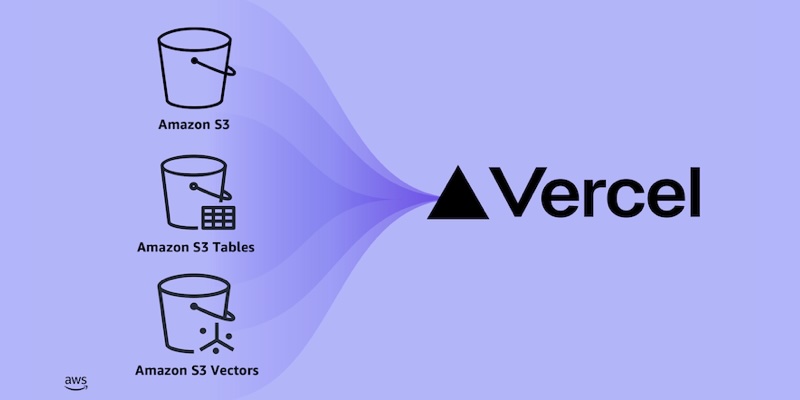
In a significant move to streamline the development lifecycle for web and AI-driven applications, Vercel has announced the native integration of Amazon Simple Storage Service (Amazon S3) directly into its platform. Developers using Vercel can now provision and manage S3 storage resources—including specialized S3 Tables and S3 Vectors—without ever leaving the Vercel ecosystem. This strategic update effectively bridges the gap between Vercel’s high-performance frontend deployment workflow and the robust, scalable backend storage infrastructure provided by AWS.
For millions of developers who rely on Vercel to build, deploy, and scale their applications, this integration marks a departure from the traditional, often fragmented process of managing cloud resources. Previously, developers looking to utilize S3 had to navigate the AWS Management Console separately to configure complex IAM policies, manage credentials, and handle resource provisioning. By centralizing these tasks within the Vercel Marketplace and the v0 AI assistant, the platform is lowering the barrier to entry for professional-grade cloud architecture, allowing teams to maintain a cohesive application stack under a single AWS account and unified billing structure.
A Unified Developer Experience for Modern Workloads
The integration is designed to support three primary categories of modern development: everyday object storage, high-performance analytics, and AI-powered vector search. By bringing these capabilities into the Vercel dashboard, the platform is reinforcing its commitment to a "serverless-first" philosophy where the underlying infrastructure management is abstracted away from the developer.
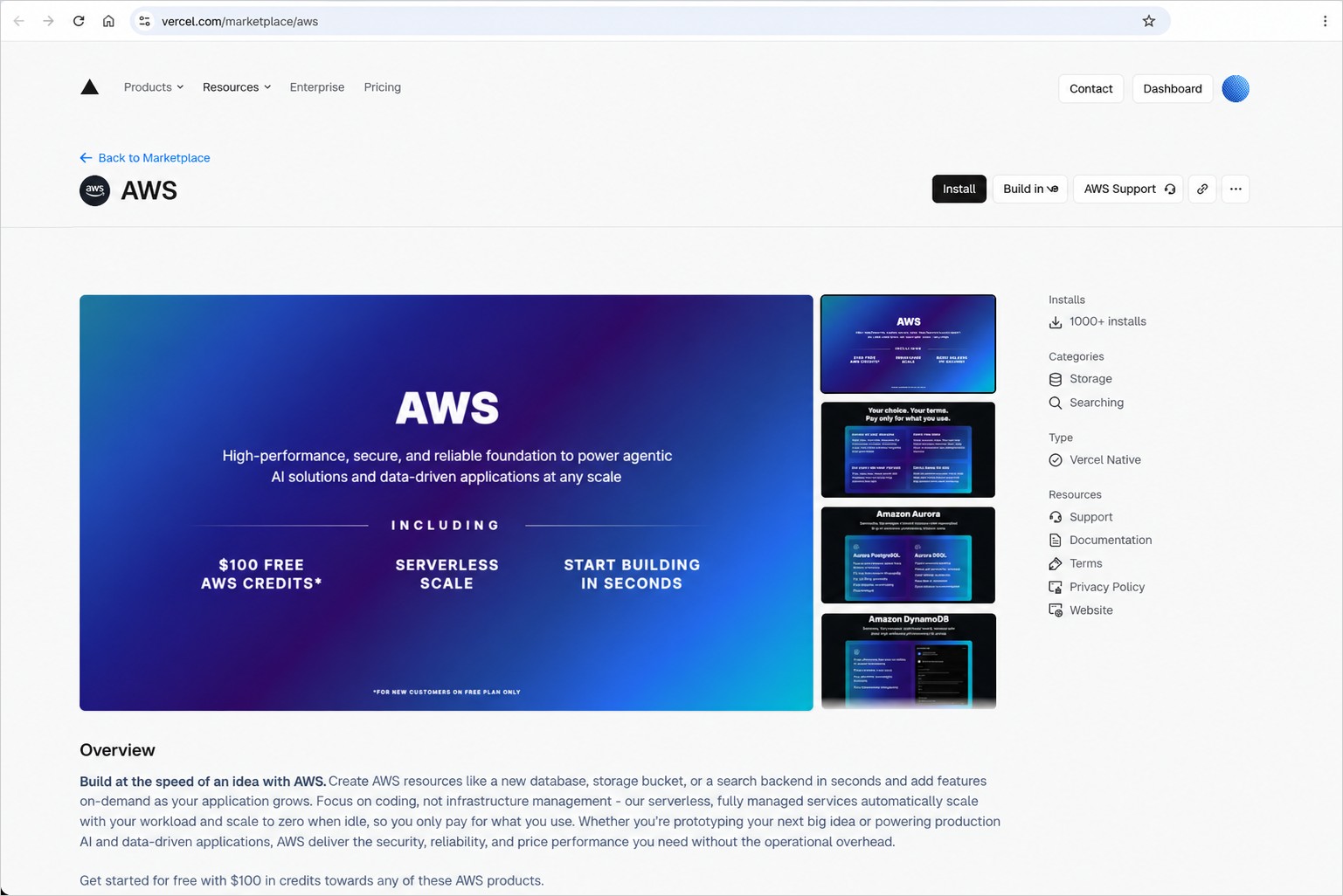
This expansion complements existing Vercel integrations for Amazon Aurora, Amazon DynamoDB, and Amazon OpenSearch Serverless. With these services now operating in concert, developers can build comprehensive, end-to-end stacks—from the frontend interface and database layer to object, vector, and analytical storage—without the historical friction of managing cross-platform configurations.
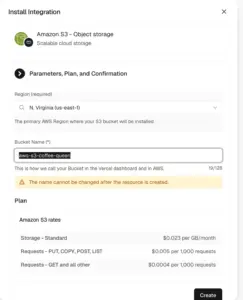
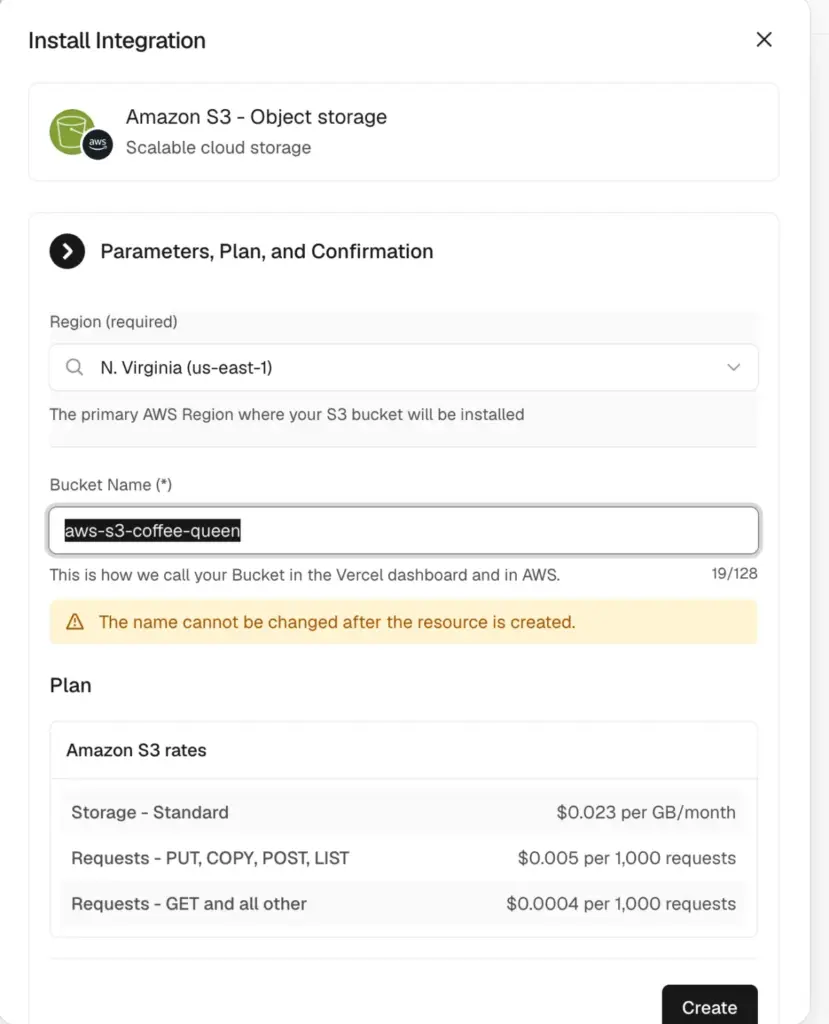
The provisioning process has been significantly simplified. From the Vercel dashboard, developers can navigate to the Storage tab, select AWS, and define their S3 bucket type and desired region. Once initiated, the provisioning process completes in seconds. The platform automatically handles the configuration of environment variables, including critical identifiers like AWS_REGION, AWS_ROLE_ARN, and the specific bucket names. Security is prioritized through the use of the awsCredentialsProvider from @vercel/functions/oidc, which facilitates the exchange of short-lived OIDC tokens with the AWS Security Token Service. This architectural decision ensures that no static keys are stored, effectively eliminating a common source of security vulnerabilities in cloud-native applications.
Specialized Storage: Analytics and AI Integration
Beyond standard object storage, the integration brings powerful, purpose-built capabilities to the Vercel environment. S3 Tables, for instance, provide a managed storage solution optimized for analytics. Designed to automatically maintain performance as data volume increases, these tables leverage Apache Iceberg to ensure that developers can handle large-scale data queries with minimal maintenance overhead. The ability to use tools like DuckDB within a Vercel Function allows for lightweight, efficient querying of these tables, enabling developers to build sophisticated analytics dashboards directly into their web applications.

Equally transformative is the inclusion of S3 Vectors. As the demand for AI-driven features—such as RAG (Retrieval-Augmented Generation) applications, semantic search, and AI agents—continues to surge, S3 Vectors offers a cost-optimized method for storing and querying high-dimensional vector data. By integrating this capability directly into the Vercel workflow, developers can now store embeddings created by their preferred models and query them for semantic matches without the immediate need for a separate, dedicated vector database. This functionality is particularly potent when paired with other AWS services, such as storing document text in DynamoDB and its corresponding embeddings in S3 Vectors, creating a streamlined pipeline for intelligent, context-aware applications.
Leveraging AI Assistance with v0
A standout feature of this release is the tight integration with v0, Vercel’s generative AI assistant. The platform now enables developers to use natural language to request complex infrastructure setups. A developer can, for example, prompt v0 to build a photo gallery with user uploads, and the assistant will automatically provision the necessary general-purpose S3 bucket. Similarly, requesting a support bot that processes PDFs will trigger the configuration of S3 Vectors, while asking for a clickstream analytics dashboard will set up S3 Tables.
This AI-driven approach goes beyond simple provisioning; v0 handles the connection strings and generates the necessary boilerplate code, significantly reducing the "time-to-first-commit" for new features. For developers, this means the focus remains on building unique application logic rather than debugging configuration files or navigating AWS documentation for setup procedures.
Flexibility and Operational Continuity
Vercel has designed this integration to be highly flexible, accommodating both new and existing AWS users. Developers can choose to create a new AWS account through the Vercel integration, which includes an incentive of $100 in AWS credits valid for six months, or they can link an existing AWS account. When an existing account is linked, Vercel respects the user’s existing infrastructure, working specifically with new buckets created through the platform.
This approach ensures that developers do not lose the benefits of AWS-native tooling. Because the underlying storage resources reside within the user’s own AWS account, teams retain full visibility, governance, and control. The integration serves as an orchestration layer rather than a walled garden, allowing for a seamless transition between Vercel’s simplified dashboard and the granular control offered by the AWS console when necessary.
As the industry moves toward more integrated development environments, the collaboration between Vercel and AWS signals a shift toward a more cohesive cloud ecosystem. By combining the speed of the Vercel deployment model with the depth and durability of S3, developers are now better equipped to tackle increasingly complex data and AI workloads. For those looking to dive deeper into the technical implementation, documentation is available via the AWS agent toolkit and plugins, providing a path for troubleshooting and advanced API interactions. As these tools continue to evolve, the integration stands as a testament to the ongoing effort to minimize the operational tax on developers, allowing them to focus on the high-level goals of innovation and user experience.