







For decades, the life of a software developer has been defined by a familiar, rigid ritual. It began with the setup: a mechanical keyboard, a precise mouse, a code editor, a terminal window, and an ever-growing constellation of browser tabs—many of which were saved for a future that rarely arrived. While the specific technologies evolved, the fundamental relationship between the developer and the machine remained static. To build software, one had to learn the language of the machine, memorize arcane command-line shortcuts, and adapt one’s cognitive processes to fit the constraints of the operating system. We learned to speak computer, painstakingly translating our ideas into the syntax, APIs, and manual sequences that the hardware required.
Today, that relationship is undergoing a profound transformation. Artificial intelligence is not merely acting as a helpful autocomplete tool; it is fundamentally altering the nature of software engineering. We are moving away from an era of issuing manual, granular commands to one of expressing high-level intent. This shift is not about "prompting" a machine to generate code snippets, but about delegating the mechanics of execution to intelligent agents that understand the context of a repository, plan complex work, navigate dependencies, and operate within the safety boundaries defined by the developer.
The Shift Toward Intent-Driven Development
The modern developer workflow is becoming a loop of orchestration rather than manual construction. With tools like GitHub Copilot, developers can now describe a desired outcome—such as refactoring a specific module or implementing a new feature—and allow the agent to handle the heavy lifting. The system can gather repository context, inspect relevant symbols and dependencies, edit multiple files simultaneously, run tests, and even revise the implementation if an error occurs.
In the integrated development environment (IDE), the "agent mode" creates an interactive, high-bandwidth feedback loop. A developer can take a specific issue, hand it off to a GitHub Copilot coding agent running in an isolated GitHub Actions-powered environment, and receive a fully formed pull request ready for human review. This is not just a marginal gain in speed; it is a structural change in the craft. The developer is no longer a laborer performing every step of the construction; they have become the architect and the final arbiter of quality. The work remains the same, but the mechanics have shifted.
By compressing the chain of events required to turn an idea into a functional feature, AI-assisted development allows professionals to spend less time navigating the minutiae of tools and more time setting direction, defining constraints, and reviewing evidence. The daily workflow is increasingly centered on understanding the deeper structure of codebases, the needs of the customer, and the nuance of what makes a solution truly effective.
This shift makes the human element of development—judgment, taste, and strategic oversight—more valuable than ever. An AI agent can generate three distinct implementations of a feature before a developer has finished their morning coffee, but the machine cannot decide if a particular abstraction is appropriate, whether a database migration is inherently safe, or if the resulting test suite provides meaningful coverage. The developer remains the final authority, accountable for the integrity and success of the outcome, even as the lower-level mechanics are increasingly delegated to autonomous systems.
The Rise of Ambient Intelligence
The goal of this transition is to embed artificial intelligence so deeply into the development process that it becomes an ambient, rather than an intrusive, force. To achieve this, the industry is looking toward more portable context and better integration between agents and the tools they manipulate. Technologies like the Model Context Protocol (MCP) are beginning to connect agents to a wider array of services, while repository-specific instructions are helping to encode team conventions into the agent’s decision-making process.
In this new framework, we can visualize the workflow across three distinct layers: the modality, which captures the developer’s intent; the harness, which plans and executes the work; and the control plane, which allows the developer to inspect, redirect, and approve the output. The most effective future products will be those that connect these three layers seamlessly without asking the developer to surrender their oversight or agency.
Why Physical Controls Are Making a Comeback
As the nature of software development moves beyond the keyboard and terminal, the physical interface is seeing a resurgence of interest. In the maker community, there has been a wave of experimentation with ambient control devices—from repurposed picture frames to custom ESP32 hardware—aimed at finding new ways to interact with agentic systems. When the work is no longer just about typing code but about steering agents, the traditional keyboard can sometimes feel like a bottleneck.
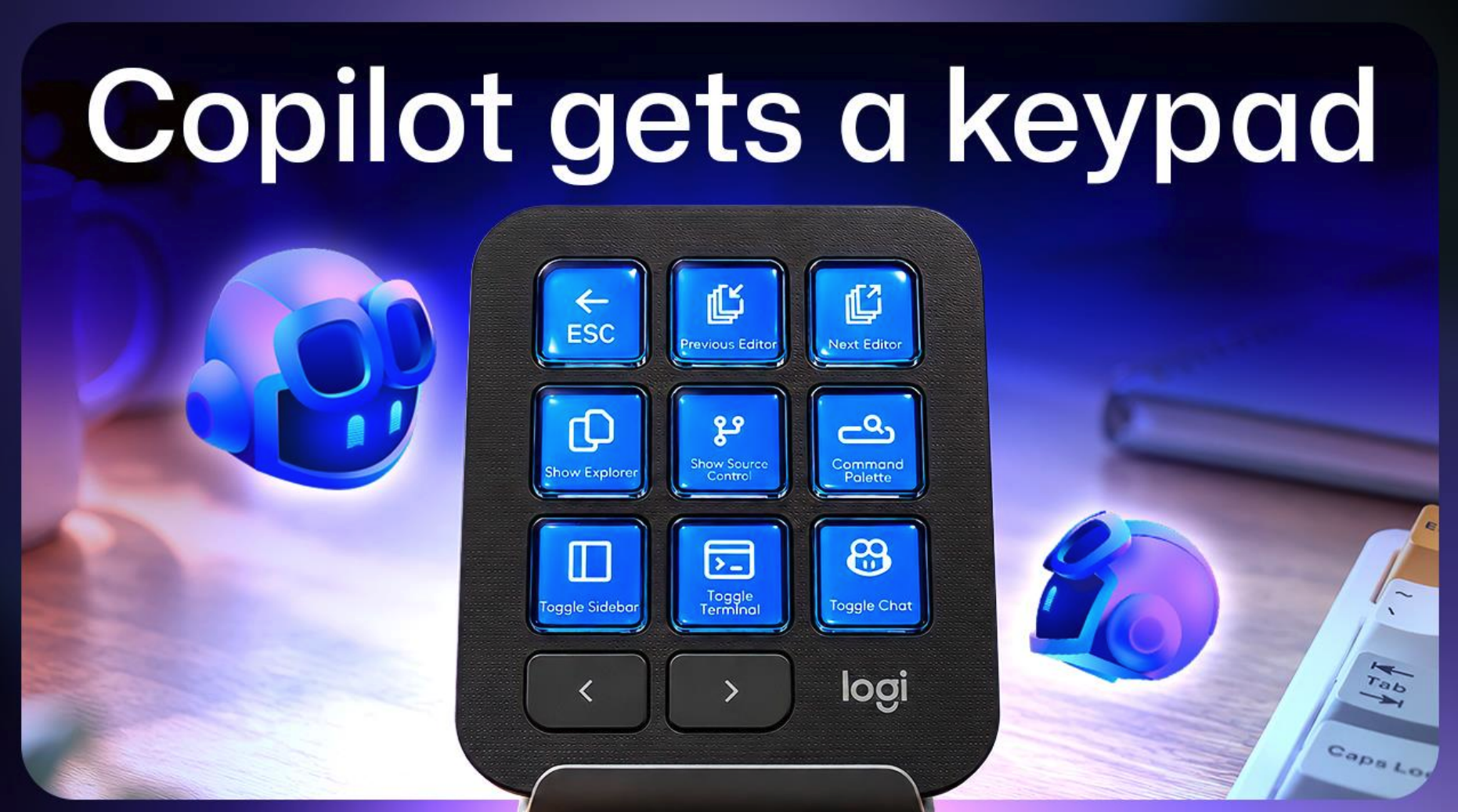
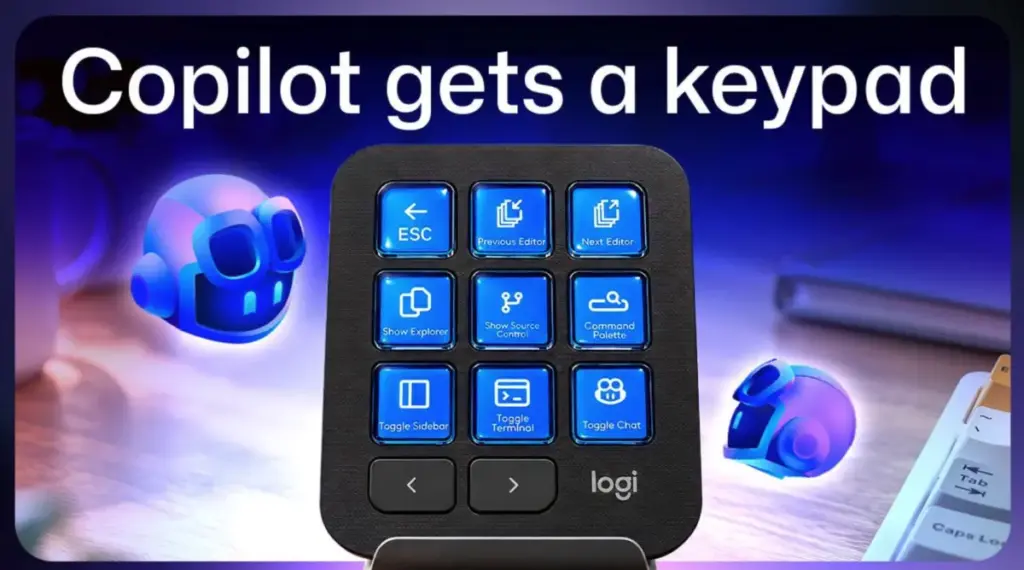
This passion for hardware-software integration has led to a collaboration between GitHub and Logitech, focusing on the MX Keypad. The objective is to determine how physical controls can translate repetitive developer actions into programmable inputs that are contextual to the work at hand.
By mapping specific actions to a physical keypad, developers can trigger multi-step sequences with a single touch. A key might be programmed to submit a complex, parameterized prompt, resume a paused GitHub Copilot session, or invoke a series of IDE commands. The value of this hardware lies in its ability to remove the friction of repetitive tasks, allowing the developer to maintain "flow state" without needing to break concentration to navigate complex menus or command palettes.
Physical controls work best when they address actions that repeat often enough that removing a few clicks or keystrokes preserves the developer’s mental momentum. It is not a universal solution—not every task deserves a physical button, and not every developer requires additional hardware—but it provides a new way to interact with the environment. In this model, the developer decides which actions earn a shortcut, choosing between the keyboard, the command palette, or voice input based on the immediate context of the problem.
The Interface Moves into the Background
This evolution is fundamentally about making the interface disappear. As software becomes more visual and connected, and as mobile devices made touch interactions natural, the integration of agents marks the next phase: ambient control. By working with Logitech to integrate the GitHub Copilot app directly into the MX Keypad experience, the industry is exploring how developers can steer agentic workflows while remaining fully in control.
The current focus is on practical, engineering-driven questions. How much repository and organizational context should an agent retain? Which tool calls should be automated, and which require explicit confirmation? How should secrets, network access, and credentials be scoped to ensure security? Perhaps most importantly, how do we coordinate multiple agents so they don’t produce conflicting results?
These questions are at the forefront of the developer experience. Products like the MX Keypad provide a sandbox for exploring how developers can invoke, steer, and resume work without losing the thread of their thought process.
For decades, the barrier to entry for software development was the ability to "speak computer." We mastered syntax, APIs, and the various incantations required to coax a machine into doing our bidding. Today, the computers are finally beginning to meet us halfway. The ultimate goal is not to remove the developer from the work, but to remove the friction that surrounds it. The best interface of the future will not be the one with the most buttons or the most sophisticated AI panels; it will be the one that understands the necessary context, preserves the developer’s ability to exercise judgment, and then gets out of the way, allowing us to build the software that truly matters.
For those looking to explore this intersection of hardware and AI, the current collaboration between Logitech and GitHub offers a practical starting point. By mapping a single, frequent interruption to a physical control, developers can test for themselves whether the move toward ambient, intent-driven development provides the focus and efficiency promised by this new era of engineering.