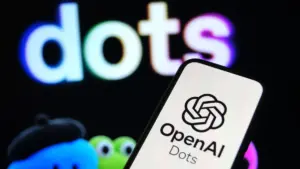







OpenAI is significantly broadening the reach of its latest innovation in artificial intelligence, "Dots," the company’s proactive, always-on personal agents. Designed to operate with a high degree of autonomy, these agents represent a shift from reactive chatbots to proactive digital assistants capable of managing complex workflows without constant human supervision. Following a successful initial rollout to higher-tier enterprise and professional plans, OpenAI has announced that it is now testing the feature with a subset of users on its $20-per-month ChatGPT Plus subscription, while simultaneously bringing the functionality to all ChatGPT Business Standard users starting today.
The expansion marks a pivotal moment in OpenAI’s strategy to integrate persistent AI agents into the daily workflows of its broader user base. By moving Dots from exclusive high-end tiers down to the more accessible Plus and Business Standard levels, the company is signaling that it views agentic behavior as a core component of the modern AI experience rather than an experimental luxury.
Thibault "Tibo" Sottiaux, the engineering lead for ChatGPT at OpenAI, confirmed the development via a post on X, emphasizing the company’s commitment to iterative improvement. "Heads up, we’re starting to test dots with a small number of ChatGPT Plus users," Sottiaux wrote. "Looking forward to the continued feedback as we expand, and I’m recently seeing a lot more positives around how good the proactivity has been after many improvements."

The "proactivity" mentioned by Sottiaux is the defining characteristic of the Dots system. Unlike traditional AI models that wait for a user to input a prompt before generating a response, Dots are designed to function in the background. They monitor progress, manage dependencies, and execute tasks across a wide array of environments. This capability is bolstered by the agent’s integration with OpenAI’s vast plugin ecosystem, which currently provides compatibility with over 4,000 distinct applications. This connectivity allows the agents to bridge the gap between disparate software tools, enabling them to perform multi-step operations that would otherwise require manual switching and data entry by the user.
Perhaps the most ambitious aspect of the Dots platform is its ability to interact directly with a user’s PC. By granting these agents access to the operating system, users can effectively delegate technical tasks to the AI. The agents can control the computer on the user’s behalf, navigating interfaces and manipulating files as if a human were at the helm. For users concerned about transparency or control, OpenAI has implemented a "computer" view, which allows individuals to check in on their agents’ progress and observe the actions being taken in real-time, ensuring that the AI remains within the intended parameters of its assignment.
The deployment to Business Standard users is particularly significant for corporate environments. As businesses increasingly look for ways to automate repetitive administrative work, having a persistent agent capable of handling tasks without requiring constant prompts can lead to substantial gains in efficiency. However, the integration of these tools into workplace environments brings questions regarding resource consumption. For higher-tier plans like ChatGPT Pro and Business Premium, OpenAI has stated that interactions with Dots do not count toward standard usage limits, provided the tasks remain within a certain complexity threshold. It remains an open question whether this same leniency will be extended to users on the Plus and Business Standard plans, or if their usage will be more strictly governed by the standard caps associated with their respective tiers.
The underlying technology driving the Dots experience has also undergone a notable evolution. While the agents were initially powered by the GPT-6 Astra model, they are now capable of operating on GPT-6.1 Terra. This transition suggests that OpenAI is refining its model architecture to better support the unique requirements of agentic tasks, which necessitate high levels of reasoning, reliability, and long-term memory. The shift to Terra potentially offers improved performance in terms of accuracy and latency, which are critical factors when an AI is tasked with controlling software or managing workflows in the background.
To complement these technical upgrades, OpenAI has introduced a suite of new features intended to make Dots feel more like an extension of the user’s mobile environment. Recent updates include the introduction of iOS widgets, which provide quick access to agent status and controls directly from the home screen, and deep integration with the iOS Shortcuts app. This allows users to trigger agent actions using voice commands or pre-configured routines. Furthermore, the expansion includes support for iMessage and RCS, alongside the ability to reply to notifications directly from an iOS device. These enhancements are clearly intended to reduce the friction of interacting with the AI, making it feel less like a separate service and more like a pervasive assistant that lives across all of a user’s devices.
While the current rollout for ChatGPT Plus users is characterized as a "test," it is common for such limited releases to serve as a precursor to a wider, more permanent implementation. OpenAI has not yet specified whether the access granted to these specific Plus users will be permanent or if the feature will be retracted before a broader launch. This uncertainty reflects the complex balancing act that AI developers currently face: providing cutting-edge, power-intensive features to a mass-market audience while managing the massive computational infrastructure required to support them.
The introduction of Dots into the lower-cost tiers of the OpenAI subscription model also places pressure on competitors in the AI space. As OpenAI pushes further into the realm of agentic, autonomous software, the market is beginning to shift its expectations for what a monthly AI subscription should include. Users are no longer satisfied with simple text-based conversational interfaces; there is a growing demand for systems that can "do" things, rather than just "talk" about them.
As the rollout progresses, the feedback loop between OpenAI’s engineering team and the user base will be vital. The success of the Dots platform will ultimately depend on its reliability and the degree to which users feel comfortable delegating tasks to an autonomous system. As Sottiaux noted, the improvements in proactivity are already yielding positive results, but the transition from a test environment to a fully matured, widely available product will require continued vigilance regarding safety, user agency, and the technical stability of the agents themselves. For now, the integration of these agents into the daily lives of thousands of new subscribers marks a significant milestone in the evolution of human-computer interaction, bringing us one step closer to a future where AI does not just assist our thinking, but shares in our labor.