









Google has officially released Gemini 4 Argon, positioning it as the company’s most advanced and capable model designed specifically to tackle complex reasoning, high-level coding, advanced mathematics, and sophisticated scientific tasks. The launch marks a significant milestone in Google’s ongoing development of artificial intelligence architectures, aiming to provide developers, researchers, and technical professionals with deeper analytical capabilities and more precise problem-solving tools than ever before.
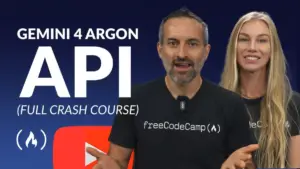
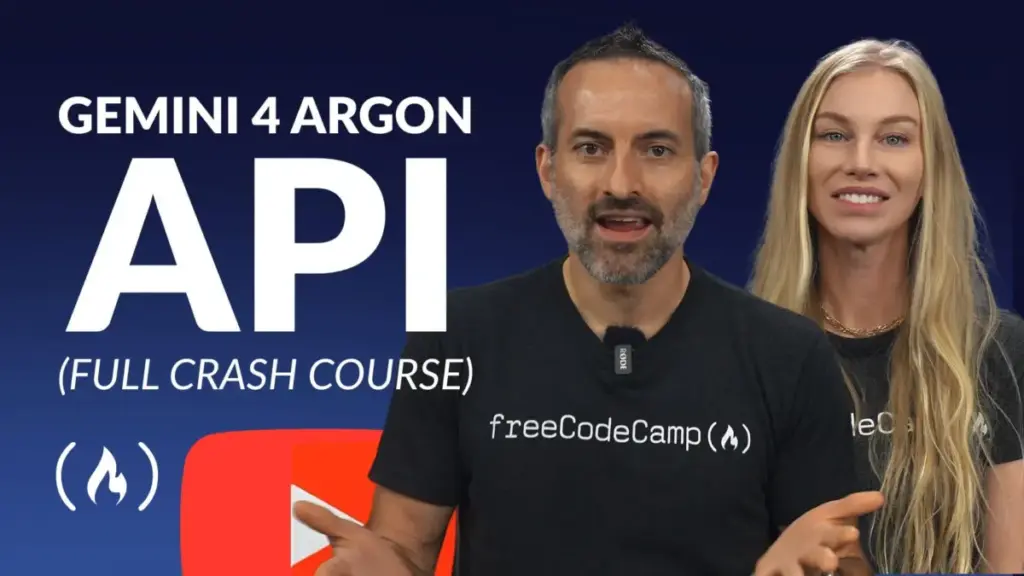
To help developers integrate this new technology into their workflows immediately, the prominent learning platform freeCodeCamp.org has released a dedicated video resource. The new Gemini 4 Argon API Crash Course is now live on the official freeCodeCamp.org YouTube channel, offering a concise and practical walkthrough for programmers looking to harness the power of the newly released model. Designed for efficiency, the ten-minute video guides viewers through the foundational steps of writing clean JavaScript code to connect with the model, steer its advanced reasoning processes, and construct real-world applications.
The introduction of Gemini 4 Argon arrives at a time when the demand for high-accuracy artificial intelligence in software engineering and technical research is rapidly accelerating. Traditional language models have often struggled with multi-step logical deductions, complex architectural planning, and precise mathematical computations. Google’s latest offering has been engineered from the ground up to address these limitations, providing a robust backbone for applications that require rigorous logical consistency and advanced domain-specific knowledge.

By focusing heavily on coding and scientific reasoning, Gemini 4 Argon aims to streamline development pipelines across various industries. Software developers can leverage the model to debug intricate codebases, design system architectures, and generate optimized algorithms with a lower margin of error. Meanwhile, researchers and engineers working in quantitative fields can utilize its advanced mathematical and scientific reasoning engines to model complex systems, analyze dense datasets, and accelerate the pace of technical discovery.
The collaboration with educational platforms like freeCodeCamp.org underscores the broader industry push to make cutting-edge artificial intelligence tools accessible to a global audience of developers. As new models emerge with increasingly sophisticated capabilities, the barrier to entry for utilizing them often involves understanding complex API structures and authentication protocols. The newly published crash course seeks to bridge this gap, allowing developers to transition from conceptual understanding of Gemini 4 Argon to active implementation within a matter of minutes.
During the short-form tutorial, viewers are introduced to the core concepts necessary for establishing a secure and efficient connection between their local environments and the Gemini 4 Argon API. The curriculum emphasizes clean, maintainable JavaScript practices, demonstrating how developers can effectively communicate with the model to guide its outputs. Rather than relying on trial and error, programmers are shown methods to steer the model’s reasoning capabilities, ensuring that the generated code and analytical responses align closely with project requirements.
The release of Gemini 4 Argon also highlights Google’s broader strategy of iterative enhancement within its Gemini ecosystem. Each successive generation of models brings refined capabilities tailored to specific enterprise and developer needs. While earlier iterations focused heavily on broad multimodal understanding, natural language processing, and general conversational utility, Argon carves out a specialized niche focused squarely on heavy-duty computation and logical execution.
Industry analysts note that as artificial intelligence becomes deeply integrated into the daily workflows of software engineers, the ability to rapidly learn and adopt specialized reasoning models is becoming an essential professional skill. Resources that distill complex API documentation into rapid, digestible tutorials play a crucial role in empowering the developer community to stay ahead of rapid technological shifts.
Developers interested in exploring the full capabilities of Google’s new system can access the complete crash course directly through the freeCodeCamp.org YouTube channel. The ten-minute video provides all the essential instructions needed to configure development environments, authenticate API requests, and execute the first successful calls to Gemini 4 Argon.
For those looking to expand their broader technical skill sets alongside their artificial intelligence capabilities, educational initiatives like freeCodeCamp continue to serve as vital resources. Operating as an open-source curriculum, the platform has historically supported tens of thousands of individuals in transitioning into professional software development careers, offering comprehensive training paths that span fundamental programming concepts to advanced modern technologies. As artificial intelligence continues to reshape the landscape of software engineering, integrating tools like Gemini 4 Argon into foundational learning frameworks ensures that the next generation of developers is well-equipped to build the applications of the future.