









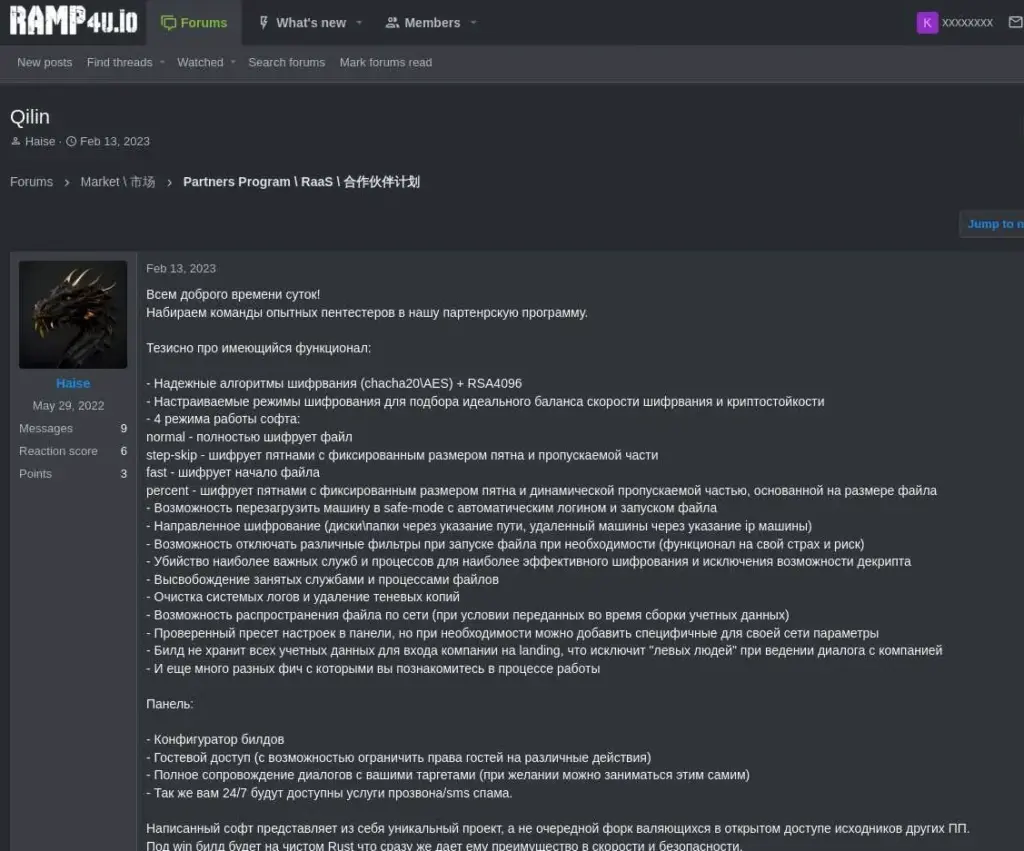
The digital underworld is often perceived as a realm of impenetrable shadows, where faceless actors operate behind sophisticated encryption and layers of anonymity. However, even the most prolific cybercriminals are human, and humans are creatures of habit. The cybercrime group Qilin, currently recognized as the world’s most active ransomware-as-a-service (RaaS) affiliate program, has learned this lesson the hard way. Despite claiming at least 365 victim organizations in the past three months alone, the group’s administrator has left behind a trail of operational security (opsec) missteps that, when pieced together, point directly to a 36-year-old man residing in St. Petersburg, Russia.
Qilin has been a dominant force in the cyber threat landscape since it began operations in September 2022. According to a recent threat intelligence report from NCC Group, the Russia-based syndicate has established itself as the most industrious gang in the RaaS ecosystem. Their business model is ruthlessly efficient: they recruit affiliates to breach corporate networks and deploy ransomware, offering these external hackers a substantial cut—at least 80 percent—of any extortion proceeds. The group employs the "double extortion" tactic, a standard but devastating practice where sensitive data is exfiltrated before systems are encrypted, with the threat of public disclosure used to squeeze additional leverage out of victims.
What distinguishes Qilin from many of its Russia-based counterparts is its willingness to collaborate with English-speaking affiliates. Its leadership has openly touted partnerships with notorious cybercrime entities, including the scattered Spider group and the RansomHub collective, on Telegram. Yet, beneath this veneer of professionalized, globalized crime, the group’s head—who operates under the handle "Haise"—has struggled to maintain the strict separation between his criminal identity and his real-life persona.
The de-anonymization of a threat actor is rarely the result of a single "smoking gun." Instead, it is the product of years of digital breadcrumbs, platform breaches, and the inherent difficulty of reinventing one’s identity in the tight-knit circles of the underground. Haise, while currently a feared name in the cybersecurity community, did not always operate under that moniker. Like many in his line of work, he recognized that changing handles periodically is a necessary defensive measure, a way to insulate one’s current activities from the mistakes made in earlier, less careful years.
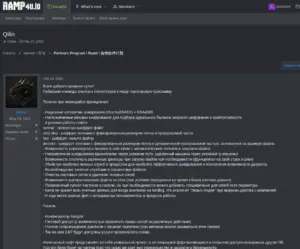
However, the nature of cybercrime forums often necessitates proving one’s "street cred." When applying for membership at exclusive, high-tier forums, applicants are often required to reference their past monikers to establish a track record of reliability. This was the undoing of the man behind Qilin. In June 2022, when he sought entry into RAMP—a heavily guarded Russian forum that functioned as a sanctuary for ransomware operators—he was vetted by the forum’s administration. Intelligence gathered by the cybersecurity firm Intel 471, which meticulously indexed direct messages from RAMP prior to its seizure by the FBI in January 2026, confirms that the forum administrator approved the application for "Haise," explicitly linking the handle to a Telegram username: "Alexbigboss44."

The trail only grows clearer from there. A search for the Telegram handle "Alexbigboss44" reveals that it was used by a user known as "Rjun" on the Russian cybercrime forums Exploit and XSS as far back as 2020. According to the cyber intelligence firm Flashpoint, Rjun was a prolific figure, deeply involved in the illicit trade of traffic, logs, and corporate access. This user was not a newcomer to the scene; they were an active broker and operator who managed networks of traffickers and purchased compromised data to fuel fraudulent advertising and gambling schemes.
The connection between the Qilin administrator, the identity of Haise, and the older handles of Rjun and Alexbigboss44 was recently synthesized by IntelHawk, an AI-based platform specialized in de-anonymizing threat actors. By leveraging historical usernames, stylometry—the statistical analysis of writing patterns—and other digital signals, IntelHawk’s founder and CTO, Leo Bogod, traced a clear progression. The analysis shows a trajectory from a novice arbitrageur and credit card fraudster in the 2018–2019 period to a sophisticated organizer of complex cybercriminal infrastructure by 2023, with an increasing focus on malware, botnets, and payment systems.
The web of evidence tightens when examining the registration habits of the user Rjun. Before the rise of the Qilin brand, Rjun was a consistent participant in various Russian crime forums, including Darkmarket, Verified, and Zloy. Records obtained by Intel 471 indicate that Rjun registered at these sites using a specific email address: [email protected]. Through the efforts of identity threat protection firm Spycloud, researchers discovered that this specific email address had been used with the password "Rjun132."
Crucially, when this email was queried within the breach tracking service Constella Intelligence, it appeared in records associated with gosuslugi.ru, the official digital platform for state and municipal services in the Russian Federation. In late 2025, a significant breach of the Gosuslugi platform exposed over 20 million records, including full names, dates of birth, and mobile phone numbers. The data tied to [email protected] pointed to 36-year-old Aleksey Mikhailovich Yakovtsev, a resident of St. Petersburg.
Further forensic analysis by Flashpoint confirmed that Haise has long utilized a specific Telegram account, identified by ID 118329521, which has generated over 5,000 messages since 2018. Records from Russia’s education watchdog, Rosobrnadzor, corroborate this identity, noting that Yakovtsev attended grade school in Murmansk and possesses a master’s degree in computing and information systems, providing him with the technical foundation necessary for his criminal career.

The digital footprints extend into the physical world as well. The Telegram ID 118329521 is linked to a Russian phone number, +79602347275. According to analysis from IntelHawk, this number belongs to Yakovtsev’s biological sister, and it appears that the suspect frequently utilized his sister’s email accounts to register for various websites, likely in an attempt to distance himself from the paper trail. This same phone number has surfaced in multiple airline flight records acquired from Russian travel agencies that suffered data breaches. These records confirm that Aleksey Yakovtsev, born on August 18, 1990, traveled between St. Petersburg and Murmansk multiple times between 2013 and 2014.
More contemporary travel data indicates that while Mr. Yakovtsev does not appear to have traveled outside of Russia in recent years, he is a frequent flyer between St. Petersburg and Sochi. The coastal city, often dubbed the "Russian Riviera," is a popular destination, located approximately 1,200 miles south of St. Petersburg.
The convergence of these data points—ranging from forum metadata and breach-exposed credentials to government records and flight logs—paints a comprehensive portrait of the man behind one of the world’s most aggressive ransomware operations. Despite the layers of obfuscation and the common practice of cycling through handles, the underlying digital identity remained consistent enough to be identified by those tracking the evolution of the Russian cybercrime ecosystem.
The findings regarding Yakovtsev have been corroborated by other independent researchers, including the anonymous Twitter/X account "GangExposed," which has a track record of successful de-anonymization in the ransomware space. These researchers have credited the use of advanced intelligence platforms in connecting the disparate threads of the suspect’s history. As of the time of this report, attempts to contact Mr. Yakovtsev through the phone numbers and email addresses associated with his online activity have yielded no response. The exposure of his identity serves as a stark reminder that even in an age of anonymous, borderless cybercrime, the permanence of digital data and the necessity of real-world infrastructure make absolute anonymity an elusive, if not impossible, goal for those operating at the top of the criminal food chain.