








For years, the relationship between IT administrators and the modern developer has been defined by a fundamental visibility gap. Ask a seasoned Mac admin for an inventory of their fleet, and they will confidently produce a comprehensive list of deployed applications, managed profiles, and enterprise-grade software. However, shift the conversation toward the reality of the developer’s workstation—what was installed via Homebrew on a Tuesday morning, which specific Visual Studio Code extensions are currently active, or which complex dependencies were pulled into a project via npm—and the certainty vanishes. This software, while essential to the business, often exists entirely outside the purview of traditional procurement, security approval, and inventory management.
In the current AI-driven era, this "shadow IT" has evolved from a niche developer concern into a broader enterprise risk. As AI tools lower the barrier to entry for coding, employees across marketing, data analysis, and operations are increasingly acting as "builders," installing their own packages and running scripts that IT departments are not equipped to track. Workbrew 2.0, the latest iteration of the platform, has arrived to bridge this critical gap, providing IT teams with the visibility and control necessary to manage these modern, fragmented workflows without stifling productivity.

The Blind Spot of Traditional Device Management
Device management platforms are, by their very nature, designed to handle the software that IT explicitly deploys. They excel at managing applications sourced from Apple Business Manager, pre-packaged installers, and configuration profiles pushed directly to endpoints. This model has served the enterprise well for decades, ensuring that standard productivity suites and security agents remain uniform across a workforce.

However, this traditional framework is increasingly mismatched with the reality of the modern Mac-based workplace. Developers, in particular, rely on high-velocity installation methods. With a single command in Terminal, a developer can pull thousands of packages from repositories like Homebrew, which currently hosts over 16,000 distinct packages. When this is compounded by the sheer scale of the npm ecosystem and the explosion of specialized IDE extensions, the reality is that the most critical software on a machine is often the software that IT never officially put there.
The problem is no longer confined to the engineering department. The advent of "vibe-coding" and accessible AI assistants has democratized software creation. Marketing professionals are now deploying AI-driven scripts, analysts are running custom local data models, and operations teams are managing automated workflows through various command-line tools. As these non-technical users begin to behave more like developers, the sprawl of unmanaged code and packages has expanded, creating a massive, invisible attack surface that standard mobile device management (MDM) systems simply cannot see, let alone secure.
Workbrew 2.0: A Unified Management Layer
Workbrew began its journey as a specialized management layer for Homebrew, acting as an agent that could report on installed packages, flag known vulnerabilities, and allow IT departments to push updates across a fleet with relative ease. With the release of Workbrew 2.0, the company is significantly expanding its scope. The platform now incorporates a broader catalog that includes npm packages, Visual Studio Code extensions, and standard macOS applications, consolidating them into a single, cohesive inventory.

The impact of this visibility is significant. Since its inception, Workbrew reports that it has successfully patched more than 10 million vulnerabilities for its customers—a testament to the scale of the security debt that often hides in unmanaged developer environments. Furthermore, in a move to signal its readiness for enterprise-grade deployments, the company has achieved ISO 27001 certification, providing a necessary layer of trust for organizations navigating strict compliance requirements.
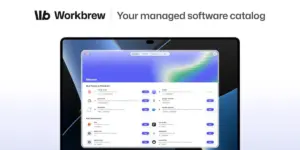
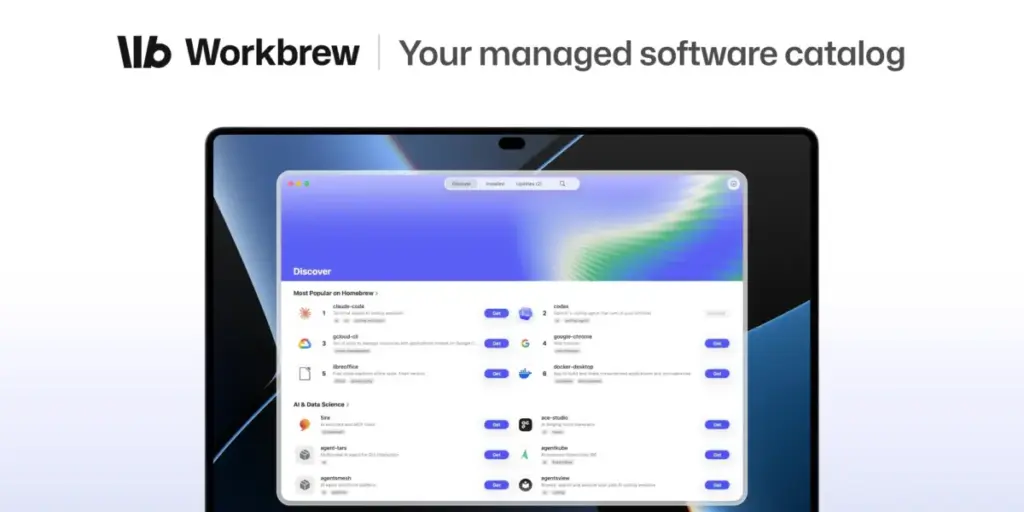
Perhaps the most transformative addition for non-developer staff is the new native Workbrew app. Designed to function as an "app store" for the entire company, it provides a user-friendly interface where employees can search for, install, and update approved software without ever needing to touch the Terminal. This self-service model empowers employees to get the tools they need while keeping the IT department in the loop. If an employee requires a tool that isn’t on the approved list, they can submit a request directly through the app. IT administrators then manage these requests through the Workbrew Console, where they can either approve or deny the request—and, importantly, provide the employee with context regarding the decision.

This functionality is bolstered by Workbrew’s recent acquisition of the Updatest team. Updatest, a well-regarded indie Mac utility, built its reputation on keeping software current for thousands of individual users. By integrating that expertise, Workbrew has refined the user experience for business customers. The new app is included across all plans, including a free Team plan that imposes no limits on the number of users or devices, ensuring that even smaller organizations or pilot programs can begin to secure their environments immediately.
Chris Merrell, Director of IT, End User Services at Camping World, highlights the practical utility of this approach: "With Workbrew, we finally have real visibility into what developers are using in Homebrew. Fleet-wide updates are effortless, and the team stays secure without being slowed down."

Coexistence with Existing MDM Infrastructure
A common misconception in the IT space is that new tools must replace existing infrastructure. Workbrew is intentionally positioned as a complementary layer rather than a replacement for established device management systems. It does not attempt to manage core OS configurations or security profiles; instead, it relies on the primary MDM solution to deploy the Workbrew agent.
Once the agent is active, Workbrew takes over the management of the "blind spots"—the developer-centric tools and package-based software that the MDM system lacks the context to handle. For organizations whose fleets consist entirely of administrative staff using only sanctioned, store-bought applications, Workbrew may be redundant. But for any company that employs developers or has seen the rise of AI-assisted scripting among its creative and analytical teams, the visibility gap is a reality that must be addressed.

In the modern IT environment, ignoring these hidden software stacks is no longer a viable security posture. Workbrew 2.0 acknowledges that apps are being installed in fundamentally different ways today than they were even five years ago. By providing IT with a comprehensive list of development tools and giving employees a sanctioned, streamlined way to access what they need, Workbrew 2.0 offers a path toward reconciling the demand for developer freedom with the mandate for enterprise security.
As the landscape of work continues to shift toward more automated and AI-integrated workflows, the ability to maintain a clear, manageable view of every piece of software on a machine will become an essential competency for IT departments. With the launch of Workbrew 2.0 and its accessible, free-tier entry point, the barrier to achieving that visibility has been lowered, allowing organizations of all sizes to bring their shadow IT out into the light.