










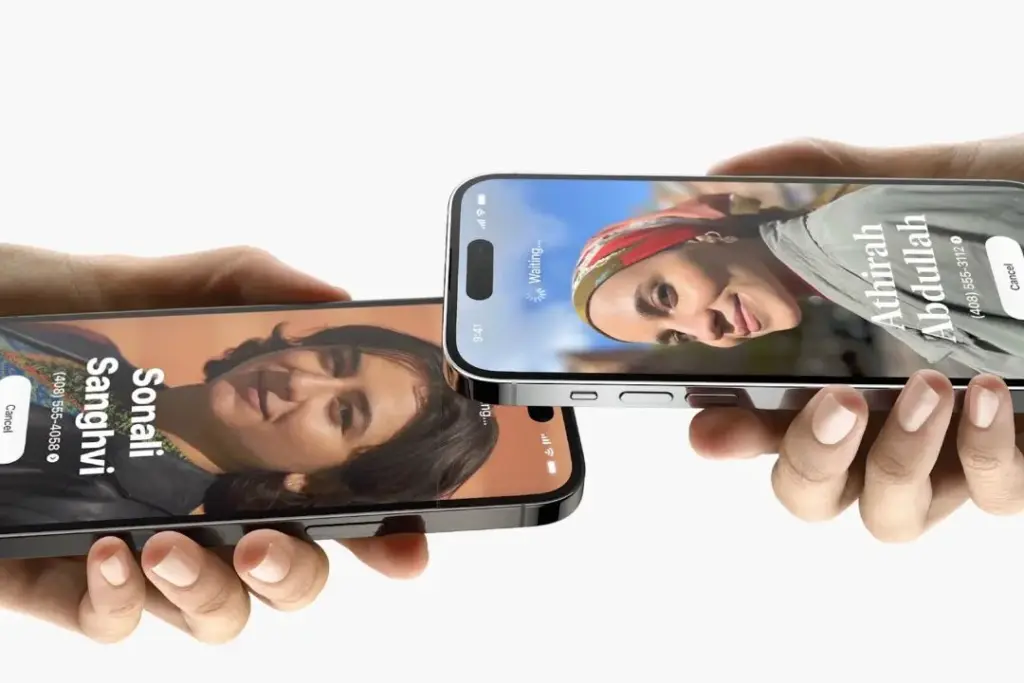
Apple, the global technology giant, is facing a significant legal challenge in India as a U.S.-based startup, GG Technologies, has filed a lawsuit alleging that the iPhone maker’s "NameDrop" feature infringes upon its proprietary technology. The feature, which allows users to seamlessly exchange contact information by simply bringing two compatible devices into close proximity, sits at the heart of a dispute that spans multiple continents.
GG Technologies, the startup behind the contact-sharing application StayTouch, is seeking ₹15 billion (approximately $161.86 million) in damages. Furthermore, the company is requesting an injunction from the Bombay High Court to halt the use of the NameDrop feature on Apple devices sold or imported within India. This litigation represents a major escalation in the startup’s broader efforts to protect its intellectual property, as it has simultaneously pursued similar legal actions against Apple in the United States.
A Dispute Over Proximity-Based Sharing
The core of the legal disagreement lies in the functional similarities between Apple’s NameDrop and the technology developed for StayTouch. StayTouch was launched in 2019 as a modern alternative to traditional business card exchanges, allowing users to share digital contact details by bringing their phones near one another. GG Technologies argues that Apple’s implementation of NameDrop, which was introduced as part of the iOS 17 update in June 2023, mirrors its own patented methods for facilitating these contactless exchanges without the need for manual pairing.

The startup’s documentation, which includes a substantial 781-page filing in the Bombay High Court, details the timeline of its intellectual property development. GG Technologies claims it first sought patent protection for its technology in the U.S. in 2019, the same year it introduced the StayTouch app. The company subsequently filed for an Indian patent in 2021, which was officially granted in July 2024.
Apple introduced NameDrop to the public in mid-2023, showcasing it as a convenient, user-friendly way for iPhone users to share contact cards. The feature quickly expanded across the Apple ecosystem, with support arriving on compatible Apple Watches through the watchOS 10.1 update in October of that same year. For GG Technologies, the rapid adoption of this feature by Apple—a company with an massive global user base—represents an existential threat to its own market position.
Legal Maneuvering in India and the U.S.
The filing in the Bombay High Court follows a failed attempt at resolution. In April, the parties entered into mandatory pre-institution mediation, a standard requirement for commercial lawsuits in India. When these negotiations concluded in September without a settlement, GG Technologies moved forward with the formal lawsuit in October.
The startup’s demands are comprehensive. Beyond seeking financial compensation for the alleged infringement, the company is urging the Indian judiciary to impose an injunction that would restrict the distribution of iPhones and Apple Watches preloaded with NameDrop. Should the court grant this request, it could potentially force a significant change in how Apple handles software distribution in one of its most critical emerging markets. At the time of this report, the case had not yet been scheduled for a hearing.
This legal pressure is not confined to India. In August, the U.S. International Trade Commission (ITC) officially opened an investigation into Apple following a complaint from GG Technologies regarding the same patent infringement claims. In the U.S. proceeding, the startup is similarly seeking an order that could block the import of infringing Apple devices, as well as broader restrictions on the sale of those products. The dual-front approach suggests a high-stakes strategy by the startup to leverage both international regulatory bodies and national courts to challenge Apple’s dominance in mobile software features.
The Origins of StayTouch
GG Technologies was founded in 2018 by Gaurav Goel, a graduate of the Indian Institute of Technology (IIT) Delhi and a former investment banker at Goldman Sachs. The company’s primary product, StayTouch, was built on the premise of simplifying professional and personal networking by replacing physical business cards with a digital, proximity-based solution. The application is currently available for users on both the iOS and Android platforms.
The startup’s legal counsel has maintained that the technology at the center of the dispute is foundational to its business model. By alleging that Apple’s native implementation of NameDrop infringes on its Indian patent, GG Technologies is essentially claiming that the utility and marketability of its own application have been undermined by the inclusion of a similar, free, and system-integrated feature on Apple’s hardware.
Apple’s Strategic Interests in India
The timing of this lawsuit is particularly sensitive given Apple’s ongoing efforts to deepen its roots in India. For the Cupertino-based company, India is no longer just a potential market; it has become a central pillar of its global strategy. Apple has significantly expanded its manufacturing footprint in the region, with reports indicating that the country now produces one in every four iPhones globally.
Beyond manufacturing, Apple has invested heavily in its retail presence, opening flagship stores and integrating its digital services deeper into the Indian consumer experience. Despite this progress, iPhones still represent less than 10% of total smartphone shipments in India, leaving significant room for growth. The company views India as a vital long-term opportunity to capture a larger share of the premium smartphone segment.
The legal challenge from GG Technologies introduces an element of uncertainty into this expansion. While patent disputes are common in the technology industry, the potential for an injunction against a specific feature—especially one that is marketed as a core convenience of the iOS experience—could complicate Apple’s operations.
Apple has thus far remained silent regarding the lawsuit and did not respond to requests for comment on the specific allegations or the ongoing proceedings in the Bombay High Court. As the case moves toward a potential hearing, industry observers will be watching closely to see how the Indian judiciary addresses the intersection of international patent law and the practices of one of the world’s most influential tech companies.
The outcome of this case could set a precedent for how software features integrated into consumer hardware are scrutinized under Indian patent law. For now, the legal battle continues, with GG Technologies holding firm on its claims and Apple continuing to operate its business as the courts evaluate the merit of the startup’s extensive filing. Whether the situation results in a court-mandated change to the NameDrop feature or leads back to the negotiating table remains to be seen.