






Flipkart, the Walmart-backed e-commerce titan that has long dominated the Indian online retail landscape, is preparing for its most significant tactical pivot in years. The Bengaluru-based company is quietly testing a new food-delivery service, marking a bold attempt to disrupt a market that has historically proven to be a graveyard for even the most well-funded tech giants. By entering this fiercely competitive sector, Flipkart is taking direct aim at the entrenched duopoly of Zomato and Swiggy, two platforms that have effectively controlled the nation’s appetite for online food ordering for the better part of a decade.
According to individuals familiar with the matter, the internal testing phase of the service has expanded significantly. What began as a pilot for a few hundred employees has scaled to involve more than 8,000 staff members. To support this, Flipkart has mobilized a dedicated fleet of delivery personnel under its logistics arm, Ekart. Crucially, these riders operate independently from the fleet currently handling the company’s "Minutes" quick-commerce deliveries, signaling that Flipkart is treating this as a distinct, specialized vertical rather than an afterthought.
For employees involved in the trial, the service is now visible as a dedicated tab within the main Flipkart shopping application, sitting alongside its existing quick-commerce and travel booking features. The platform is leveraging a hybrid model for its restaurant inventory: it is drawing from the government-backed Open Network for Digital Commerce (ONDC)—a decentralized infrastructure designed to connect buyers and sellers across various platforms—while simultaneously onboarding restaurants through direct partnerships. On the streets of Bengaluru, the company’s headquarters, the initiative is already becoming visible, with riders sporting "Eat-in by Minutes" branding observed fulfilling test orders.

A Market Defined by Concentration and Growth
The entry of a player with the scale and capital of Flipkart could not come at a more pivotal time for the Indian food-services industry. According to data from the brokerage firm Bernstein, the market is currently experiencing robust annual growth of 18% to 20%. Despite this rapid expansion, online delivery remains a relatively untapped frontier, accounting for just over 15% of the total food-services industry in India.
The dominance of the current incumbents is staggering. Bernstein estimates that Zomato, backed by Eternal, and Swiggy collectively serve between 85 million and 95 million paying customers annually. This massive user base underscores both the height of the barrier to entry and the sheer potential for growth in the world’s most populous nation, where internet subscriptions now exceed the one-billion mark.
Flipkart is not alone in its desire to dismantle this status quo. The market is witnessing a broader pushback against the pricing models enforced by the duopoly. The ride-hailing company Rapido, which has already disrupted the urban mobility sector by challenging Uber and Ola, has begun testing its own food-delivery service, "Ownly." Notably, Rapido has positioned its entry with a zero-commission model for restaurants, a direct jab at the high fees charged by Zomato and Swiggy. Meanwhile, Swiggy has launched "Toing," a separate application tailored to budget-conscious consumers, reflecting an urgent need to address the sensitivity of Indian diners to rising delivery and service costs.
These maneuvers highlight the growing friction between the platforms and the restaurant industry. Sagar Daryani, president of the New Delhi-headquartered National Restaurant Association of India (NRAI), which represents over 500,000 restaurants, did not mince words regarding the current landscape. "Monopoly is bad, but duopoly is more pathetic," Daryani stated. "What one does, the other follows suit." For years, restaurant operators have been vocal about their dependence on the two dominant platforms and their need for a viable, competitive alternative.
The Lessons of History: Why Predecessors Failed
Flipkart is walking a path that has seen many giants stumble. In 2020, Amazon launched its own food-delivery service in Bengaluru, only to shutter the operations two years later after failing to achieve the necessary scale and market penetration. Similarly, Google’s "Areo" app, which bundled food ordering with home services, struggled to gain traction and eventually faded into obscurity. Even global ride-hailing giant Uber ultimately conceded defeat in the Indian food-delivery market, selling its "Uber Eats" business to Zomato in 2020 for $206 million.
However, industry experts and stakeholders believe Flipkart may possess a different set of strategic advantages. Daryani notes a fundamental structural difference: whereas Zomato and Swiggy built their platforms primarily as food-delivery companies before diversifying into quick commerce, Flipkart is approaching the market in reverse. It is utilizing its massive, pre-existing e-commerce ecosystem and its rapidly growing quick-commerce arm as a foundational springboard.
"Flipkart’s quick commerce benefit will get passed on to food delivery, so it will be leaner, more efficient," Daryani explained. The integration of food delivery into an established, multi-category app could allow Flipkart to drive user engagement more naturally, lowering the cost of customer acquisition—a major hurdle that previous entrants like Amazon and Google could not overcome.
The Economics of the Commission Model
For restaurant owners, the primary motivation for supporting a new entrant is the hope for lower costs. Daryani, who is also the co-founder and CEO of the popular dumpling chain Wow! Momo Foods, pointed out that Flipkart has proposed a base commission structure of approximately 10%. This stands in stark contrast to the 20% to 25% that restaurants typically pay to the current incumbents.
However, the headline commission is only part of the equation. Once advertising spend, mandatory discounts, and promotional costs are aggregated, restaurants often find themselves paying out 40% to 50% of an order’s value to the platforms. Daryani suggests that if Flipkart can successfully maintain a total cost structure closer to 15% or 16%, it would represent a transformative change, allowing restaurants to retain a significantly higher portion of their revenue per order.
Yet, securing restaurant partnerships is only half the battle; winning over the Indian consumer is an entirely different challenge. Analysts at Bernstein suggest that even with improved operational efficiency, new entrants might only be able to reduce costs for the end consumer by a margin of 20 to 30 rupees (approximately 20–30 cents) per order. Whether that modest saving is sufficient to incentivize millions of loyal users to switch from the familiar interfaces of Zomato and Swiggy remains to be seen. Furthermore, the incumbents are unlikely to remain passive; they possess the financial capacity to engage in aggressive discount wars to protect their market share.
Looking Toward the Future
Flipkart’s ambitions extend far beyond the initial testing grounds in Bengaluru. The company has reportedly informed restaurant partners of its intent to launch the service publicly by the end of October. The roadmap involves an aggressive expansion strategy, with plans to enter five or six major cities by the end of this year.
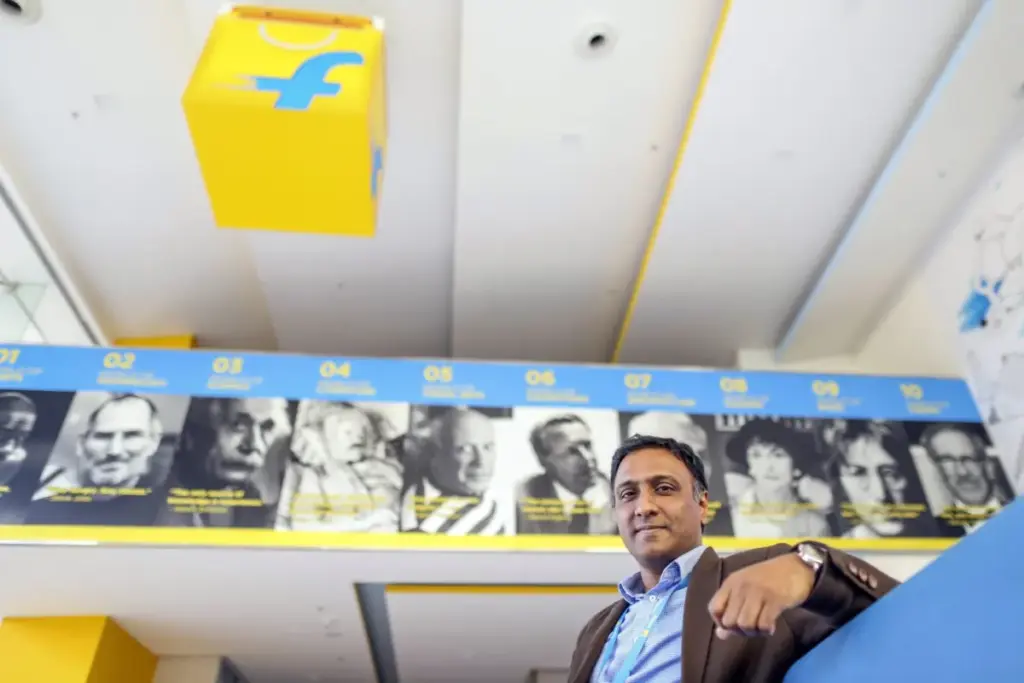
This push into food delivery also occurs against the backdrop of uncertainty regarding Flipkart’s long-term financial roadmap. Chief Executive Kalyan Krishnamurthy has recently refrained from providing a timeline for an initial public offering (IPO), even as the firm doubles down on high-frequency, low-margin categories designed to keep users within its digital ecosystem.
As the lines between e-commerce and quick commerce continue to blur—with platforms now delivering everything from groceries to the latest iPhones in minutes—the competition for the Indian consumer’s wallet has never been more intense. By entering the food-delivery fray, Flipkart is betting that it can leverage its existing infrastructure to achieve what so many others could not. Whether this move will finally break the duopoly or become another cautionary tale in the annals of Indian tech remains to be seen. Flipkart, for its part, has not yet issued a formal comment on the specifics of its rollout.