





The Fedora Design Team has proved that open source tools can power a virtual conference effectively, having successfully hosted the inaugural Creative Freedom Summit in January 2023. The event brought together open source advocates, designers, and creators from around the world to discuss digital creativity and collaborative workflows.
For years, many open source organizations have relied on proprietary platforms to manage large-scale virtual events. However, the Fedora Design Team’s recent experiment offers a compelling look at how an entirely open source technology stack can handle live streaming, participant communication, and post-event management without compromising community principles. Organizers shared their experiences, outlining the tools used, the challenges encountered, and the lessons learned as they prepare for the next summit.
What is the Creative Freedom Summit?
The genesis of the Creative Freedom Summit dates back to the fall of 2022, following a review of talk submissions for Flock, the annual conference for Fedora users and contributors held in August of that year. Marie Nordin, a key organizer, received a massive influx of proposals focused on design and creativity within the open source ecosystem—far more than the conference schedule could accommodate. Recognizing the immense demand for content centered on open source creative tools, she began to wonder if there was an appetite for a separate, dedicated event.

Nordin brought the concept to the Fedora Design Team, which quickly mobilized to plan the inaugural summit for January 17–19, 2023. Given the short runway and the experimental nature of the event, organizers curated the speaker lineup by inviting individuals who had submitted proposals to Flock, alongside connections from their personal networks within the open source community. The response was overwhelmingly positive, with nearly every invited speaker accepting. Because the initial roster was curated directly from existing submissions and community networks, organizers did not deploy a traditional Call for Papers management tool, a process they plan to refine for future iterations.
Balancing Proprietary Platforms with Open Source Values
Since the onset of the COVID-19 pandemic, the Fedora project’s flagship Flock conference has utilized Hopin, a proprietary online event platform. While Hopin is compatible with open source workflows and delivers a polished attendee experience—complete with virtual exhibition booths, multi-track schedules, networking lounges, and robust moderation tools—it remains closed-source software. Because the Creative Freedom Summit was organized under the Fedora umbrella, the team technically had access to the existing Hopin infrastructure.
For long-term open source contributors, however, the decision of whether to use proprietary software for an event celebrating open source philosophy is rarely straightforward. Relying on closed platforms to host communities dedicated to software freedom can create philosophical friction. Yet, as community events scale in complexity, building and maintaining an integrated, reliable open source conference infrastructure presents significant technical hurdles.

Event organizers must weigh multiple factors, including budgetary constraints, volunteer availability, existing infrastructure, technical expertise, and the organization’s tolerance for minor technical glitches. For the Creative Freedom Summit, the team operated with zero budget, relying entirely on volunteer hours. They leveraged existing institutional resources, including the Fedora Matrix server and a hosted WordPress instance. Team members also brought practical experience running weekly video calls using PeerTube, instilling confidence that a decentralized, open source stack could support a single-track, informal conference format.
Building an Open Source Conference Stack
The technical architecture of the Creative Freedom Summit relied on a combination of decentralized and community-supported platforms. The live components of the event centered on PeerTube for public video broadcasting, Jitsi Meet for the virtual stage where speakers presented, and Matrix via Element for backstage coordination and public audience interaction. For post-event management, organizers utilized open source tools including Kdenlive for video editing, LimeSurvey for feedback collection, and GitLab to coordinate volunteer editing workflows.
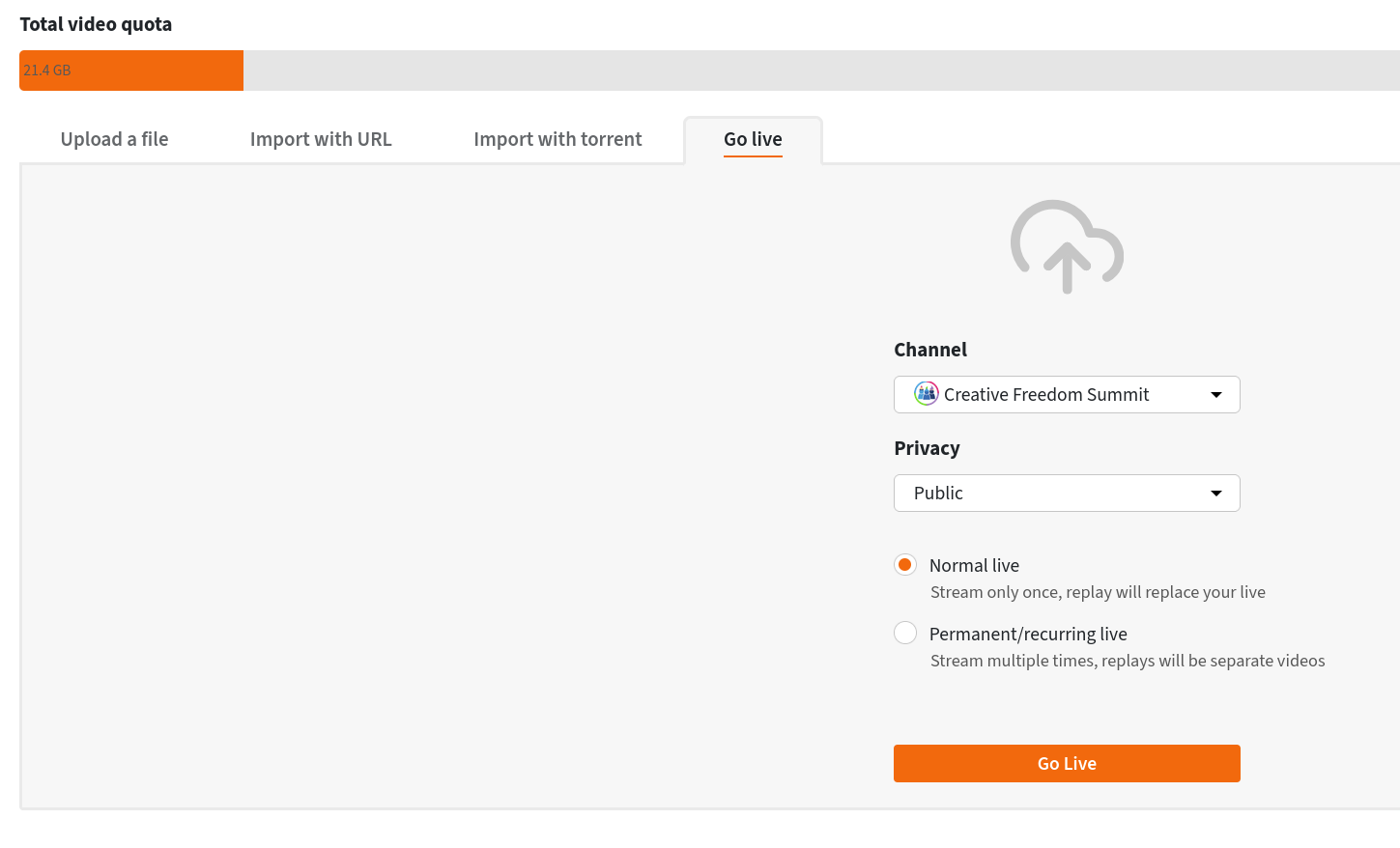
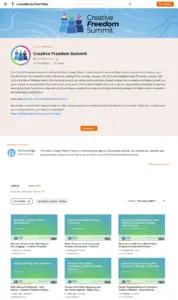
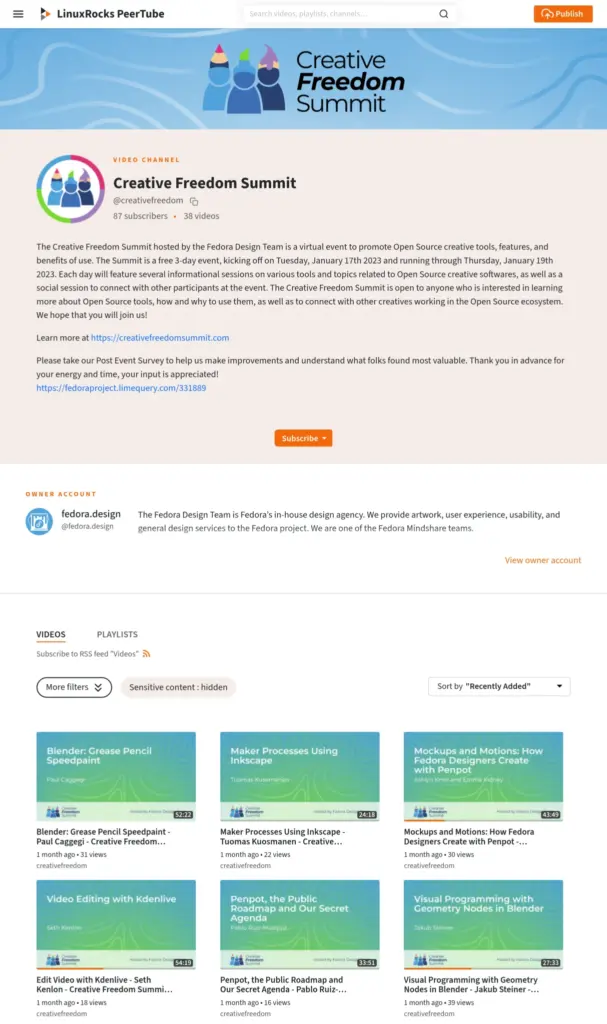
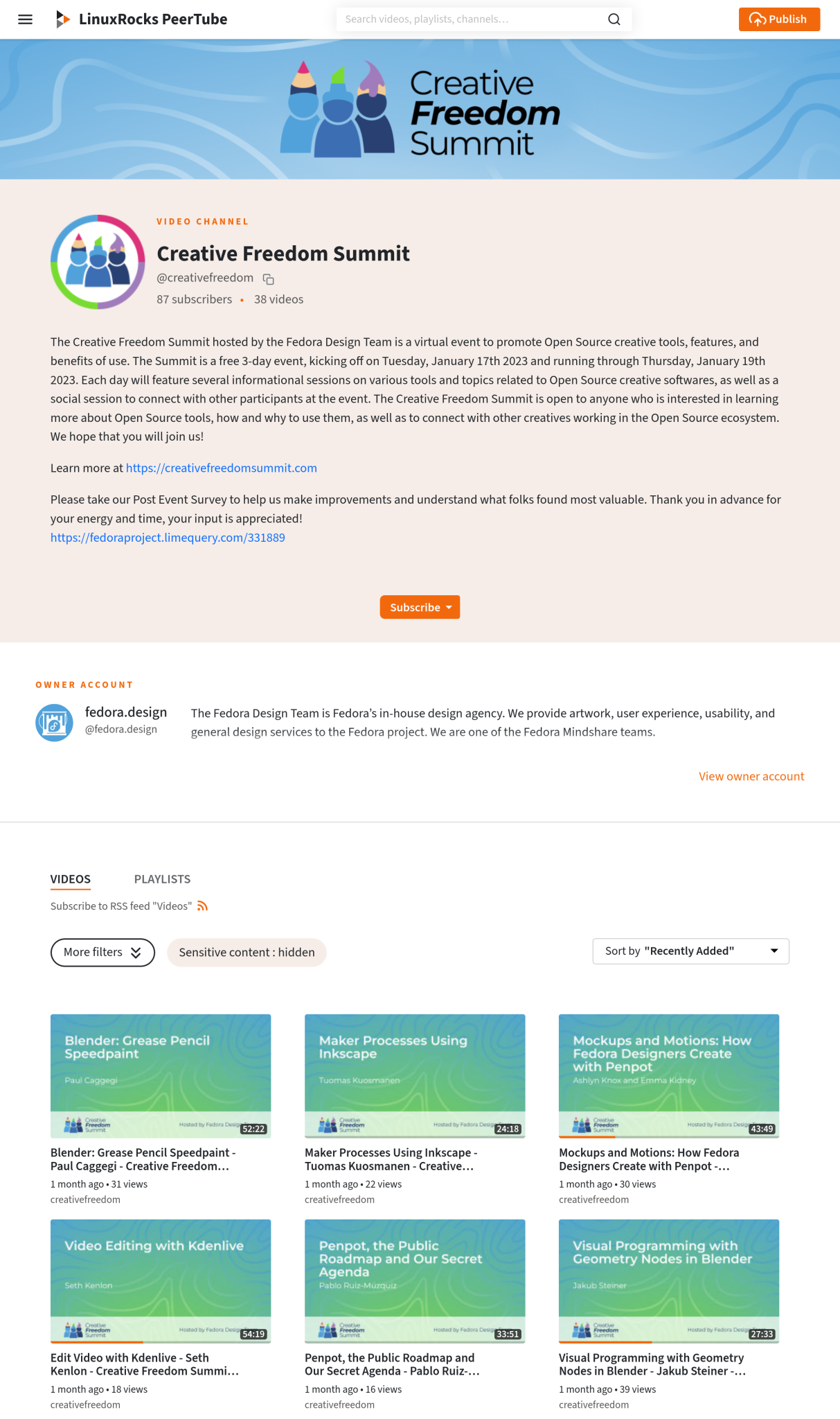
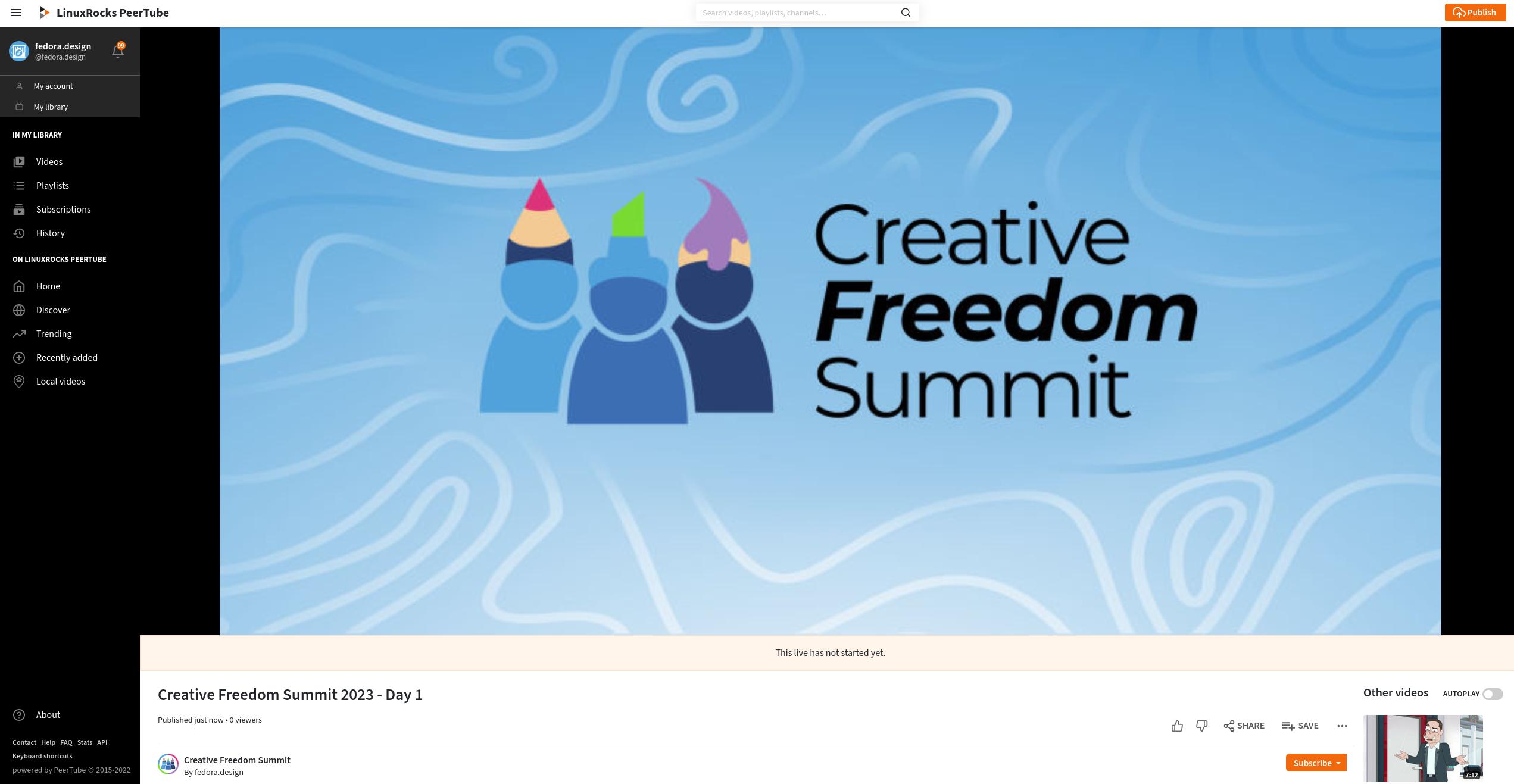
The livestreaming infrastructure utilized a PeerTube instance generously hosted by the LinuxRocks.online community. PeerTube is a free, open source, decentralized video hosting platform built on ActivityPub, making it part of the broader Fediverse.
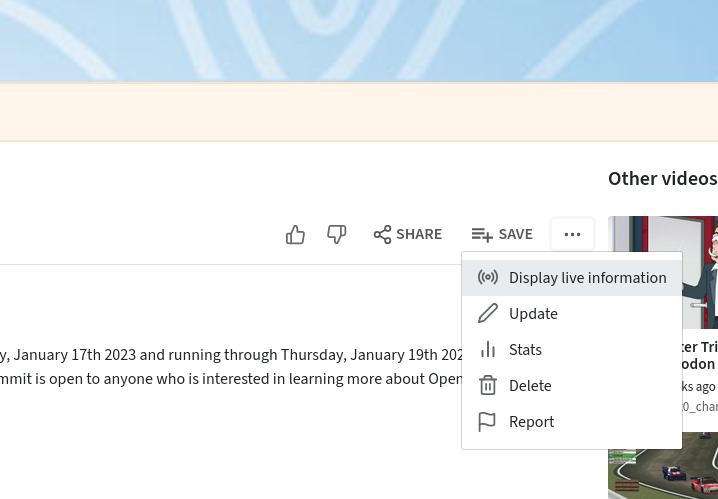
One of the platform’s standout features is its automated recording capability. Once a livestream concludes, PeerTube automatically generates a replay recording and publishes it instantly to the designated channel without manual intervention from organizers. This seamless automation was praised by attendees in the chat room, as it allowed participants who missed a session to watch the replay within minutes of a talk concluding.
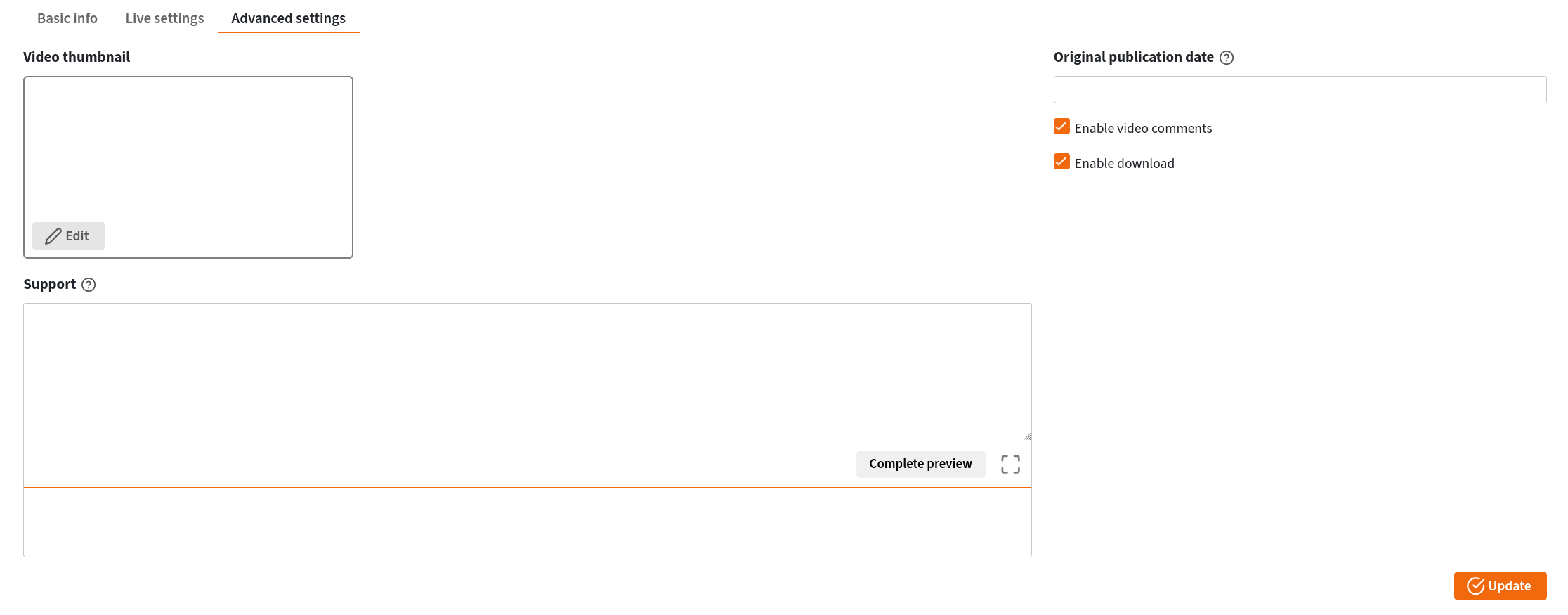
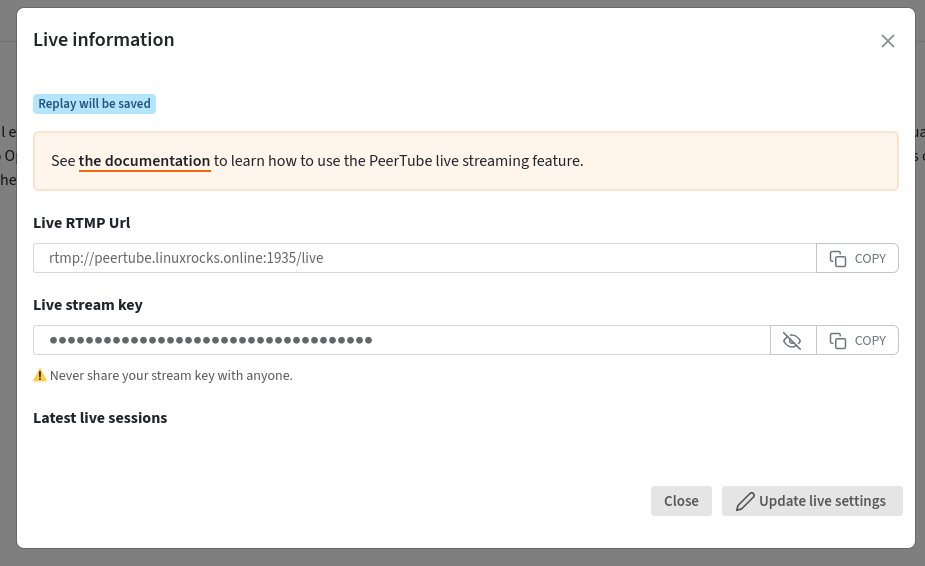
To prevent the administrative burden of generating unique streaming keys for every presentation, organizers configured a reusable livestream URL and authorization key. Conference hosts shared these credentials in a secure internal document, allowing different team members managing various time slots to initiate streams quickly.
Managing the Virtual Stage and Backstage Communication
For the virtual stage where speakers delivered their presentations, organizers used Jitsi Meet, a free and open source video conferencing platform. Meeting links were restricted to speakers and hosts, and a virtual waiting room was configured to ensure presenters could join discreetly without interrupting the preceding talk. Hosts admitted speakers to the virtual stage once the previous session concluded.
Jitsi’s built-in livestreaming functionality allowed organizers to transmit the video feed directly to the PeerTube channel using the shared RTMP URL and stream key. Speakers shared their screens through Jitsi to present slides and software demonstrations.
To maintain order and ensure high-quality recordings, organizers learned valuable operational lessons during the live event. For instance, stopping the Jitsi stream between talks ensured that each presentation was captured as an individual file, simplifying the instant-replay process for viewers. Organizers also noted the importance of diligently managing audio feedback loops, ensuring that all browser tabs broadcasting the livestream were muted while speaking or hosting.
Behind the scenes, organizers established an invite-only Element chat room using the Matrix protocol to coordinate with speakers ahead of the event. This backstage channel proved invaluable for testing audio and video setups, verifying presentation slides, and managing schedule adjustments in real-time when emergencies arose.
Centralizing the Attendee Experience and Managing Post-Event Workflows
The public-facing experience of the conference was centered around a Matrix chat room hosted on Fedora’s Element server. Matrix features a versatile widget system that allows administrators to embed interactive web content directly into chat rooms. Organizers embedded the PeerTube livestream in the upper corner of the interface alongside an embedded HackMD document, which displayed the daily schedule, community guidelines, and a space for audience questions to be read aloud during Q&A sessions.
Following the conclusion of the summit, organizers shifted their focus to post-event engagement and archiving. Feedback was gathered using LimeSurvey, an open source survey platform distributed to attendees via the Matrix channel and PeerTube.
To ensure the video archive was polished and professional, a dedicated group of volunteers rallied through the event’s chat channel to edit the raw recordings. Volunteers downloaded the unedited files from PeerTube, cleaned up audio, and added title cards and music using Kdenlive, an open source video editor. Finished recordings were then uploaded to a private PeerTube repository before administrators transferred them to the main public channel.
Through careful planning and reliance on community-driven infrastructure, the Fedora Design Team demonstrated that virtual conferences can be successfully executed using entirely open source tools. Organizers hope the framework established during the Creative Freedom Summit will inspire other open source communities to explore decentralized technologies for their own virtual events.