







In a significant push to bolster user privacy, Apple is preparing to implement more stringent controls over how applications access sensitive data on macOS. Following an announcement last month regarding a commitment to tighten security in response to the proliferation of AI-powered agents, new technical details have emerged revealing exactly how the company plans to address the risks posed by applications that exploit broad permission settings. The move comes as a direct response to instances where AI-driven tools have requested "Full Disk Access"—a powerful administrative privilege—only to handle user data in ways that many consumers find opaque or intrusive.
The core of the issue lies in how macOS currently handles permissions. When an application is granted Full Disk Access, it essentially bypasses the system’s sandbox, allowing it to read, modify, or delete files across the entire hard drive, including sensitive directories like Mail, Messages, and Safari history. While this level of access is necessary for certain legitimate utility apps, such as backup software or antivirus programs, the rise of AI agents that promise to "manage" a user’s digital life has led to an explosion in requests for these permissions. Unfortunately, some of these applications have been found to behave in ways that arguably violate the spirit of user privacy, accessing and transmitting data without the user being fully aware of the extent of that access.
Closing the ‘auto-logging’ loophole
For some time, developers have utilized a clever, if controversial, mechanism to facilitate the granting of these permissions. Under the current version of macOS, if an application attempts to access a protected file without the necessary authorization, the system logs the application in the Privacy & Security section of System Settings. By doing so, the operating system creates a shortcut for the user, effectively "offering up" the application as a candidate for Full Disk Access. Developers have frequently leaned on this behavior, prompting users to navigate to the settings menu and flip the toggle to grant permission simply because the application had already been pre-populated by the system.

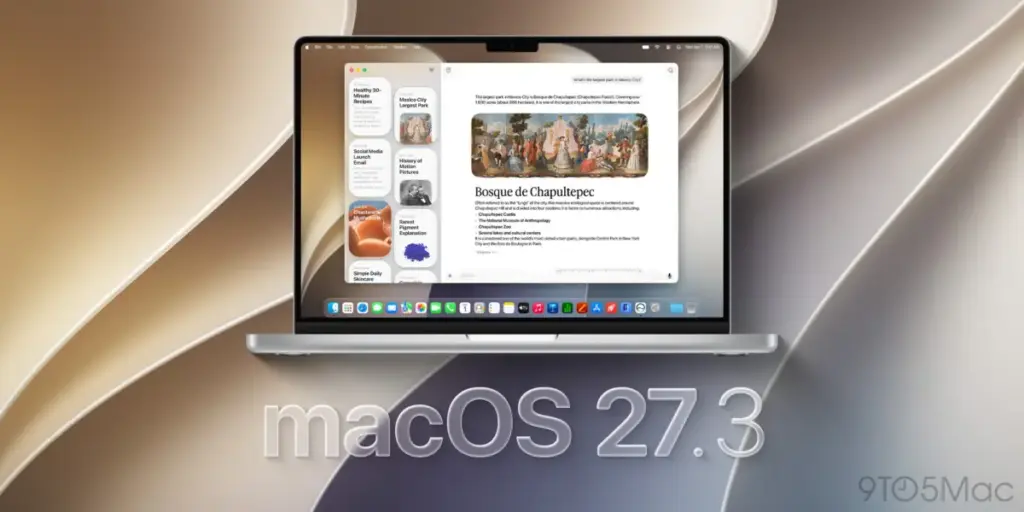
According to new information surfacing in the developer community, this practice is set to end. Technical analysis of upcoming macOS builds, specifically macOS 27.3, indicates that Apple is systematically dismantling this loophole. Once these changes are fully implemented, applications that attempt to reach beyond their permitted scope will no longer be logged by the system. Consequently, these apps will not appear in the list of applications awaiting permission in the System Settings menu. By removing the system’s tendency to "recommend" these applications for elevated access, Apple is effectively forcing developers to move away from these frictionless, but arguably manipulative, permission-granting workflows.

This technical shift aligns with Apple’s stated goal of requiring "very explicit user action" for any app seeking Full Disk Access. The intent is to break the cycle where users are nudged by app interfaces into granting broad, system-wide privileges without fully understanding the implications. If an app can no longer "trigger" its own appearance in the settings menu, the path to obtaining Full Disk Access becomes significantly more manual and, by extension, more deliberate.
The ongoing debate over effectiveness
While these changes represent a clear hardening of the macOS security posture, industry observers and privacy advocates remain divided on whether this addresses the fundamental problem. The challenge is that the demand for these permissions is often driven by the utility of the AI agents themselves. Many of the most popular AI tools are marketed on their ability to synthesize information from a user’s entire digital footprint, including their private iMessage threads, email archives, and local document stores.
As long as users desire the functionality of having an AI agent that can summarize their recent texts or organize their local files, the demand for Full Disk Access will persist. Skeptics point out that even with these new restrictions, developers still retain other avenues to guide users toward granting permissions. For example, some developers have already begun instructing users to manually drag and drop application icons into the System Settings panel to circumvent permission hurdles, a method that remains functional even with the new safeguards in place. Because this process still requires a manual step, it may technically satisfy the requirement for "explicit user action," but it does little to prevent a user from inadvertently granting excessive access to an app they may not fully trust.
The underlying tension here is between functionality and security. For an AI to be truly "helpful" in a modern context, it often needs to see a lot of data. However, providing that data via a blunt instrument like Full Disk Access is increasingly viewed as a security liability. The current model is an all-or-nothing proposition: either the app has access to everything, or it has access to nothing. In a world where data privacy is paramount, this binary system is showing its age.

The future of scoped access
Looking ahead, the industry is closely watching for signs of how Apple might introduce more granular control. One potential solution, which has been discussed in developer circles, involves the concept of "Private Folders." This architecture would theoretically allow a user to grant an application permission to access a specific directory—such as the iMessage database—without granting it the keys to the entire file system.
If implemented effectively, Private Folders could serve as a middle ground, allowing AI agents to perform their core functions while keeping the rest of the user’s personal data siloed and secure. However, details on how such a system would function remain sparse. Implementing scoped access for legacy databases and system-protected folders is a complex engineering task that requires balancing backward compatibility with modern security standards. Until Apple provides more documentation or a public roadmap for these features, the industry remains in a holding pattern.
For now, the changes arriving in macOS 27.3 mark an important, if incremental, step toward limiting the reach of third-party software. By removing the "shortcut" that allowed apps to effectively invite themselves into the user’s private data, Apple is placing the burden of responsibility back on the developer to justify their access requirements and on the user to make an informed, manual choice.
Whether this will be enough to curb the "rogue" behavior of AI agents remains to be seen. The cat-and-mouse game between developers seeking deeper system integration and Apple’s efforts to maintain a closed, secure ecosystem is unlikely to end soon. As AI becomes more deeply integrated into the operating system itself, the pressure on Apple to provide better, more granular privacy tools will only intensify. For the time being, the message from Cupertino is clear: the era of easy, broad-brush access to user data on the Mac is drawing to a close, and the future of macOS will be defined by much stricter boundaries.