









In the rapidly evolving landscape of cloud computing, the true cost of innovation often lies not in the adoption of new technologies, but in the operational friction required to transition toward them. For many engineering teams, the prospect of migrating legacy systems—such as shifting a massive Hive table to the Apache Iceberg format—has historically represented weeks of painstaking labor. This week, Amazon Web Services (AWS) introduced a series of updates designed to dissolve those barriers, emphasizing a philosophy of seamless integration that allows systems to remain operational throughout the transition process.
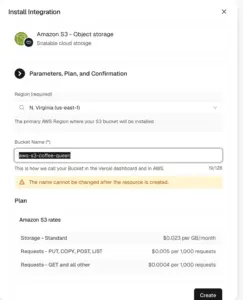
Among the most significant developments is the new managed migration capability within Amazon S3 Tables. By streamlining the move from Apache Hive to Apache Iceberg into a simple three-step process—start, sync, and complete—AWS is effectively removing the overhead that has long deterred organizations from modernizing their data lakes. Crucially, this approach ensures that the source data remains writable during the entire migration, with only a momentary pause required at the final cutover. In a similar vein, Amazon DynamoDB has enhanced its utility by enabling the loading of data from S3 directly into existing tables, further reducing the need for complex, stop-and-start data pipelines.
This theme of non-disruptive, incremental improvement permeates the latest updates to AWS’s artificial intelligence offerings as well. The introduction of the Amazon Bedrock AgentCore Runtime and the new Web Answer tool are designed to be retrofitted onto existing infrastructure, allowing developers to upgrade their capabilities without re-architecting their entire environments.
Advancements in AgentCore Runtime
For developers building and deploying intelligent agents, the new Amazon Bedrock AgentCore Runtime represents a major leap forward in both efficiency and performance. Since its general availability, the runtime has introduced two critical architectural changes that address the dual challenges of memory management and startup latency.
The first improvement concerns memory utilization. The new runtime is designed to be elastic, allowing sessions to start with a smaller memory footprint. It pages in data on demand and, crucially, releases memory back to the system when it goes cold rather than holding onto peak allocations. This ensures that users only pay for the actual resources their agents consume. The second improvement addresses the persistent pain point of "cold starts." By preparing the environment once and utilizing snapshots, the system can restore an agent instance almost instantaneously. In internal testing, the team observed that P75 cold starts remained consistent at approximately two seconds for images ranging from 200 MB up to 2 GB. By contrast, the original runtime’s performance degraded significantly as image sizes increased, jumping from 5.4 seconds to nearly 30 seconds. While the per-unit rate for the new runtime is higher, the substantial reduction in total GB-hours consumed is expected to lower the overall bill for the majority of agents.
To leverage these optimizations, developers simply need to set the platformVersion to V2 during the creation or update of a runtime. Because the system requires a window of time to prepare the snapshot, and because containers must report a healthy status on the /ping endpoint within 120 seconds, the transition process encourages developers to fine-tune their initialization sequences.
Managed Migrations to Apache Iceberg
The shift toward open table formats like Apache Iceberg has gained significant momentum, yet the migration effort has remained a hurdle for many enterprises. The new managed migration feature for Amazon S3 Tables changes this dynamic by allowing users to migrate Parquet tables registered in the AWS Glue Data Catalog directly into S3 Tables.
This process eliminates the need to provision separate compute resources or build custom migration pipelines. The system automatically validates the source data and generates a comprehensive compatibility report for every object. Because the sync process only copies changed data, production workloads can continue to write to the source until the very last moment of the migration. Once completed, the tables become immediately available for querying via Amazon Athena, Amazon SageMaker Unified Studio, or any engine compatible with the Iceberg REST API. By maintaining existing storage tiers—such as S3 Intelligent-Tiering—and charging only for the data copied rather than the conversion process itself, AWS is lowering both the financial and operational barriers to modernization.
Key Launches and Updates
Beyond the headline-grabbing changes to agent runtimes and table migrations, AWS introduced several other features this week that address data management, networking, and security.

Amazon DynamoDB now supports bulk item imports directly from S3 into existing tables. This managed, asynchronous job capability is particularly powerful because it allows each record to carry its own condition expression, enabling a single file to contain a mix of insert-only and version-guarded writes. Designed for scale, the system uses dedicated system capacity to process these imports, and an "Accelerated" tier is available for time-sensitive jobs, with the ability to ingest 100 million 1 KB items in under an hour.
In the realm of AI, the new "Web Answer" tool for Amazon Bedrock AgentCore allows developers to integrate synthesized, cited answers into their agents without the need to build a custom search and retrieval pipeline. By attaching Web Answer to an AgentCore Gateway via MCP, developers can provide their agents with the ability to plan and execute searches across the web, citing evidence as they go. This feature offers granular control through domain include and deny lists, as well as publication-date filters.
Networking infrastructure also saw an update with the preview of AWS Interconnect, a last-mile solution developed in partnership with Equinix. This service enables users to establish a private, managed connection between Equinix data centers and AWS without the traditional complexities of configuring routers or ordering cross-connects. With quad-redundant capacity and MACsec encryption by default, the service is currently available in the San Jose metro area and Northern Virginia.
Furthermore, AWS Security Hub has expanded its visibility features to include a comprehensive Software Bill of Materials (SBOM) inventory. By aggregating data from Amazon Inspector, Security Hub now provides a clear view of every software package across an organization’s EC2 instances, ECR images, and Lambda functions. This allows security teams to instantly identify the location and version of any vulnerable library across their entire compute footprint, a critical capability in modern software supply chain management.
Broader Industry Developments
The past week also highlighted broader engineering trends within the AWS ecosystem. The quarterly serverless recap emphasized the ongoing maturation of event-driven architectures, noting advancements such as the 90-minute timeout on Lambda Managed Instances and the expansion of Lambda MicroVMs.
On the database front, AWS has contributed a significant optimization to the community MySQL project. By addressing the performance bottleneck created by large transactions holding global commit locks, AWS has enabled the use of a spill file directly in the binary log. This optimization, which has been utilized in Amazon Aurora MySQL since 2019, has been shown to reduce commit latency for massive transactions—such as a 50 GiB operation—from seven minutes down to a matter of seconds.
Finally, architectural efficiency remains a priority, as demonstrated by the case study of the food-ordering platform OrderServ. By transitioning from a fragmented, per-brand cluster model to a multi-tenant Amazon ECS architecture on Fargate and EC2 Auto Scaling groups, the company achieved a 64% reduction in costs. These stories of optimization serve as a reminder that as cloud services continue to evolve, the most impactful gains often come from re-evaluating how existing tools are deployed and managed at scale.
As the industry looks toward the upcoming AWS re-Invent conference in Las Vegas, these recent updates provide a glimpse into the ongoing effort to make cloud infrastructure more responsive, cost-effective, and easier to maintain. Developers and architects are encouraged to monitor the "What’s New with AWS" page for further developments as the year draws to a close.