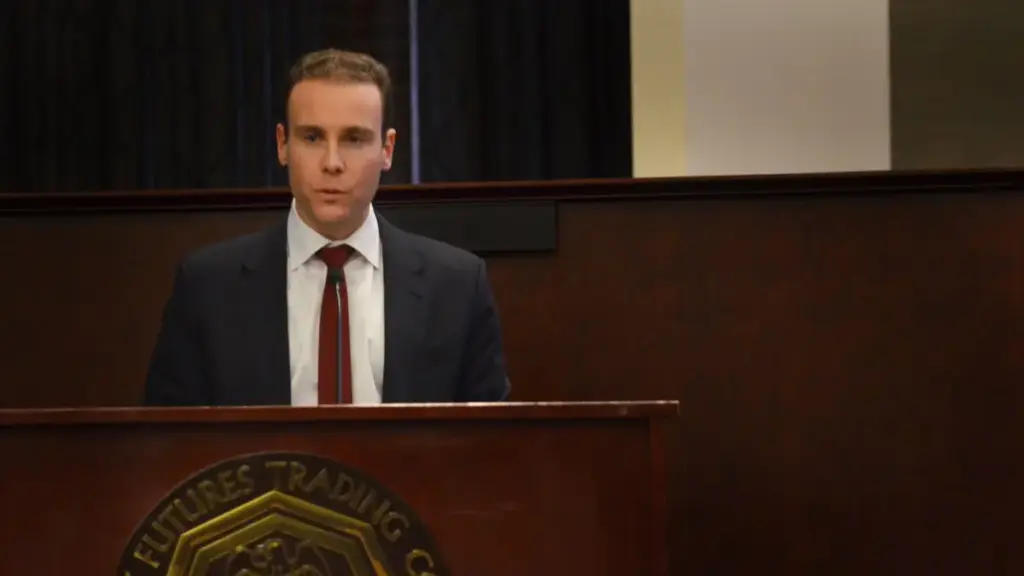
The U.S. Commodity Futures Trading Commission (CFTC) has launched a significant and formal effort to secure its role as the primary federal regulator for prediction markets. In a pair of actions unveiled on Friday, the agency finalized an interim rule and proposed a new regulatory framework that collectively aim to cement the legal status of "event contracts" as swaps—a move that would place these instruments firmly under the CFTC’s jurisdiction and insulate them from the reach of state-level gambling regulators.
This regulatory maneuver, spearheaded by CFTC Chairman Mike Selig, arrives at a moment of intense legal friction between federal authorities, state governments, and the growing industry of prediction platforms like Kalshi and Polymarket. By defining these event contracts as swaps, the agency is attempting to clarify its mandate while simultaneously delineating where its authority ends and traditional, state-governed gaming begins.
Defining the Scope of Federal Oversight
The core of the CFTC’s latest action lies in a precise, legalistic distinction. The agency is seeking to establish a clear boundary between what it considers legitimate financial derivatives—which fall under its purview—and "casino-style" gambling, which it explicitly excludes from the definition of a swap.

Under the new interim final rule, which takes effect immediately while remaining open for public comment, the CFTC has codified a definition of sports wagering that does not constitute a swap. By doing so, the agency is signaling to critics—including various state attorneys general and gaming commissions—that it has no intention of encroaching on the established, state-regulated sports betting and casino industries.
Conversely, the agency’s proposed rule seeks to explicitly categorize event contracts—such as those based on political outcomes, weather patterns, and cultural milestones—as swaps. Because swaps are financial instruments under the Commodity Exchange Act, they are subject to federal oversight. This legal classification is intended to provide a robust defense against state-level claims that these platforms are operating as illegal, unlicensed gambling dens.
The proposed rule, which is currently subject to a 30-day public comment period, serves as a legislative reinforcement of the CFTC’s long-standing position. If adopted, it would create a uniform federal standard that could effectively preempt state law, potentially neutralizing the legal arguments currently being wielded by states seeking to shutter these platforms.
A High-Stakes Legal Battle
The timing of this regulatory push is far from coincidental. Prediction markets have become a flashpoint in a broader legal conflict that is currently climbing toward the U.S. Supreme Court. Multiple states are embroiled in litigation against the CFTC, asserting that platforms like Kalshi are facilitating unregulated betting that violates state statutes.
Recent judicial history on this matter has been inconsistent. Federal appellate courts have issued conflicting rulings, with some supporting the states’ right to regulate these platforms and others siding with the federal regulator’s authority. The uncertainty created by these split decisions has prompted calls for the Supreme Court to intervene and provide a final resolution on whether event contracts represent financial innovation or simple wagering.
By codifying these definitions into the Code of Federal Regulations, the CFTC is effectively building a "regulatory shield." Should the Supreme Court decide to hear the case, the agency will be able to demonstrate that it has not only asserted its authority but has also engaged in a formal, deliberative rulemaking process to define the boundaries of that authority.
"We view this interim final rule as designed to improve the agency’s position in court as the states are arguing that the CFTC’s definition of a swap would make federally illegal any wager made at a state or tribal casino or sportsbook," wrote Jaret Seiberg, a policy analyst at TD Cowen, in a note to clients following the announcement. "Whether this actually works is a different question."
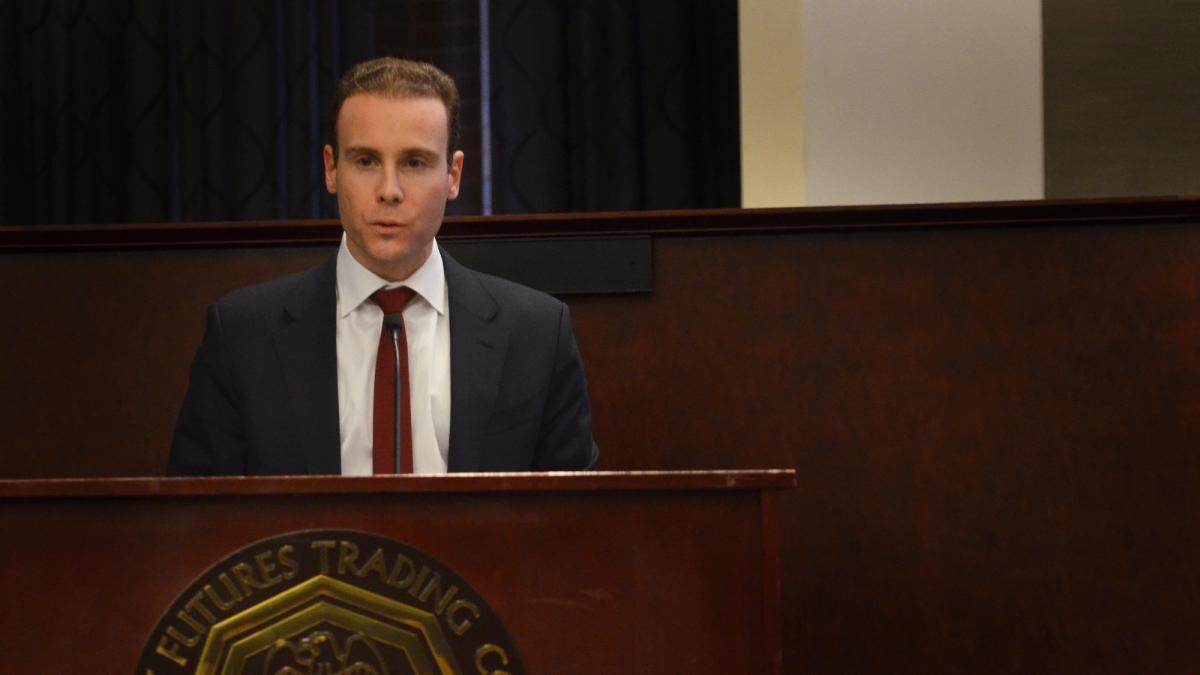
The speed with which the CFTC moved to finalize these measures—having submitted them for White House review less than two weeks prior—underscores the urgency felt by the agency’s leadership. Chairman Selig appears determined to resolve the jurisdictional ambiguity before the judiciary can force a different outcome that might limit the agency’s power.
The Role of the Sole Commissioner
The current regulatory landscape at the CFTC is highly unusual. Chairman Mike Selig is currently the sole commissioner presiding over the agency. Typically, the CFTC is structured as a five-member commission designed to represent a diversity of viewpoints and bipartisan oversight. However, with the current administration declining to appoint additional commissioners, the agency is operating under a centralized decision-making structure.
This concentration of power has enabled the CFTC to act with remarkable speed and cohesion, avoiding the internal debates or deadlocks that often characterize multi-member regulatory bodies. However, this lack of oversight has also drawn criticism from those who argue that such significant regulatory shifts should be the product of a fully constituted commission.
A similar situation persists at the Securities and Exchange Commission (SEC), where a five-member board is currently functioning with only two members. This trend of operating with skeletal staffing appears to be part of a broader strategy by the Trump administration to streamline regulatory agencies and, in many cases, reduce the influence of Democratic appointees. For the prediction market industry, this environment of concentrated executive authority has been a double-edged sword: while it has allowed for rapid, decisive action in their favor, it also means that the industry’s regulatory fate is heavily tied to the policy preferences of a single individual.
Industry Implications and the Road Ahead
For companies like Kalshi, the CFTC’s actions are a welcome development. These platforms have consistently argued that they are financial exchanges rather than gambling operations. They maintain that event contracts provide valuable hedging tools for businesses and individuals seeking to mitigate risks associated with political or economic outcomes. By aligning themselves with the CFTC, these platforms are seeking the legitimacy that comes with federal oversight, which could eventually pave the way for broader adoption and institutional participation.
However, the opposition from the states remains fierce. State regulators argue that the "swap" classification is a legal fiction designed to bypass state gaming laws that protect consumers and generate significant tax revenue. They contend that if the CFTC is allowed to define almost anything as a "swap," it could inadvertently strip states of their constitutional authority to manage gaming within their own borders.
As the 30-day comment period for the proposed rule begins, the battle is expected to intensify. The CFTC will face a barrage of comments from state attorneys general, industry lobbyists, and legal scholars, all of whom have a stake in where the line is drawn.
The final resolution of this dispute will likely have profound implications for the future of financial technology in the United States. If the CFTC’s rules hold, it could set a precedent for a new class of "event-based" financial products that operate on a national scale, free from the patchwork of state gaming regulations that currently limit their growth. Conversely, if the courts determine that the CFTC has overreached its statutory authority, the entire business model of these prediction platforms could be thrown into jeopardy.
For now, the agency’s focus remains on the implementation of these rules. By explicitly carving out space for state-regulated casinos while pulling event contracts under its own umbrella, the CFTC is attempting to thread a difficult needle—a strategy that will be tested in both the court of public opinion and the highest courts in the land. The coming months will likely determine whether the agency’s "interim final" path proves to be a masterstroke of regulatory policy or a temporary measure that will eventually be undone by the realities of federalism.