









Bharat Semi, a New Delhi-based semiconductor startup, has successfully raised $24 million in an all-equity seed funding round, marking a significant milestone in its mission to develop cutting-edge, AI-enabled image sensors. As the company positions itself to capture market share in the United States and global sectors, this injection of capital provides the runway necessary to accelerate product development, expand its engineering footprint, and bring its sophisticated, programmable sensors to market.
The funding round was led by Info Edge Group, South Park Commons, and Indus Bridge Ventures, with notable participation from Valour Capital, Micromax, Gaingels, and several individual investors. This influx of capital arrives at a critical juncture for both the company and the broader Indian semiconductor ecosystem. While Bharat Semi is still in its pre-revenue phase—nearing its five-year anniversary—it has already achieved significant validation by securing design wins with major industry players, including U.S. defense technology firm General Atomics and the Indian manufacturing giant Kaynes Semicon.
Pioneering "Sense-Making" Technology
At the heart of Bharat Semi’s innovation is a fundamental shift in how visual data is processed. The company is developing programmable image sensors that integrate image capture, processing, and artificial intelligence capabilities onto a single, unified chip. This architectural approach is designed to eliminate the latency and overhead associated with traditional systems, which typically require separate components for image sensing, image signal processing, and system-on-chip (SoC) compute functions.

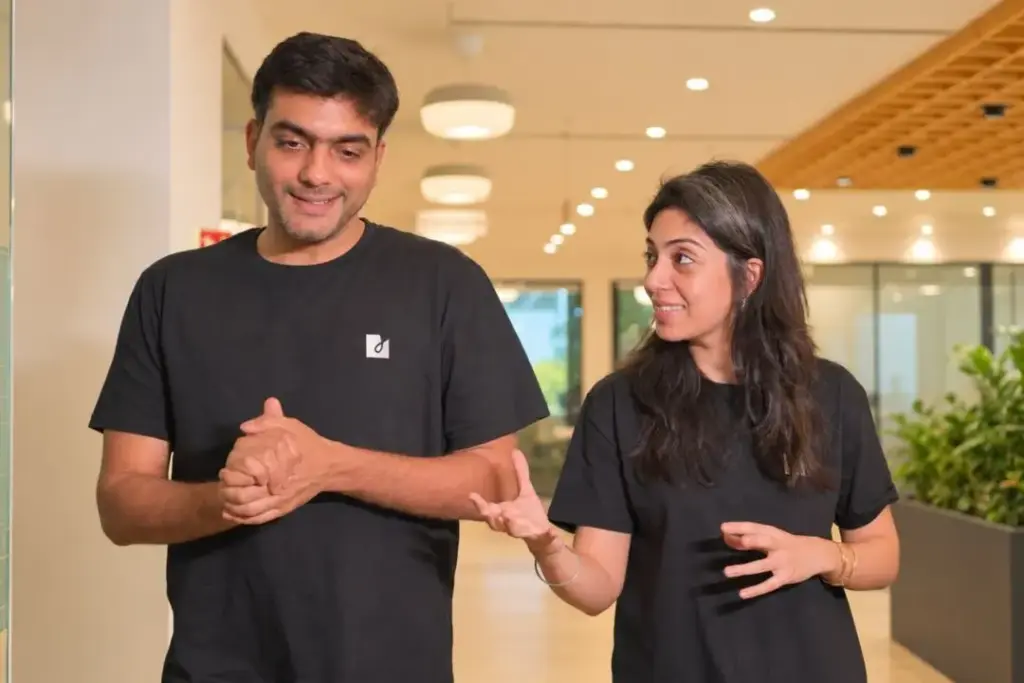
Vrinda Kapoor, co-founder of Bharat Semi, described the company’s vision as a transition from simple image sensors to "sense-making solutions." By embedding AI directly into the sensor, the hardware can perform complex computational tasks at the "edge," drastically reducing the need to transmit vast amounts of raw visual data to external processors. According to Kapoor, this integrated design could reduce overall system costs by at least 70% compared to conventional multi-chip setups.
The startup’s target applications are diverse, ranging from smart home automation and industrial surveillance to high-stakes aerospace projects. For instance, in a smart home setting, these sensors could allow air conditioning units to intelligently detect occupancy and adjust environmental settings automatically, without requiring external computing hardware. In the aerospace and drone sectors, the ability to process visual information locally—onboard the drone itself—could unlock new levels of autonomy and efficiency, even in environments where robust, power-hungry computing hardware is impractical or unavailable.
Strategic Growth and Global Ambitions
The leadership team at Bharat Semi brings a diverse blend of experience from the worlds of healthcare technology, private equity, and semiconductor manufacturing. Co-founder Vrinda Kapoor, a South Park Commons fellow with a background in health-tech, launched the startup in late 2021 alongside managing director Vinayak Dalmia, who previously held roles at McKinsey and in the private equity sector. The company’s technical vision is steered by Chief Technology Officer Boyd Fowler, who previously served as the CTO of the prominent image-sensor maker OmniVision.
The startup’s current operational footprint spans approximately 75 employees distributed between India and the United States. While the majority of its engineering and business development team is currently based in India, the company maintains a strategic presence in Santa Clara, California. As part of its growth roadmap, Bharat Semi plans to scale its U.S. headcount to approximately 20 by mid-2027 and has already begun expanding its engineering talent pool into Europe to tap into global design expertise.
Regarding its product timeline, the company is moving through a deliberate development cycle. The first generation of its sensors is currently in the prototyping phase. Looking further ahead, the company is developing second-generation sensors that will feature even more advanced, specialized AI capabilities. These next-generation prototypes are expected to reach maturity by mid-2027, with the startup aiming to deliver the technology to customers by the end of that year.
India’s Semiconductor Ambitions
Bharat Semi’s progress occurs against the backdrop of a massive, government-backed effort to transform India into a global semiconductor manufacturing hub. With billions of dollars in subsidies and investment commitments, India is positioning itself as a strategic alternative for companies looking to diversify their supply chains away from China. While the country is still in the early stages of establishing a full-scale domestic chip manufacturing ecosystem, the current AI boom has provided a unique opening for specialized, design-focused startups like Bharat Semi to carve out a niche in the global market.
The founders of Bharat Semi are acutely aware of this "Taiwan moment" for India. In 2024, the startup made headlines by announcing plans for a potential semiconductor fabrication project in India, which included a technology partnership with the U.S. Space Force. While this project remains in the development phase—with the company currently scouting for domestic partners capable of operating such a facility—it remains distinct from the startup’s core business model.
Kapoor emphasized that Bharat Semi intends to remain a "fabless" semiconductor company. By focusing exclusively on chip design, software architecture, and intellectual property, the startup avoids the immense capital expenditure required to own and operate a physical fabrication plant. The $24 million seed funding will be strictly allocated toward engineering headcount, the completion of product development, and the logistical challenges of bringing its innovative sensors to the global market. The funding is not intended to finance the separate fabrication facility project.
A Global Outlook for Indian Tech
The success of this seed round highlights the growing investor confidence in the ability of Indian firms to compete on a global stage in high-complexity sectors like deep-tech and semiconductors. For Kapoor, Bharat Semi is more than just a business; it is a test case for whether a company can originate in India, leverage domestic engineering talent, and effectively serve the most demanding sectors of the global economy, including the U.S. defense and aerospace industries.
"It’s a story of can we build a global technology company out of India," Kapoor said, reflecting on the firm’s broader objective. By focusing on the intersection of sensor technology and AI, Bharat Semi is attempting to solve a bottleneck in the current hardware landscape. As autonomous systems, industrial IoT, and smart infrastructure become increasingly reliant on real-time visual processing, the demand for efficient, low-cost, and intelligent sensing solutions is expected to grow exponentially.
As the company enters this next phase of growth, its ability to execute on its technical roadmap will be tested. With its first-generation prototypes already in development and a clear vision for 2027, Bharat Semi is positioning itself as a critical link in the next generation of visual intelligence. Whether it can effectively bridge the gap between design-focused innovation in India and the stringent requirements of global high-tech markets remains a pivotal narrative to watch in the coming years. For now, the company remains focused on its core mandate: refining its programmable sensor technology and proving that "sense-making" at the edge is the future of visual computing.