











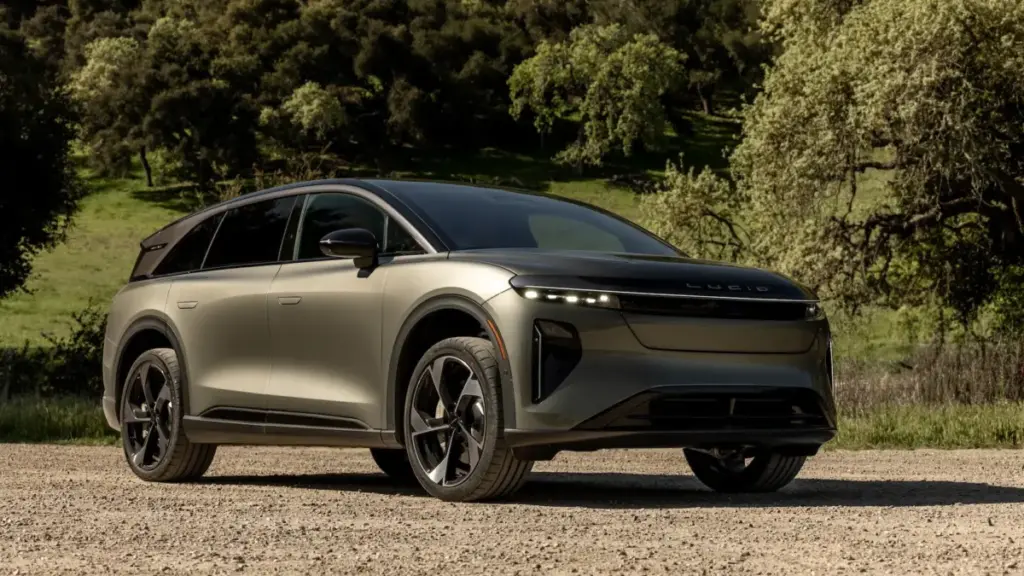
Lucid Motors has reported a significant contraction in its manufacturing output for the third quarter of this year, building 2,954 electric vehicles (EVs). This figure represents a sharp 54% decline compared to the same period last year. According to the company, this reduction is a deliberate strategic move rather than a failure of manufacturing capability; Lucid is intentionally curbing production to better align its inventory levels with the current consumer demand for its luxury EV lineup.
The latest production figures mark a concerning trend for the automaker, representing the third consecutive quarter in which the volume of vehicles built has trended downward. This latest output is the lowest the company has seen since the first quarter of 2025, a period that followed shortly after Lucid officially launched production of its second flagship vehicle, the Gravity SUV. By narrowing its production focus, Lucid appears to be attempting to avoid the inventory bloat that has plagued several emerging EV manufacturers over the past two years.
Deliveries, while slightly more stable than production figures, underscore the persistent challenges Lucid faces in capturing a broader market share. The company delivered 3,806 EVs during the third quarter. This performance is essentially flat when measured against the second quarter of this year and shows a decline of approximately 200 units compared to the third quarter of 2025. The data reveals a consistent pattern of over-production relative to sales; in five of the last six quarters, Lucid has built more vehicles than it has managed to deliver to customers, highlighting the difficulty the company has faced in moving its luxury units off dealer lots and into the hands of buyers.

The current atmosphere at Lucid is defined by a significant restructuring effort led by CEO Silvio Napoli. Since taking the helm, Napoli has spearheaded a mandate to "simplify the company," an initiative that has fundamentally altered the firm’s operational structure. This turnaround strategy has been marked by painful but decisive actions, including the reduction of the company’s workforce by approximately 1,500 employees. Beyond headcount reductions, Napoli has worked to streamline the leadership hierarchy and eliminated the second shift at the company’s manufacturing facility in Arizona. These measures are central to a broader financial goal: achieving $1.4 billion in cost savings to stabilize the company’s balance sheet.
Part of this recalibration involves managing the expectations surrounding future product launches. Lucid has confirmed a delay in the release of its third vehicle, the "Cosmos." Originally positioned as the company’s entry into the more accessible segment of the EV market—with an anticipated starting price below $50,000—the delay suggests that management is prioritizing financial stability and operational readiness over rapid expansion.
The gravity of Lucid’s current position becomes even more pronounced when contrasted with the performance of its peers. The third-quarter results, released on Monday, arrived in the shadow of a banner quarter for rival EV manufacturer Rivian. Bolstered by the success of its new R2 SUV, Rivian recently reported its strongest sales period to date. While the company did not isolate exact delivery figures for the R2, its total shipments reached nearly 20,000 vehicles in the third quarter—a significant leap from the 12,194 vehicles delivered in the second quarter. The divergence between Rivian’s growth and Lucid’s contraction highlights the competitive pressures within the sector, particularly as consumers increasingly favor more affordable, high-utility options.
The current reality stands in stark contrast to the optimistic projections Lucid presented to investors when it first went public in 2021. During its merger with a special purpose acquisition company (SPAC), which provided the company with an initial injection of $4 billion, Lucid’s leadership projected a rapid ascent in production. At the time, the company’s guidance suggested it would be capable of shipping as many as 90,000 EVs in 2024 alone. The gap between those initial projections and the company’s current operational scale serves as a reminder of the volatility inherent in the EV startup ecosystem.
During Lucid’s second-quarter earnings call in August, Napoli provided a candid assessment of why the company has struggled to achieve the market penetration it originally envisioned. He acknowledged that while Lucid has succeeded in developing high-performance technology and innovative products, the company has failed to execute on the operational front.
"While there is no question that Lucid brought leading innovations and outstanding products to the market, we have disappointed on several fronts, and for far too long," Napoli stated. He went on to identify specific internal failures, noting that the company had not executed consistently, frequently missed key commitments, and launched products before they were fully ready for the rigors of the mass market. Furthermore, he highlighted that the company had underinvested in service infrastructure, responded too slowly to quality control issues, and allowed a culture of complexity to impede rapid, effective decision-making.
The Cosmos model remains a critical component of Lucid’s long-term strategy, as its lower price point is intended to open the brand to a wider demographic of buyers. However, Napoli remains wary of repeating the tactical errors of the past. In his address to shareholders, he emphasized that rushing the Cosmos to market simply to generate revenue would be a strategic blunder.
"We will not repeat the mistakes of the past by bringing a product to market before it is ready," Napoli said. This conservative approach suggests that while investors may be eager for growth, the company is attempting to pivot toward a model of sustainable, controlled development. Whether this pivot can stabilize the company and eventually lead to the high-volume success once promised remains to be seen, as the company navigates a transition period characterized by austerity and a renewed focus on execution rather than ambition. For now, Lucid’s path forward remains tied to its ability to balance its technological reputation with the harsh realities of manufacturing, logistics, and shifting consumer demand.