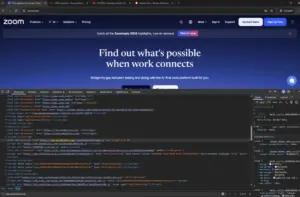










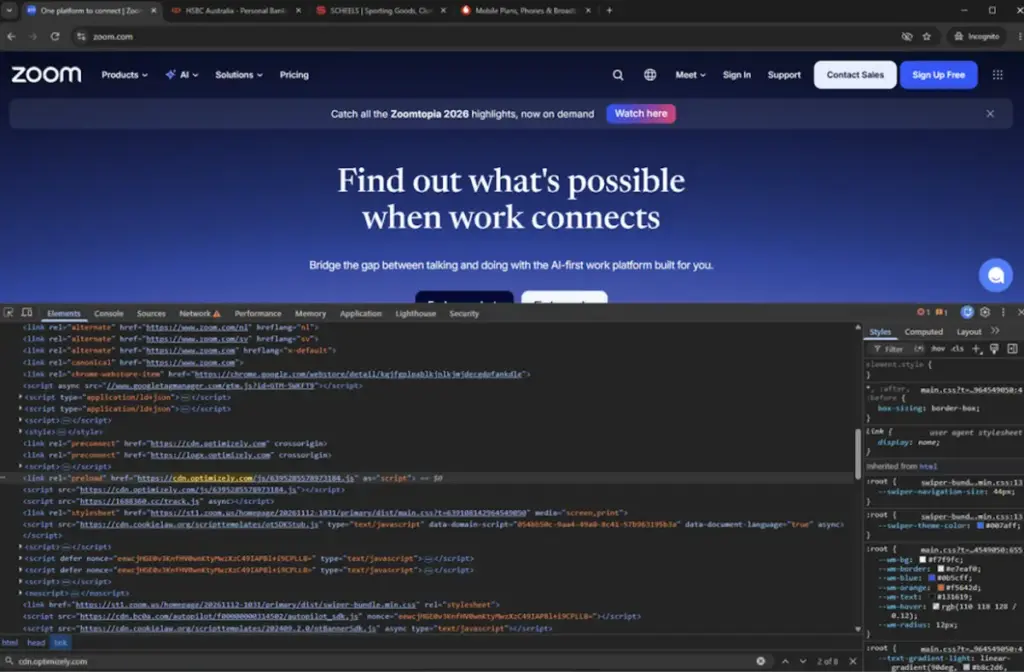
In a stark reminder of the fragile nature of modern web supply chains, at least 178 major web destinations—including household names like the BBC, CNN, Equifax, Ledger, and Zoom—unwittingly served malicious software to their visitors over a 24-hour period. The incident originated from a security vulnerability within Optimizely, a prominent platform that provides businesses with tools for A/B testing and user experience optimization. By compromising this single third-party vendor, attackers were able to inject data-stealing scripts directly into the infrastructure of high-traffic websites, illustrating the ease with which a single point of failure can jeopardize the security of millions of users.
According to a detailed analysis from the security firm Report URI, the incident began on November 16, 2026. Scott Helme, a researcher at Report URI, discovered that the malicious JavaScript served through the Optimizely platform was not a static threat; it was a highly dynamic, evolving payload. Throughout the day, the attackers rebuilt the malicious kit 26 times, constantly iterating to evade detection and expand their reach. The injected code acted as a multi-purpose malware delivery system capable of siphoning sensitive user data, including payment card information, browser cookies, and even screenshots of the user’s screen. Furthermore, the malware was designed to perform real-time financial fraud by swapping legitimate cryptocurrency payment addresses with those controlled by the attackers.
The breach was not limited to traditional desktop threats. Helme’s investigation revealed that the injected code also included sophisticated exploits tailored for outdated Apple iPhone and iPad devices. Known by monikers such as “DarkSword” and “Coruna,” these zero-click exploit kits are designed to chain together multiple security vulnerabilities. Once triggered, these kits can seize total control over a mobile device, allowing attackers to extract private data without the user ever interacting with a malicious link or file.
“The important lesson here is that trusted JavaScript doesn’t always remain trustworthy,” Helme wrote in his assessment of the event. “A website can be compromised through a third-party dependency without its own code or infrastructure ever being breached.”
The Optimizely Response and Technical Fallout
When reached for comment, Optimizely confirmed the incident, stating that an unauthorized party had successfully exploited a vulnerability within its "Experimentation" service to inject malicious JavaScript into a subset of customer projects. In a formal statement, the company noted that it identified the security incident on November 16 and moved quickly to contain the threat.
Optimizely’s remediation efforts were extensive, involving the blocking of the vulnerable path, a full deployment of a security fix, and the purging of all malicious code from impacted customer projects. Furthermore, the company took steps to revoke tokens, terminate active sessions, and reset access for affected user accounts to ensure the attackers could no longer maintain a foothold. Optimizely has also implemented additional protective layers within its Cloudflare configuration to prevent future unauthorized code delivery. While the company maintains that the incident is fully resolved, it continues to work alongside third-party cybersecurity experts to conduct a comprehensive forensic investigation into how the breach occurred.
The Dangers of Modern JavaScript Dependencies
The Optimizely incident highlights the systemic risks posed by the modern web’s heavy reliance on third-party JavaScript. Today, it is standard practice for major web properties to refuse to display content until a user agrees to load dozens of third-party scripts. While these scripts are often used for analytics, A/B testing, or advertising, they are inherently powerful pieces of code. When a browser executes JavaScript, it does so with a significant degree of privilege; the script can read information displayed on the page, monitor user input, and even alter the appearance or functionality of the website itself.
Data from the 2025 Web Almanac, published by the HTTP Archive, confirms the ubiquity of these scripts, showing that the median homepage loads at least 22 distinct JavaScript files. This complexity creates a massive attack surface. As demonstrated by this incident, a compromise at a single vendor can trigger a supply chain attack that ripples across hundreds of high-profile downstream websites.
Zach Edwards, a researcher at Infoblox and co-founder of the ad-tracking service DecryptAds, points out that the architectural nature of tools like Optimizely makes them particularly dangerous when compromised. These snippets are typically placed at the very top of a website’s code to ensure they load before anything else—a requirement for accurate A/B testing.

“To make the product work as expected, this code is set up to fire immediately on-page load, and not restrict rendering behind a consent dialog box,” Edwards explained. “This means that this supply chain attack didn’t require any clicking or consent to trigger—most of the impacted clients would immediately serve up the payload as soon as someone loaded the page, further increasing risks from this type of JavaScript snippet being compromised.”
The Need for Stricter Content Security Policies
The primary defense against this type of third-party compromise is a Content Security Policy (CSP). A CSP allows website administrators to explicitly define which domains are permitted to serve scripts to their users. If a website were to strictly enforce a CSP, any attempt by a compromised vendor to inject code from an unauthorized or malicious source would be blocked by the browser.
However, the reality is that widespread adoption of CSPs remains elusive. According to Edwards, while major e-commerce, social media, and financial platforms have begun to implement these protections, the vast majority of websites either ignore CSPs entirely or maintain overly permissive policies to avoid disrupting their marketing and tracking scripts.
The data gathered by Report URI regarding this incident is telling: of the 178 impacted websites, 68 had no CSP in place at all. Another 50 sites had policies that were so poorly configured that they permitted the malicious payload and the subsequent data exfiltration. Only 24 of the affected sites—a mere 15 percent—possessed a CSP robust enough to fully block the malicious activity.
This mirrors broader trends in web security. Data from Helme’s security scanning site, crawler.ninja, suggests that only about 10 percent of the web’s busiest sites have effectively deployed CSPs. Helme characterizes the current state of web security as a “Wild West” scenario. “Organizations are running all this code, but they don’t know what it’s doing,” Helme noted. “This is why we keep seeing such large-scale breaches in places where there are no checks and rules in place on the code we’re running, so this was kind of inevitable.”
Helme also pointed to the rising role of automation and artificial intelligence in cybercrime. Once an attacker gains the ability to execute code on a victim’s site, the barriers to exploiting that access have dropped significantly. “Now with AI, that’s not a problem anymore,” he said, referring to the ease with which attackers can generate malicious scripts tailored to specific site architectures.
Protecting the End User
For the average internet user, the risk posed by supply chain attacks can feel insurmountable. While tools like NoScript have long been available for security-conscious users to block JavaScript, these plugins require a high level of technical expertise and often break the functionality of modern, interactive websites.
Increasingly, the responsibility for protection is shifting toward ad-blocking and script-blocking software, which have evolved to become the modern equivalent of the traditional firewall. A decade ago, security advice focused on installing antivirus software and configuring hardware firewalls. Today, a robust ad blocker that restricts third-party scripts is often the most effective tool a user has to prevent the execution of malicious code.
While the Optimizely incident resulted in estimated financial losses of approximately $7,500 in cryptocurrency and an unknown volume of stolen payment records, security experts warn that the potential for damage in future supply chain attacks could be significantly higher. As long as the internet relies on a sprawling, largely unchecked ecosystem of third-party dependencies, the risk of a single point of failure leading to widespread user compromise remains a constant, looming threat.