











Meta has officially begun the rollout of a significant privacy update for its line of smart glasses, providing users with a long-awaited mechanism to prevent the company from utilizing "visual data" captured by the devices for the purpose of artificial intelligence training. The move follows increasing scrutiny regarding how technology giants leverage consumer-generated media to refine their generative AI models, and it marks a pivotal shift in how Meta handles the data streams flowing through its wearable hardware.
The new functionality is being introduced directly through the Meta AI app, which serves as the central hub for managing the features and settings of the company’s connected eyewear. Owners of Meta’s smart glasses have begun receiving notifications via pop-up alerts within the application, clearly outlining that while the glasses are designed to assist with tasks—such as translating menus, identifying flora, or answering questions about the wearer’s surroundings—the data powering these experiences can now be cordoned off from Meta’s internal development pipelines.
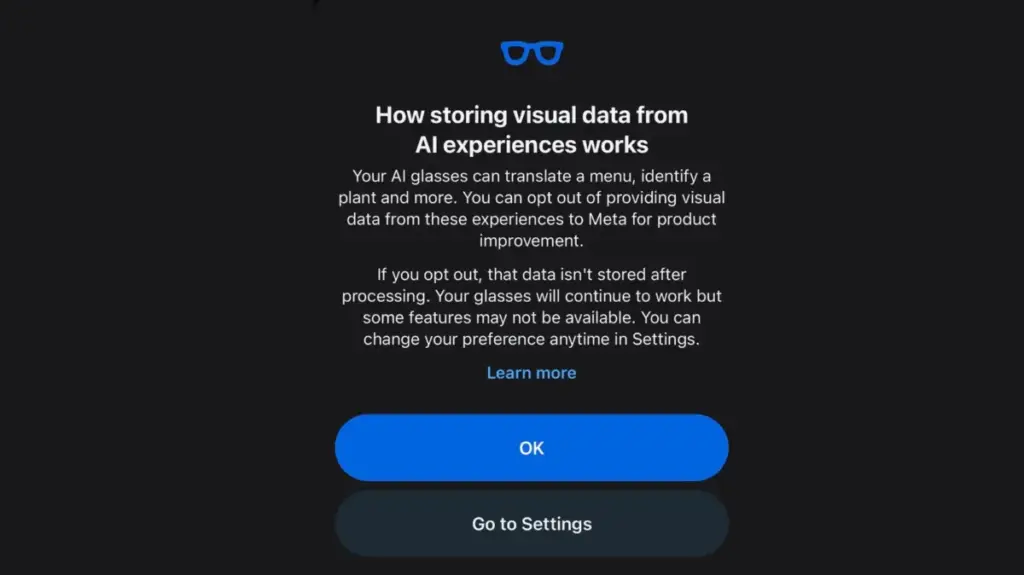
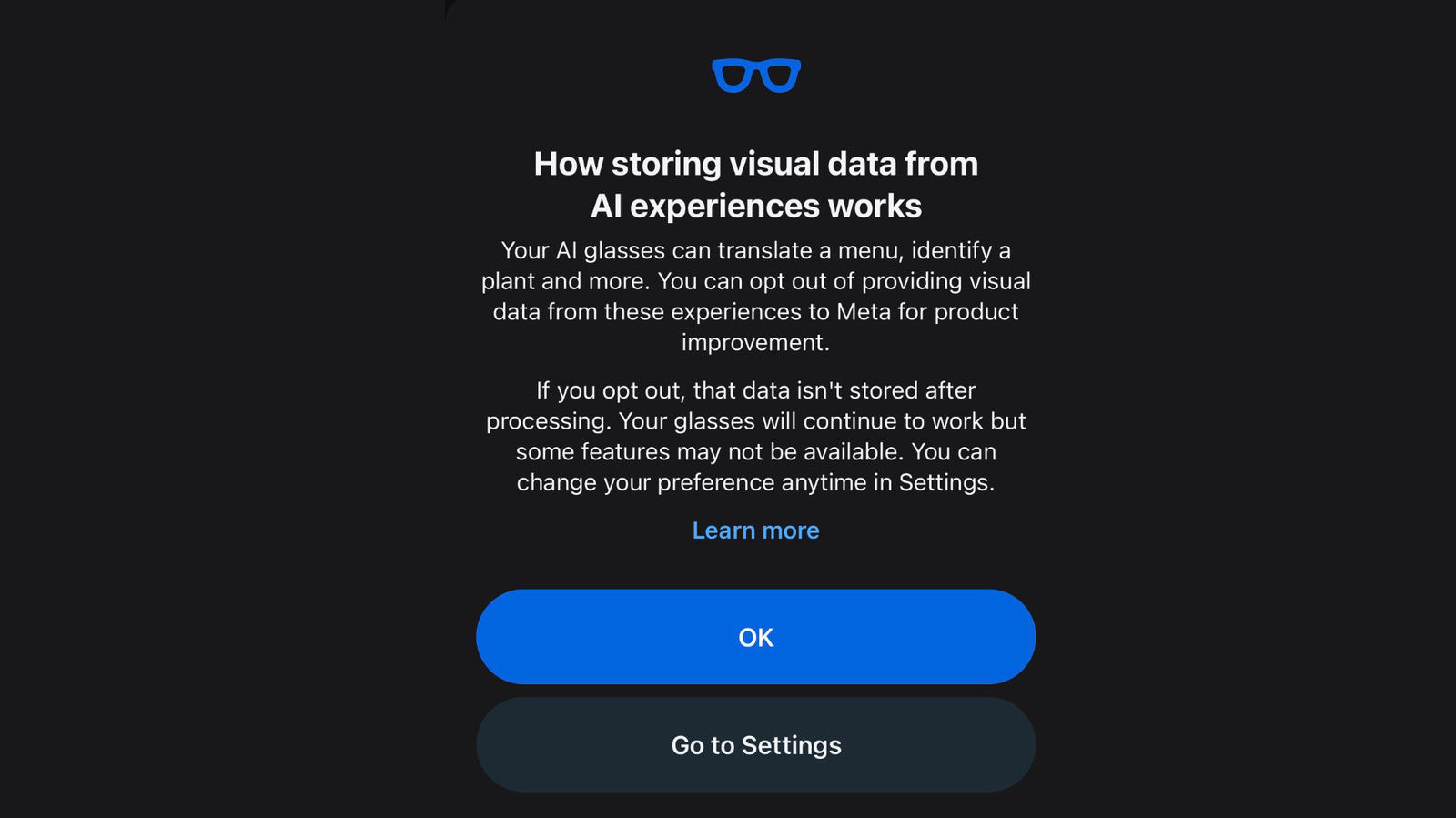
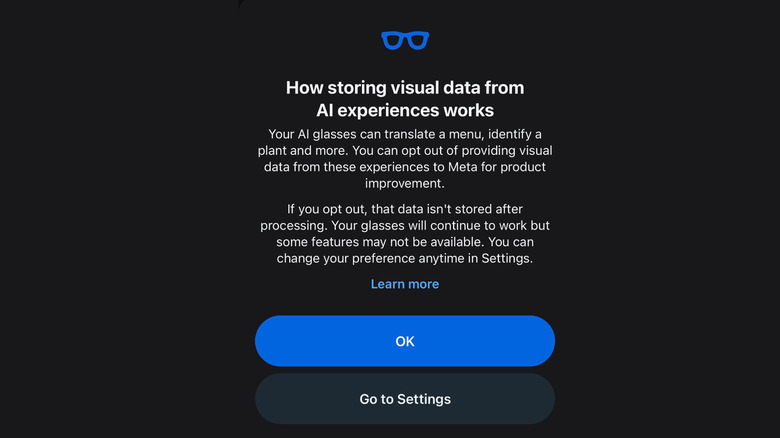
According to the company, the notification serves as both an educational tool and a gateway to the new settings. The prompt explains the trade-off inherent in the device’s functionality: "Your AI glasses can translate a menu, identify a plant and more. You can opt out of providing visual data from these experiences to Meta for product improvement. If you opt out, that data isn’t stored after processing."

Navigating the Privacy Settings
For users looking to adjust these preferences, the process involves navigating through the specific management menus for their hardware. The setting is located within the settings section of the individual pair of glasses, tucked under the "Meta AI" category. Users are required to scroll down to find the toggle labeled "store visual data from AI experiences."
There are specific prerequisites for accessing this configuration: the glasses must be removed from their charging case and actively connected to the user’s smartphone via Bluetooth. Furthermore, for users who have invested in multiple pairs of Meta’s smart glasses, the company has clarified that this privacy preference does not apply globally to a user’s account. Instead, the setting must be toggled individually for every pair of glasses the user owns, ensuring that the preference is explicitly set for each device.
The Trade-off: Functionality vs. Privacy
While the introduction of this opt-out mechanism is a clear win for user autonomy, Meta has cautioned that exercising this right may come at the expense of certain high-level features. Specifically, the company has noted that opting out of data collection will likely disable the "visual reminders" feature. This feature allows a user to look at a physical object—such as a product in a store or a book on a shelf—and verbally instruct the AI to remind them to purchase or interact with that item at a future date. By removing the visual data from the server-side processing loop, the glasses lose the context required to "remember" the object in question.
At this stage, it remains unclear whether other features might be impacted by the opt-out, as the development of AI-driven wearable technology is a rapidly evolving field. Meta has not provided an exhaustive list of every feature that relies on this specific data stream for "product improvement," leaving some users to wonder about the long-term impact on the intelligence and responsiveness of their devices.
Human Review and Data Transparency
The update coincides with a renewed effort by Meta to clarify how it handles the information collected by its smart glasses. Alongside the release of the opt-out setting, the company has updated its official help center documentation to provide a more granular breakdown of its data processing methods. The documentation makes it explicit that "visual data"—which encompasses photos and video clips captured during AI-driven interactions—is not merely analyzed by automated algorithms.
"When you use AI experiences on your Meta glasses—like asking about something you’re looking at or using live AI—Meta stores the resulting visual data and may use it to power glasses features and improve Meta products," the company explains in its updated guidance. Perhaps most notably, the company explicitly mentions the role of human involvement in this process: "This includes the process of training and improving AI models, which may be automated or manual (human)."
This acknowledgment of "manual (human)" review is a point of contention for many privacy advocates, as it highlights that the images or video clips captured by a user’s glasses could potentially be viewed by human contractors or employees. By allowing users to opt out of this storage, Meta is effectively cutting off the pipeline that would otherwise send this sensitive, first-person footage into the pools used for human-in-the-loop training.
Defining "Visual Data"
To mitigate confusion, Meta has attempted to distinguish between the various types of data captured by its hardware. The company maintains a strict boundary between "visual data" captured during AI-enhanced tasks and standard content creation.
According to Meta, the data subject to this new opt-out policy does not include the photos and videos that users intentionally capture for their own personal use—such as when a user presses the capture button to record a birthday party or a scenic view. The company specifies that these standard captures, which are marked by the device’s external LED indicator, are treated differently. The "visual data" in question is specifically tied to the active, real-time AI sessions where the glasses are performing computer vision tasks, such as analyzing a scene to answer a user’s inquiry.
This distinction is intended to reassure users that their everyday, non-AI interactions with the glasses are not being vacuumed up for model training. However, for many, the distinction between a "personal photo" and "AI-processed visual data" can be murky, especially as the line between standard capture and AI-assisted analysis continues to blur in the Meta ecosystem.
As the wearable AI market grows, Meta’s move to provide this level of transparency and control represents a significant step in the broader industry conversation regarding surveillance, consent, and the ethics of artificial intelligence. By placing the power in the hands of the consumer, Meta is addressing one of the most pressing concerns surrounding its smart glasses, though the utility of the device will ultimately remain linked to the data users are willing to share with the company’s backend servers. Whether this opt-out feature becomes a standard expectation for future hardware remains to be seen, but for now, it provides a crucial layer of control for those currently wearing the technology.