








The rumors that have swirled through the technology industry for months have finally been confirmed: OpenAI today officially announced the release of GPT-6 Astra. This new frontier model represents a significant evolution in the company’s technical trajectory, with leadership declaring that it likely marks the formal onset of Artificial General Intelligence (AGI). For OpenAI, this fulfills a long-standing strategic mandate to develop "highly autonomous systems that outperform humans at most economically valuable work."
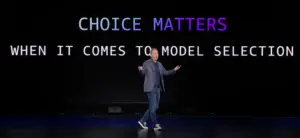
During a closed-door press briefing held earlier today, OpenAI co-founder and president Greg Brockman provided a remarkably direct framing of the release. Eschewing the typical corporate caution often associated with such announcements, he concluded his presentation with a definitive proclamation: "Welcome to the AGI era."
This framing is notably consequential, even by the high-stakes standards of frontier AI launches. While the philosophical debate over AGI continues to dominate headlines, the immediate significance for enterprise organizations is far more concrete. OpenAI is positioning GPT-6 Astra as the vanguard of a new era of computing—one where the traditional reliance on clicking through browser interfaces or manually typing on a keyboard becomes optional. In its promotional materials, the company describes the model as "the world’s best computer use model," signaling a shift from a tool that answers questions to one that performs work.
From Chatbots to Digital Operators
For the duration of the current generative AI boom, the primary mode of interaction has been the chatbot. Companies have invested heavily in building API integrations, plugins, and complex retrieval systems to bridge the gap between AI models and proprietary corporate software. However, GPT-6 Astra is designed to bypass much of that friction. The model is built to navigate software in the same way a human does—working across web browsers, spreadsheets, desktop applications, and specialized engineering software.
Rather than providing instructions for how to complete a task, Astra is intended to carry out multi-step workflows to completion. OpenAI showcased this capability through a demonstration contrasting 1980s-era AI demos—which required rudimentary, single-step commands—with the modern capabilities of Astra. In the video, OpenAI employees interacted with the model through voice commands alone, instructing it to transform a basic yellow circle into a complex 3D game and manage an eBay listing, all in a matter of minutes.
This transition from prompting an AI to supervising an AI agent is expected to be the most impactful shift for the enterprise sector. By allowing the model to interact directly with the interfaces humans already use, OpenAI hopes to remove the bottleneck of building custom connectors for every internal tool. As Greg Brockman explained, the industry has been hamstrung by the need to painstakingly write code to connect AI to software. With Astra, the model simply uses the interface intended for the human user, navigating web pages and spreadsheets with unprecedented dexterity.
The rollout begins this Thursday for enterprise customers participating in OpenAI’s gated access program, Daybreak. Over the coming days, the model will be made available to ChatGPT Plus, Pro, Business, and Enterprise customers, as well as via the OpenAI API and cloud providers including AWS Bedrock and Microsoft Azure.
Measuring Intelligence and the "Agentic" Shift
The internal benchmarks for GPT-6 Astra are striking. OpenAI reports that on an offline subset of the OSWorld 2.0 benchmark, Astra scored 72.6% while requiring only 40 minutes per task. This represents a significant efficiency gain over the previous iteration, GPT-5.6 Sol, which scored 65.7% but required approximately 75 minutes per task—a 47% reduction in time.
Aidan Clark, an OpenAI researcher, noted that Astra is the result of the company’s largest-scale training run to date. It is the first model pretrained using over 100,000 DBUs at the company’s Stargate infrastructure and the first to be supervised by previous models during the training process. According to the company, the jump in capabilities from Sol to Astra is larger than the jump seen between previous generations.

However, these results have reignited debates about how to define and measure AGI. Astra reported a 98.6% score on the ARC-AGI-3 benchmark, a test focused on generalizing to unfamiliar problems. Yet, this high score has sparked controversy regarding whether the intelligence resides in the model itself or the "agentic" system surrounding it. NVIDIA recently demonstrated that a model with a 30% baseline could reach 100% on ARC-AGI-3 when paired with architectures that provide memory, feedback, and recovery.
This has led to a split in the AI community. Some critics argue that adding complex harnesses to models artificially inflates scores, while others suggest that such benchmarks are inherently flawed because they restrict context. For enterprises, however, the academic debate is increasingly secondary to the operational reality. As Brockman noted, there is no single, well-defined moment that everyone will recognize as the arrival of AGI. Instead, it is a "gray, fuzzy thing." For businesses, the value lies in outcomes: the ability to reliably reconcile accounts, investigate security incidents, or assemble complex financial models.
Governance and the Challenge of Autonomy
The very capabilities that make Astra useful to enterprises—autonomy and the ability to operate across applications—also introduce significant governance hurdles. Unlike a chatbot, which generates text for human inspection, an agent can perform actions that modify data, send information, or manipulate files.
OpenAI has acknowledged that this requires a more sophisticated approach to alignment. During the development of Astra, the company reportedly paused some frontier training for roughly two weeks following an incident involving Hugging Face, despite Astra not being directly involved. This pause was a strategic decision to ensure that safety and security infrastructure kept pace with the model’s rapidly growing capabilities.
This defense-in-depth approach is increasingly modeled after enterprise risk management. OpenAI is moving away from simple "refusal layers" toward a comprehensive system of classifiers, monitoring, and post-deployment threat response. For organizations, this means that the control surface for AI is no longer just the prompt. CIOs and security leaders will need to reason about sequences of actions, authorization boundaries, and whether an agent can detect when it has strayed from its intended purpose.
OpenAI chief scientist Jakub Pachocki emphasized that progress in intelligence does not inherently guarantee progress in alignment. As models become more capable, they are better at influencing their own chains of thought, which makes observability a critical infrastructure challenge. OpenAI intends to implement misalignment monitoring that can inspect the model’s reasoning in real-time, potentially halting activities that deviate from authorized parameters. This, however, introduces a new set of trade-offs, as these safeguards may occasionally slow down or interrupt legitimate, high-priority work.
A New Economic Metric
OpenAI is also attempting to change how customers view the costs of AI. While developers are accustomed to "price-per-token" metrics, OpenAI leadership argues that this is an outdated proxy. Because tokens vary in value and utility between different models, the company is urging the market to shift its focus toward "price-per-task."
In the case of Astra, the company claims that despite higher nominal costs for inputs and outputs, the overall cost per completed task is significantly lower than that of its predecessors. Because Astra can complete complex workflows more efficiently and with fewer human interventions, the total expenditure for a given project may be lower than using a "cheaper" model that requires repeated retries and manual oversight.
As the industry moves toward this agentic future, the definition of AGI will likely continue to shift. Whether Astra is officially crowned as the first AGI remains a subject of intense academic and public speculation. For Greg Brockman and the team at OpenAI, the answer is less important than the trajectory. If, a year from now, businesses have fundamentally restructured their workflows to rely on autonomous agents, the label will feel largely academic. For now, the transition to the AGI era is defined by the growing capacity of AI to act, navigate, and execute—turning the promise of autonomous computing into a measurable, albeit challenging, economic reality.