





The rapid advancement of artificial intelligence has shifted the conversation from how Large Language Models generate text to how they interact with the physical and digital world. To bridge the gap between AI models and practical utility, frameworks like the Model Context Protocol (MCP) have emerged, helping connect LLMs directly to external tools, databases, and APIs. However, giving AI agents hands and feet to take real-world actions introduces an entirely new and complex attack surface that traditional software security practices were never designed to handle.
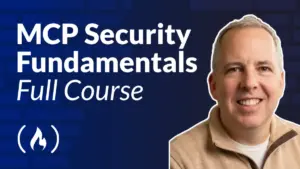
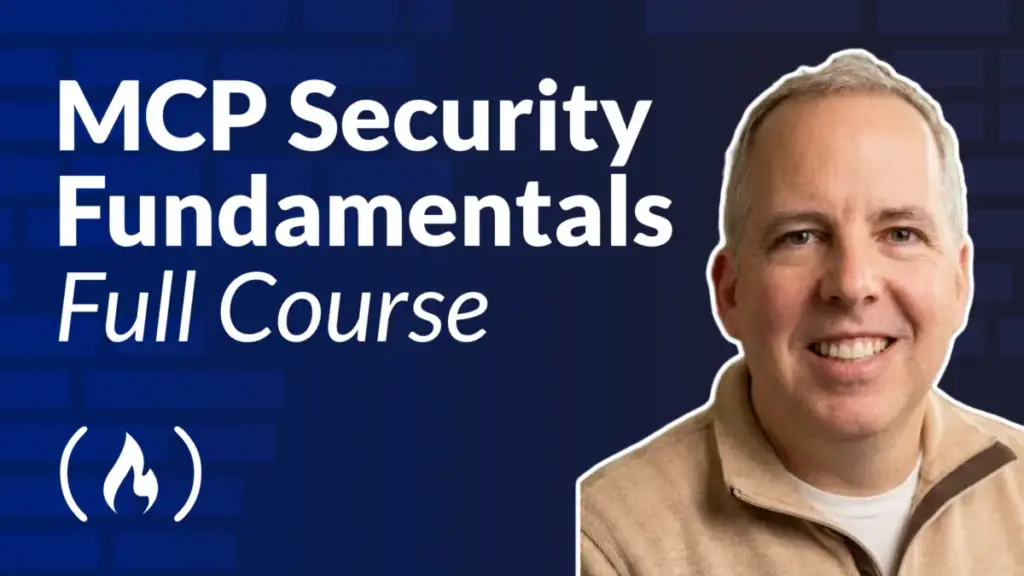
To address these vulnerabilities, a new comprehensive training resource has been made available to the global developer community. A free Model Context Protocol (MCP) Security Course has officially been published on the freeCodeCamp.org YouTube channel, providing developers and security professionals with critical insights into the mechanics of agent exploitation and the strategies needed to defend against them. Taught by instructor Dan, the two-hour course arrives at a crucial time as organizations increasingly deploy autonomous and semi-autonomous AI agents into production environments.
Traditional application security has long relied on the assumption of deterministic code and predictable interactions between humans and machines. Software developers write explicit logic, test for well-defined edge cases, and establish strict boundaries around user inputs. AI agents, however, fundamentally shatter this paradigm by introducing non-deterministic decision-makers directly into the core application logic. When an intelligent agent operates on untrusted data—such as parsing an incoming email, reading a public web page, or processing user-submitted documents—classic software vulnerabilities like command injection, privilege escalation, and token leakage can execute at machine speed, bypassing traditional safeguards.
Throughout the course, instructor Dan frames these modern cybersecurity challenges around security expert Simon Willison’s well-known "Lethal Trifecta" framework. This concept outlines the dangerous convergence of three distinct capabilities within a single AI agent architecture. When an agent possesses the ability to access private or sensitive data, the capability to execute actions with real-world consequences, and the susceptibility to process untrusted and untagged input from external sources, it becomes structurally vulnerable to prompt-driven exploitation.
In scenarios governed by the Lethal Trifecta, malicious actors do not need to exploit traditional memory corruption bugs or network-level vulnerabilities. Instead, they can leverage indirect prompt injection—hiding malicious instructions within seemingly benign data sources like a shared document, a customer support ticket, or a website. Once the AI agent reads the poisoned input, it may interpret the hidden instructions as legitimate commands, inadvertently exfiltrating private databases, initiating unauthorized financial transactions, or modifying critical system settings.
Rather than relying on brittle prompt filters and keyword blacklists—which are notoriously easy for attackers to bypass using linguistic variations, obfuscation, or multi-step reasoning—the new freeCodeCamp course emphasizes robust architectural boundaries. Students learn how to systematically break the Lethal Trifecta by decoupling data ingestion from action execution, establishing the principle of least privilege for agent tools, and enforcing strict human-in-the-loop validation for high-risk operations.
The publication of this security course on the freeCodeCamp.org YouTube channel aligns with the organization’s broader mission of democratizing technical education. Over the years, freeCodeCamp’s open-source curriculum and video library have supported millions of learners worldwide, helping tens of thousands of individuals transition into software development careers. By making specialized, high-level AI security education freely accessible to the public, the platform aims to raise the baseline security posture of AI applications being built across the industry today.
Developers, security engineers, and AI practitioners can now watch the full two-hour course on the freeCodeCamp.org YouTube channel to begin hardening their AI agent integrations and understanding how to safely deploy contextual protocols in modern production environments.