









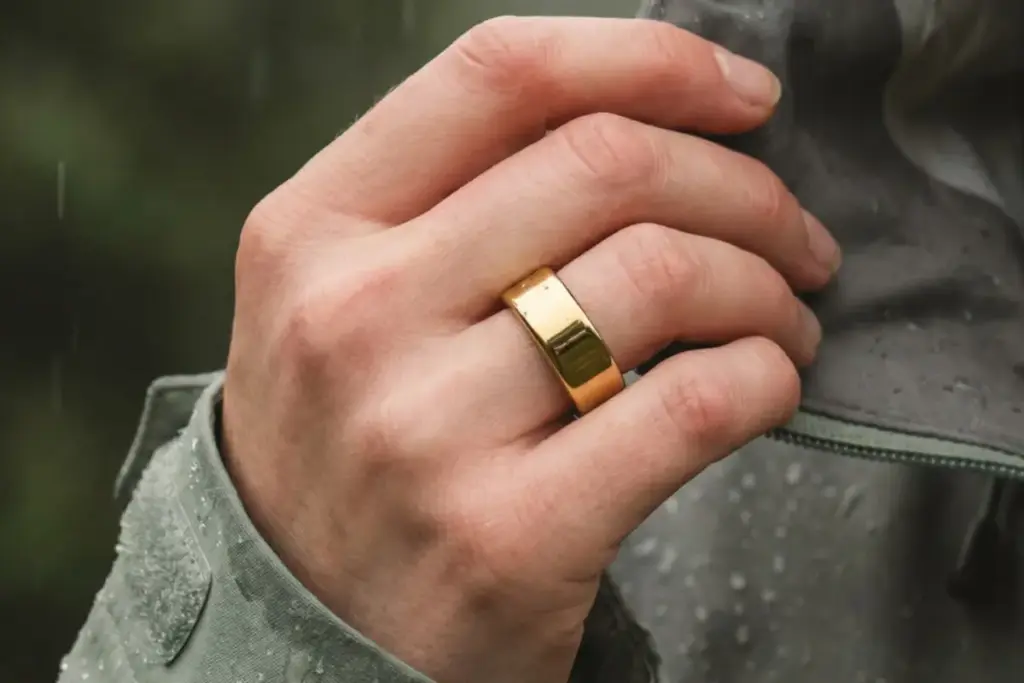
Smart ring pioneer Oura has escalated its aggressive legal strategy against competitors, filing a new lawsuit against Bengaluru-based startup Ultrahuman. The legal action, lodged in a federal court in Texas, seeks a permanent injunction to block U.S. sales of the Ultrahuman Ring Pro. This move comes mere months after the startup successfully returned to the American market following a redesign that bypassed a previous import ban. The case marks another chapter in an ongoing, industry-wide patent battle that has seen Oura take legal action against a host of rivals, including tech giant Samsung and competitor RingConn.
In the complaint filed on Thursday, Oura alleges that the Ring Pro infringes upon two specific patents relating to the device’s internal architecture and design. The claims center on protected intellectual property involving the ring’s proprietary sensor arrays and battery configuration. By seeking both monetary damages and a court-ordered halt to sales, Oura is aiming to effectively neutralize the momentum Ultrahuman has built since its return to the U.S. market in the spring of this year.
The stakes are high for both companies. Ultrahuman’s redesigned Ring Pro, which debuted in February, had managed to secure a favorable ruling from U.S. Customs and Border Protection in March. That decision was seen as a major victory for the startup, effectively clearing the path for its reentry after a bruising International Trade Commission (ITC) battle in 2024. That earlier conflict resulted in an import ban on the previous-generation Ring Air, a product that had been instrumental in establishing Ultrahuman’s footprint in North America.

An Oura spokesperson expressed deep frustration with the startup’s current market presence, stating that Ultrahuman has a documented history of mimicking Oura’s innovations. "Ultrahuman introduced a redesigned ring but failed to address continued infringement of Oura’s patents, seeking instead to capitalize on our innovation and the market leadership we have built," the spokesperson said in a statement. According to Oura, the previous Customs ruling was limited in scope and only addressed the specific patent involved in the earlier litigation, leaving other key components of the device vulnerable to separate claims.
At the heart of the new filing are two specific patents: D804,471 and 12,769,363. The latter is particularly notable for its timing; it was issued to Oura on October 20, just two days prior to the filing of the lawsuit. This patent covers a sophisticated smart-ring design that integrates internal components including a curved battery, a specialized circuit board, magnets, and advanced sensor suites. By asserting a newly minted patent, Oura is signaling that it intends to aggressively protect its intellectual property as the technology behind wearable health monitoring continues to evolve.
The lawsuit also takes aim at the manufacturing supply chain. Oura has named Texas-based electronics manufacturer SVTronics as a co-defendant in the case. The complaint alleges that SVTronics, operating from a facility in Plano, Texas, manufactures the Ring Pro under the direct control and instruction of Ultrahuman. Oura asserts that both entities are jointly responsible for the infringement through the manufacture, importation, and sale of the device within the United States.
Ultrahuman co-founder and CEO Mohit Kumar has responded to the allegations with a message of defiance, asserting that the startup remains fully confident in the legitimacy of its product. "Oura has now chosen to assert different patents, including one that issued just two days before this lawsuit was filed," Kumar told reporters. "We will address these claims through the appropriate legal process and will defend our position vigorously. There is no court order affecting Ring Pro, and it remains available to customers in the U.S."
The friction between these two companies is not a new phenomenon. The rivalry dates back to 2023, when Oura first initiated legal proceedings against Ultrahuman over the Ring Air. That initial skirmish set the stage for a broader campaign of litigation by Oura against the smart-ring ecosystem. By utilizing the U.S. International Trade Commission in 2024 to secure an import ban, Oura demonstrated a willingness to leverage international trade law to stifle competition.
However, the legal pressure is not confined to the Ultrahuman dispute. Oura has been engaged in a multi-front war to maintain its market dominance. The company has filed patent infringement claims against various players in the wearable tech space, including Samsung, RingConn, Circular, and Zepp Health. While some of these legal confrontations have resulted in prolonged courtroom battles, others have concluded with licensing agreements. For instance, both RingConn and Circular opted to settle their disputes by entering into multi-year licensing deals, agreeing to pay royalties to Oura in order to secure their right to operate within the U.S. market.
The ongoing litigation occurs against a backdrop of significant growth in the smart-ring sector. Market research firm IDC projects that global shipments of smart rings will rise by 12.8% this year, reaching approximately 4.9 million units, with forecasts suggesting that the market could expand to 6.3 million units by 2030. While Oura currently enjoys a position as a leading player, the rapid entry of new competitors—and the evolution of existing ones—has created an intensely competitive environment where intellectual property is often the primary battleground.
For Oura, the legal strategy is unfolding during a period of corporate recalibration. Just weeks ago, the company made headlines when it decided to shelve its highly anticipated $2.2 billion IPO, citing "uncertainty" in the broader market. Despite the pause in its public offering, Oura has maintained a rapid pace of product development, recently introducing new fitness metrics designed to help users better understand the relationship between their workouts and cardiovascular health.
Meanwhile, Ultrahuman is operating with significant financial backing as it navigates these legal challenges. In September, the startup successfully raised $70 million in a funding round that included participation from Qualcomm Ventures and Labcorp, bringing the company’s valuation to roughly $365 million. Furthermore, Ultrahuman has entered into a strategic partnership with Qualcomm to develop a new generation of smart rings. This collaboration aims to move beyond basic health tracking by integrating more sophisticated software capable of handling AI interactions and gaming, potentially turning the smart ring into a more powerful, standalone computer.
As the litigation proceeds, the tech industry will be watching closely to see if the Texas court grants the injunction requested by Oura. A successful block on the Ring Pro would be a significant blow to Ultrahuman’s U.S. operations, potentially forcing another redesign or pushing the company toward a settlement similar to those reached by its peers. For now, however, the Ring Pro remains on the market, and both companies appear prepared to continue their battle in the courtroom, highlighting the high-stakes nature of the competition for dominance in the emerging smart-ring category. Whether through further innovation or legal maneuvering, the fight for the finger-worn wearable market shows no signs of cooling down.