









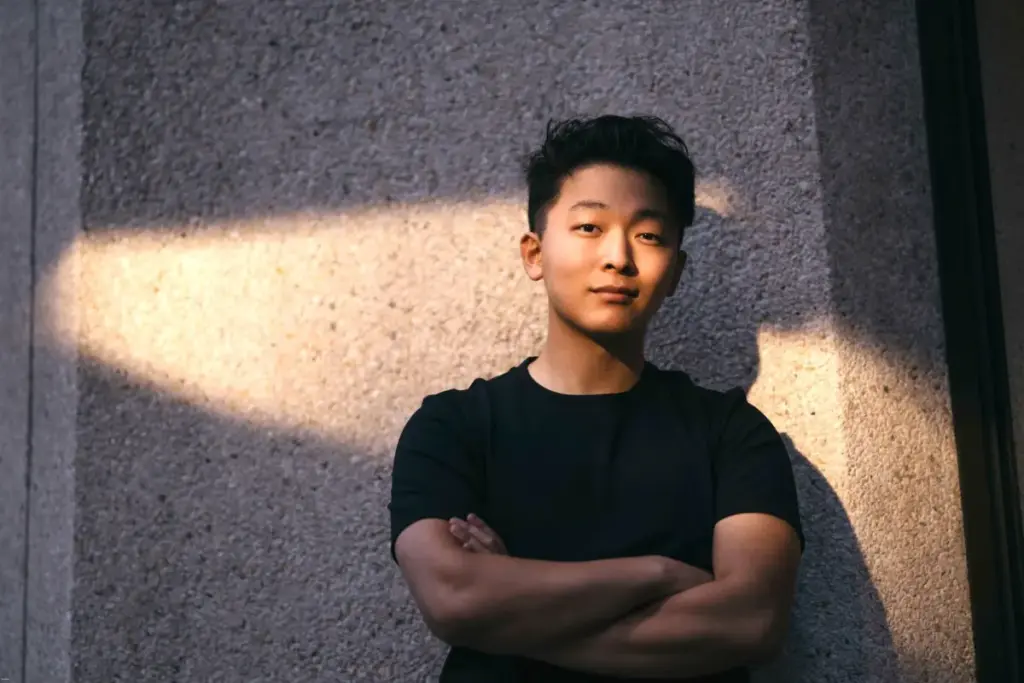
When Sigil Wen moved to Silicon Valley at the age of 17, he didn’t just enter the tech industry; he walked directly into the inner sanctum of the artificial intelligence revolution. As a self-taught coder, Wen took up residence in a legendary AI hacker house, living alongside some of the most influential minds in the field today, including renowned AI researcher Andrej Karpathy. That period served as a crucible for his career, providing him with a front-row seat to the rapid evolution of technology that would soon capture the world’s attention.
While embedded in that environment, Wen collaborated and coded alongside peers who would go on to become titans of the industry, such as Perplexity founder Aravind Srinivas and OpenAI researcher Noam Brown. The hacker house acted as a testing ground for early, experimental AI tools—prototypes that were at the time unknown to the public but destined for greatness. Wen was among the first to tinker with the early iterations of what would eventually become Anthropic’s Claude, introduced to him by co-founder Ben Mann, and the image generation technology from David Holz that evolved into Midjourney. His hands-on experience extended to the foundational models that define today’s landscape, including early versions of OpenAI’s GPT-3 and the image synthesis powerhouse Stable Diffusion.
His technical prowess did not go unnoticed. Naval Ravikant, the prominent investor and entrepreneur, eventually hired Wen for Airchat, a high-profile attempt to challenge the dominance of the Clubhouse social network. Even during his downtime, Wen’s curiosity drove him to experiment with the limits of consumer hardware; he famously managed to get GPT-2 running on an Apple Watch—a feat that, at the time, served as a testament to both his ingenuity and the rapidly shrinking footprint of powerful models. Reflecting on those early days, Wen describes it as a "magical time," characterized by a sense of limitless possibility.
Now, as a Thiel Fellow—a prestigious program established by investor Peter Thiel that encourages young, exceptional founders to pursue ambitious projects rather than traditional higher education—Wen is ready to unveil his own contribution to the field. This Monday, Wen launched an invite-only beta for Underdog, a new AI assistant that positions itself as one of the most privacy-conscious tools yet to emerge from the Silicon Valley ecosystem.
The core differentiator for Underdog is its commitment to local execution. Unlike the vast majority of current AI assistants that rely on cloud-based data centers to process queries, Underdog operates entirely on-device. This means that a user’s personal data—the intimate details of their life, work, and communications—never leaves the machine they already own. The platform currently supports Macs and Windows PCs, with plans to expand compatibility to Linux, iPhone, and Android in the near future.
Underpinning this capability is "Husky," an inference engine engineered by Wen specifically to run AI models with high efficiency on personal hardware. According to Wen, Husky’s architectural advantage lies in how it manages data flow; it significantly reduces the amount of data moved between a computer’s main processor and its graphics processing unit (GPU) compared to competing on-device engines. This optimization is crucial for maintaining responsiveness without necessitating the kind of massive, energy-intensive hardware setups usually associated with high-level AI performance.
Beyond raw speed and local processing, security is woven into the fabric of the product. Underdog includes robust encryption for sensitive credentials, such as the keys to email accounts and other services that a user might authorize the assistant to access. This design choice addresses a growing concern among privacy advocates: the danger of handing over keys to one’s digital life to third-party services that could, in theory, be breached or exploited.
While Underdog prioritizes privacy, it makes a calculated trade-off regarding model size. Rather than attempting to match the gargantuan, trillion-parameter models hosted in massive data centers, Underdog utilizes a more manageable 27-billion parameter reasoning model, fine-tuned from Qwen3.8-27B. Wen argues that this model is more than sufficient for the tasks that users actually want to perform on a daily basis. By his metrics, the 27-billion parameter model compares favorably to Claude Opus 4.6 in specific benchmarks—effectively matching the top-tier performance levels seen just six months ago.
Wen maintains that for everyday utility—such as conducting shopping research, drafting emails, or providing assistance with complex math problems—a smaller, locally-run model provides a superior experience. "You don’t need to sacrifice your privacy for the capability because they’re just as capable," Wen notes. He anticipates that as hardware continues to improve and optimization techniques evolve, these smaller on-device models will only grow in proficiency, eventually bridging the gap between local convenience and massive-scale power.
Perhaps the most disruptive aspect of Underdog is its business model, which diverges sharply from the current industry standard. Because the AI runs entirely on the user’s local machine, Conway Research—the startup behind Underdog—avoids the massive overhead costs of paying for cloud-based server time for every user interaction. Consequently, the app will remain free for users and will never be supported by advertisements. "I don’t have to charge you a subscription to run this because my costs are so super low," Wen explains.
In a move that mirrors the strategies of the fintech era, Wen is borrowing from the world of secure payment processing. With Stripe co-founder Patrick Collison on board as an angel investor, Underdog is designed to facilitate transactions via Stripe’s secure payment rails. When the AI assistant helps a user make a purchase, the company takes a tiny percentage of the transaction—an "interchange fee" of sorts. This alignment of interests is fundamental to Wen’s philosophy: because the platform doesn’t need to monetize user data to sustain its operations, it remains an ally to the user, not a broker of their information.
This approach stands in direct opposition to the prevailing business models of many other AI assistant providers. Currently, many players in the space operate under privacy policies that grant them broad latitude to collect user data. This data is frequently used to train future models or is sold to advertisers and other third parties, creating a cycle of exploitation. This trade-off is particularly hazardous when considering the nature of AI assistants, which, to be truly useful, often require access to the most intimate corners of a user’s life—ranging from medical and financial history to personal details about their family and children.
As Wen articulated in his "AI manifesto," he poses a simple but profound question: "Why should using AI require surrendering your private information?" For Wen, the mission is as much about integrity as it is about technology. He is building Underdog not just as a business, but as a utility he wants for himself. "I honestly want to build Underdog for myself," he told TechCrunch. "I’m building a product that I would be proud for my future children to use."
The potential for such a privacy-centric model has attracted significant attention from the venture capital community. Conway Research has secured funding from a notable roster of backers, including Andreessen Horowitz, led by partner Chris Dixon, as well as Khosla Ventures, Hummingbird, SV Angel, and the Anthology Fund—a collaborative investment arm between Menlo Ventures and Anthropic. The project is further supported by an influential group of angel investors that includes Vercel founder Guillermo Rauch, Noam Brown, and Deedy Das.
As Underdog enters its beta phase, it serves as a litmus test for whether users are willing to trade the promise of infinite, cloud-based intelligence for the tangible security of local, private computing. By prioritizing the user’s autonomy over the data-mining imperatives that have defined the last decade of tech, Sigil Wen and the team at Conway Research are attempting to chart a new, more sustainable path for the future of personal AI.