








The community that has long powered Opensource.com is hard at work on something new. Regular visitors to the publication may have recently noticed a distinct quietness across the site, a hush that signals a period of transition and behind-the-scenes development. While specific details regarding the upcoming project remain under wraps for the moment, organizers assure followers that there is already plenty to talk about as the platform prepares for its next evolutionary phase. What better way to begin discussing this horizon than by looking at the very fabric that connects us all—the entire internet?
The Internet, and Top-Level Domains
To understand where a community-focused digital platform is heading, it helps to examine where the digital landscape began. Most internet users know that the internet is, fundamentally, a network. By definition, a network is a group of connections working in tandem. In fact, the term "internet" is a portmanteau derived from the words "interconnected" and "network."
In its earliest iterations, the modern internet consisted primarily of two distinct networks: a military network and an academic network. These foundational systems served specialized groups with highly specific needs. However, as the digital age progressed and the internet grew in popularity and accessibility far beyond those initial military and academic circles, a new challenge emerged. It quickly became apparent that different designations were desperately needed to differentiate between various types of entities populating the digital space.
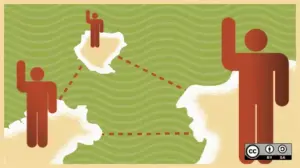

Authorities needed a way to instantly signal whether a digital destination belonged to a commercial entity, a charitable organization, a university, or a governmental department. These crucial designations eventually became known as top-level domains, commonly abbreviated as TLDs.
Today, internet users can choose from a vast and diverse ecosystem of top-level domains, ranging from specialized geographic extensions to industry-specific suffixes. However, for a long time during the web’s formative years, there were only a handful of these foundational extensions available. Those original TLDs remain remarkably popular and culturally embedded in how we navigate the web today. Most internet users intuitively understand that when they type a ".com" address into their browser, they are visiting a commercial site. Conversely, visiting a ".org" address typically signals that the user is navigating to a non-profit website dedicated to public service, advocacy, or community support. These distinctions, though simple on the surface, laid the groundwork for how organizations project their identity and purpose online.
Open Source Is a Network
Just as the internet relies on a web of interconnected connections, open source can be many things simultaneously. It can be commercial, it can be non-profit, it can be academic, and it can be cultural. It crosses national boundaries, bridges corporate divides, and adapts to countless different use cases across the technological landscape. Yet, no matter what form open source takes, or what industry it serves, it is always a network.

Sometimes that network manifests as a physical connection of computers, servers, and repositories sharing code across continents. But more importantly, and at its very core, open source is a network of people. Whether those human connections happen when people gather in person at a bustling conference, catch up informally over drinks at a local pub, or collaborate asynchronously in an online chat room, open source is, above all else, a community of human beings.
For the past twelve years, the website Opensource.com has been generously supported by a commercial entity, serving as a prominent digital hub for sharing stories about software, collaboration, and shared innovation. Yet, a fundamental truth underpins the platform’s existence: the people—representing both the readers and the contributors that make up the vibrant Opensource.com community—are not commercial entities. They are individual people driven by shared values of collaboration, openness, and collective progress.
Now, the community is preparing to align the platform more closely with that human-centric reality. In one month, Opensource.com is going to resolve that long-standing bug and unveil its next chapter. Stay tuned for further updates as the community steps forward into its future.