










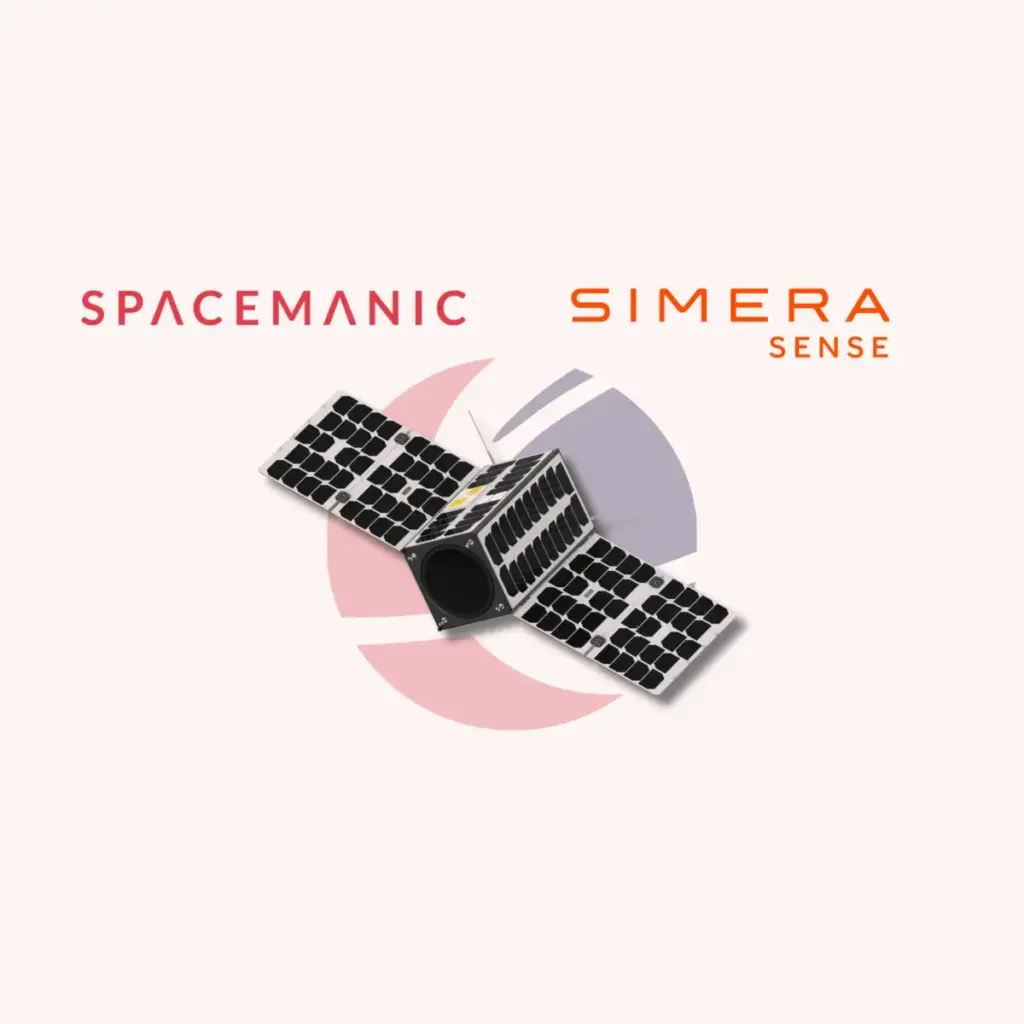
The small satellite market is experiencing a profound shift as Czech spacecraft manufacturer Spacemanic joins forces with Belgian optical payload leader Simera Sense. Together, the two European companies are rolling out an innovative dual-use satellite solution designed to directly rival the capabilities of much larger, heavier, and more expensive spacecraft.
At the heart of this new offering is the integration of the Simera Sense xScape200 Dual-Use (DU) camera directly into Spacemanic’s advanced 16U CubeSat platform. This powerful combination brings high-resolution imaging capabilities to a lightweight, highly compact spacecraft chassis that is intentionally engineered for repeatable deployment and rapid constellation growth. By bridging the gap between high-end optical performance and small-satellite economics, the partnership aims to redefine what is possible in low-Earth orbit for both commercial enterprises and defense organizations alike.
Reimagining High-Resolution Imaging for Small Satellites

The newly introduced xScape200 DU system is strategically engineered to meet the growing demand for actionable, high-resolution Earth observation data without the traditional logistical and financial burdens associated with traditional satellite missions. By combining a compact 12U form factor, low Size, Weight, and Power (SWaP) metrics, and standardized integration protocols, the system provides commercial and defense users with sophisticated dual-use imaging capabilities.
Historically, obtaining high-resolution imagery from space required launching larger spacecraft equipped with massive optical instruments. These larger missions inherently demand heavier launch vehicles, more complex power architectures, and significantly higher budgets. The collaboration between Spacemanic and Simera Sense upends this paradigm. It allows operators to achieve comparable imaging fidelity from a fraction of the mass and volume, opening up new possibilities for frequent, scalable, and cost-effective missions that can be deployed rapidly as part of larger orbital constellations.
Vertical Integration and Tailored Platform Architecture
A key differentiator in this new offering lies in Spacemanic’s comprehensive approach to spacecraft manufacturing. As a company that designs and builds its satellite platforms, core subsystems, and deployers entirely in-house, Spacemanic maintains complete control over the engineering lifecycle.

This vertical integration allows the engineering team to take a holistic approach to satellite design. Rather than forcing a high-performance optical payload to fit into a rigid, off-the-shelf standard form factor, Spacemanic shapes the entire satellite architecture directly around the requirements of the camera. This bespoke methodology encompasses every critical element of the spacecraft, including its primary structure, mechanical envelope, electrical systems, thermal management, and data handling interfaces. Furthermore, this internal control extends all the way to how the finished satellite integrates seamlessly with its dedicated deployment mechanism, ensuring optimal performance from the factory floor to the vacuum of space.
Advanced Deployment and Launch Vehicle Compatibility
To accommodate the unique physical dimensions of payloads like the xScape200 DU camera, Spacemanic utilizes its proprietary SPACE CANNON deployer system. The SPACE CANNON is engineered to house CubeSats up to 16U in size, featuring an intentionally expanded integration envelope specifically designed to accommodate payloads that incorporate protruding elements on their sides as well as a cylindrical "tuna can" structure at the bottom.
This additional internal volume provides the crucial physical clearance required for larger, high-performance optical payload configurations that would otherwise fail to fit inside conventional, restrictive deployer geometries. In addition to its spatial flexibility, the deployer features removable side panels across all four exterior walls. These panels provide direct physical access to the satellite even after the integration process has been completed, enabling engineers to perform crucial final adjustments, inspections, and calibrations right up until the moments before launch.
Flexibility and adaptability extend to the launch market as well. The SPACE CANNON is meticulously designed for seamless integration with a wide array of contemporary launch vehicles. This broad compatibility ensures that customers utilizing the Spacemanic and Simera Sense solution have immense flexibility when booking rides to space, with integration pathways supporting major heavy-lift and emerging commercial rockets alike, including SpaceX’s Falcon 9, Arianespace’s Ariane 6, the Vega-C, HyImpulse’s SL1, InnoSpace’s Hanbit, Isar Aerospace’s Spectrum, RFA ONE, and HyPrSpace’s Baguette One.
Shaping the Future of the Dual-Use Market
By combining Simera Sense’s advanced optical technology with Spacemanic’s tailored platform architecture and versatile deployer system, the two companies have created a complete, end-to-end mission solution. This integrated approach drastically simplifies the traditionally complex path that operators face, streamlining the journey from initial payload integration all the way through to successful orbital launch and deployment.
Beyond the immediate technical achievements of the hardware itself, the partnership between Spacemanic and Simera Sense represents a strategic effort to shape the trajectory of both the commercial and dual-use space markets. As demand continues to accelerate for agile, responsive, and high-performance orbital assets, turnkey solutions that marry cutting-edge optics with highly optimized smallsat platforms are expected to play a foundational role in the future architecture of low-Earth orbit operations.