










The vibrant and far-reaching open source community is hard at work on something entirely new. Regular visitors to Opensource.com may have recently noticed a distinct quietness settling across the platform. That noticeable pause in publishing is not an accident; it is the direct result of a significant new project currently in the works behind the scenes. While organizers note that there are not yet many specific details or roadmap milestones ready for a formal public announcement, there is already an abundance of foundational ideas to talk about. And what better way to start a conversation about a massive digital transition than by looking at the entire internet itself?
The internet, and top-level domains
To understand where the community is heading, it is helpful to look back at how modern digital infrastructure came to be. Most internet users know that the internet is, fundamentally, a vast network. A network, by definition, is simply a group of interconnected connections. In fact, the term "internet" is a portmanteau seamlessly blending the words "interconnected" and "network."
In its earliest days, the internet was a much smaller, highly specialized ecosystem consisting primarily of two distinct networks: the military network and the academic network. These early architects designed a system meant for secure, reliable communication among trusted institutions. However, once the internet began to grow in popularity and expand far beyond those two initial groups, it quickly became apparent that different designations were desperately needed. Systems administrators and early internet pioneers required a reliable way to differentiate between a commercial business entity, a charitable organization, a university, or a governmental department.
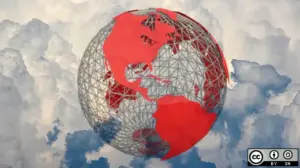
These critical designations eventually came to be known as top-level domains, commonly abbreviated as TLDs. Today, internet users can choose from a vast and sometimes overwhelming array of available domain endings. Yet, for a remarkably long time in the history of the web, there were only a handful of these designations in active circulation.

The original top-level domains remain remarkably popular and culturally embedded in the fabric of the web. Most casual internet users instinctively understand that when they type a web address ending in .com, they are visiting a commercial site operated by a business enterprise. Conversely, when a user navigates to a .org address, they understand they are visiting a non-profit website dedicated to public service, advocacy, or community support. These distinctions matter because they signal the underlying intent, governance, and organizational structure of the entity behind the screen.
Open source is a network
Just as the internet relies on a foundational network of interconnected systems, open source can be many things, but it is always a network at its core. Open source projects can take on a multitude of forms depending on their goals and participants. An open source initiative can be thoroughly commercial, driving enterprise software solutions and commercial support models. It can be non-profit, managed by foundations dedicated to keeping code accessible and free. It can be academic, born out of university research laboratories to advance computer science. It can also be cultural, shaping how artists, writers, and creators share digital works.
No matter what specific form an open source project ultimately takes, it always functions as a network. Sometimes, that network consists of computers, servers, and automated build pipelines linked together across the globe. More importantly, however, it is fundamentally a network of people.
Whether human collaborators are gathering physically at an international conference, meeting informally at a local pub, or conversing in a real-time online chat room, open source is, above all else, a community of living, breathing people. It is driven by human curiosity, shared problem-solving, and a collective desire to build tools that anyone can inspect, modify, and improve.

For the past twelve years, the prominent digital publication Opensource.com has been generously supported by a commercial entity. Throughout that extensive run, the platform has served as a vital digital town square, publishing hundreds of stories about creating, adopting, and sharing open source solutions, while fostering a global dialogue among developers, sysadmins, writers, and enthusiasts.
However, a subtle yet crucial distinction underlies this dynamic. The individual people—representing the readers, contributors, commenters, and advocates who make up the vibrant Opensource.com community—are not commercial entities. They are people. They are individuals bound together by a shared philosophy of collaboration, transparency, and digital freedom rather than corporate balance sheets.
Now, after more than a decade of publication under its current structural model, change is on the horizon. In exactly one month, Opensource.com is going to resolve that long-standing structural mismatch. The community and its supporters are preparing to turn the page and step into a new era. Stay tuned for further announcements as the details of this exciting new chapter come to light.