










It was a weekend of dramatic highs and crushing lows for the burgeoning commercial space economy, highlighted by a historic engineering triumph for SpaceX and a severe setback for Amazon’s competing satellite broadband initiative. While SpaceX’s ambitious Starship program took a monumental step toward achieving full and rapid reusability by successfully catching its upper-stage rocket out of mid-air, Amazon Leo faced a major roadblock when a batch of 40 satellites was lost following an in-flight anomaly during the inaugural United Launch Alliance (ULA) Vulcan mission dedicated to the constellation.
The stark contrast between the two major aerospace events underscores both the unprecedented pace of technological innovation in private spaceflight and the persistent, high-stakes risks inherent in orbital transport. As commercial operators race to build colossal low-Earth orbit (LEO) constellations for global broadband, defense, and artificial intelligence applications, the industry remains tightly bottlenecked by launch capacity, engineering complexity, and the unforgiving physics of space.
‘Baby Come Back’
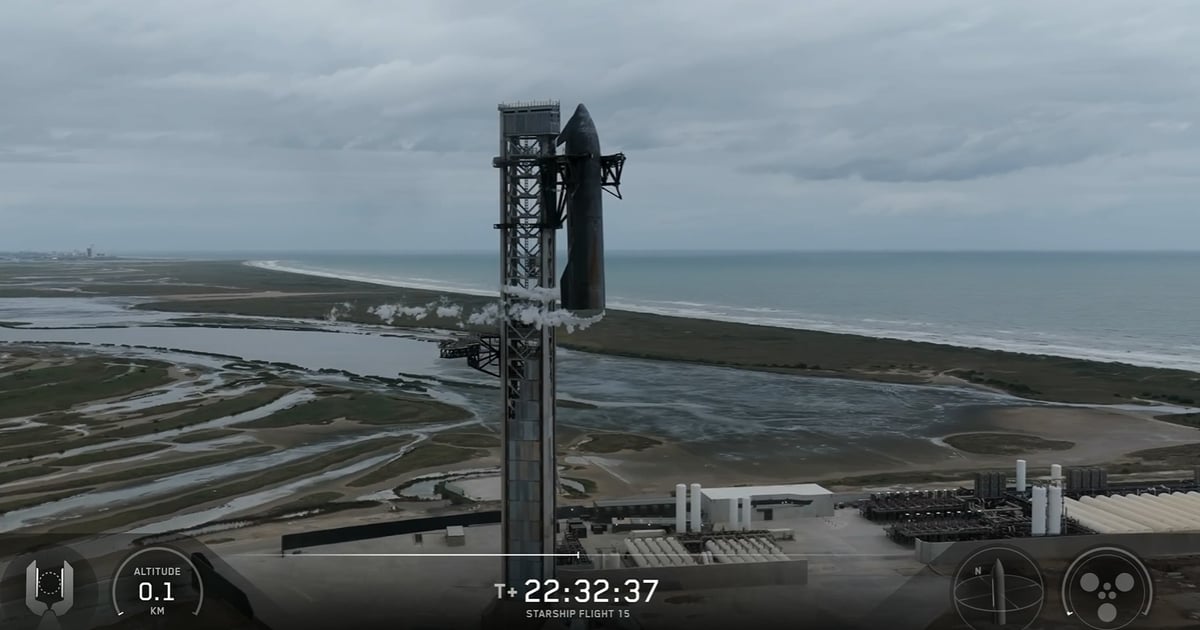
For SpaceX, the weekend marked a major psychological and technical breakthrough at its Starbase facility in Boca Chica, Texas. While the company ultimately fell short of its audacious target to execute a synchronized "double catch"—which would have returned both Starship’s lower-stage Super Heavy booster and its upper-stage spacecraft safely to the launch site—it successfully retrieved the upper-stage "Ship" for the first time ever on Saturday afternoon.

Following the successful deployment of 26 high-capacity "V3" Starlink satellites and nearly a full day operating in orbit, the 171-foot-tall upper-stage initiated its deorbit burn. Navigating flawlessly through the atmosphere and orienting itself toward the Texas coast, the massive vehicle gently maneuvered into the awaiting mechanical arms of "Mechazilla"—SpaceX’s towering launch and landing infrastructure—at 4:20 p.m. ET. The dramatic capture was broadcast live on SpaceX’s stream as Player’s classic yacht rock anthem "Baby Come Back" played softly in the background, instantly cementing the moment in commercial spaceflight lore.
The mission fell short of achieving a complete, dual-vehicle recovery when computer systems aborted the tower catch for the first-stage Super Heavy V3 booster. Telemetry determined that the booster was slightly out of position due to engine underperformance, prompting an automated abort that directed the lower stage to execute a conventional landing burn and splash down in the Gulf of Mexico instead. Elon Musk later confirmed on X that the decision to ditch the booster in the ocean was made because the vehicle was "slightly low on fuel."
Step Toward Rapid Reusability
Despite the missed booster catch, the historic retrieval of Starship’s upper-stage represents a foundational milestone on the path toward rapid reusability. SpaceX has long maintained that true commercial viability in deep-space transport and massive orbital deployment requires aircraft-like operations, where vehicles can be inspected, refueled, and relaunched within hours rather than months. Achieving this capability is considered a vital prerequisite for deploying next-generation broadband and AI satellite constellations, as well as enabling future crewed and cargo missions to the Moon and Mars.
"We caught Starship. Now, everything changes," declared Dan Huot, SpaceX communications manager, during Saturday’s live broadcast.
Industry analysts immediately recognized the catch as a watershed moment for the aerospace sector, though many noted that significant hurdles remain before routine reusability becomes operational. Kutgun Maral, an analyst at ISI Evercore, noted in a research note that Saturday’s Ship catch serves as a "prerequisite for reuse and the clearest step toward that aim." He emphasized that the upper-stage of SpaceX’s former workhorse, the Falcon 9, has historically been discarded after every orbital flight, making Flight 15 of Starship the first hard evidence that the upper stage—widely considered the harder half of the reusability equation—can survive orbital reentry and be successfully caught.
Analysts at New Street Research agreed, stating in a note that the "major hurdles for reusability have passed." They added that SpaceX’s immediate priority will be to thoroughly inspect the recovered vehicle’s engines and thermal protection heat shield to refine future iterations, with the ultimate goal of cutting turnaround and refurbishment times from weeks down to days, and eventually to hours.
The successful catch also provides a critical confidence boost for Starship’s upcoming manifest. Musk had previously given the catch attempt 50% to 60% odds of success back in September. With the milestone now achieved, the focus turns to accelerating the deployment cadence of Starlink V3 satellites, future V4 payloads, and the upcoming constellation of SpaceX "Starmind" AI satellites. Following Saturday’s launch, SpaceX has deployed 52 V3 satellites. Company President and COO Gwynne Shotwell recently indicated that SpaceX will need to deploy a "few hundred" of these high-capacity satellites before customers begin to notice substantial improvements in network speeds—a milestone projected to arrive by mid-2027.
Bigger Starship in the Works
Building on the momentum of the weekend’s success, Musk revealed even grander ambitions for the Starship program on Sunday. Writing on X, he detailed plans for a larger "V4" iteration of the spacecraft, which will stretch approximately 70 meters long—representing a 40% size increase over the current V3 upper-stage—and allow for a 60% boost in propellant capacity.
According to Musk, the V4 design will increase the total engine count to nine by adding three high-thrust Raptor-Vacuum engines. While early conceptual diagrams released in August 2025 suggested a total stack height of roughly 142 to 150 meters (465 to 492 feet), Musk noted that while the V3 Starship is technically capable of reaching Mars, the larger V4 platform will be significantly better suited for interplanetary colonization efforts.
Amazon Leo Loses 40 Satellites in Vulcan Anomaly
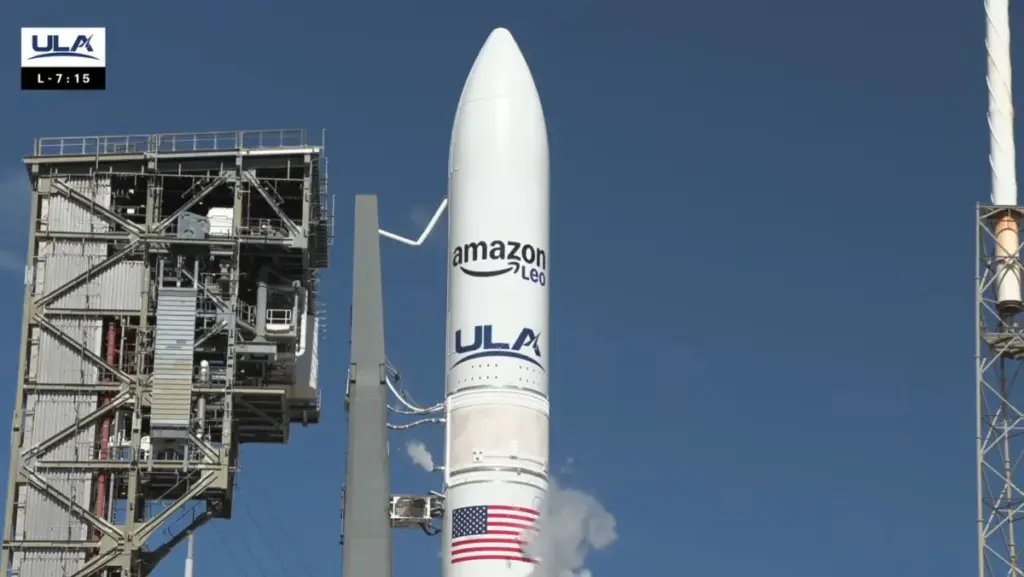
While SpaceX celebrated a technical triumph, the weekend delivered a sharp blow to Amazon Leo, the company’s ambitious low-Earth orbit broadband project. On Sunday, the inaugural flight of United Launch Alliance’s Vulcan rocket dedicated to the Amazon Leo constellation suffered a severe in-flight anomaly approximately ten minutes after liftoff, resulting in the total loss of 40 operational satellites.
The mission was intended to be the first of 38 contracted flights utilizing the Vulcan platform to rapidly scale the Amazon Leo constellation, which currently operates just under 400 satellites in low-Earth orbit. Amazon had previously planned to launch initial commercial services later this year, backed by thousands of customer terminals already manufactured and ready for deployment. The company had previously secured a 24-month extension from the Federal Communications Commission in June regarding its regulatory deployment milestones, with ambitions to expand the constellation to 700 satellites by July 2026.
United Launch Alliance has not yet determined the root cause of the anomaly, stating that engineering teams are actively analyzing telemetry data. "हम will work closely with our customer and other appropriate organizations to find the cause, determine the appropriate corrective action, and return to flight as quickly as possible," ULA said in a statement on its mission website.
In a pre-recorded video broadcast prior to Sunday’s launch, Chris Ellerhorst, ULA’s vice president of strategy, business development, and sales, acknowledged the inherent risks of aerospace manufacturing, noting that inaugural flights carry heightened uncertainty. Analysts from New Street Research pointed out that despite ULA’s six decades of launch heritage, the legacy provider has struggled to smoothly ramp up production of its new expendable rocket. Originally slated to debut in 2019, Vulcan ultimately flew for the first time in January 2024 and has already encountered three anomalies across its first five flights.
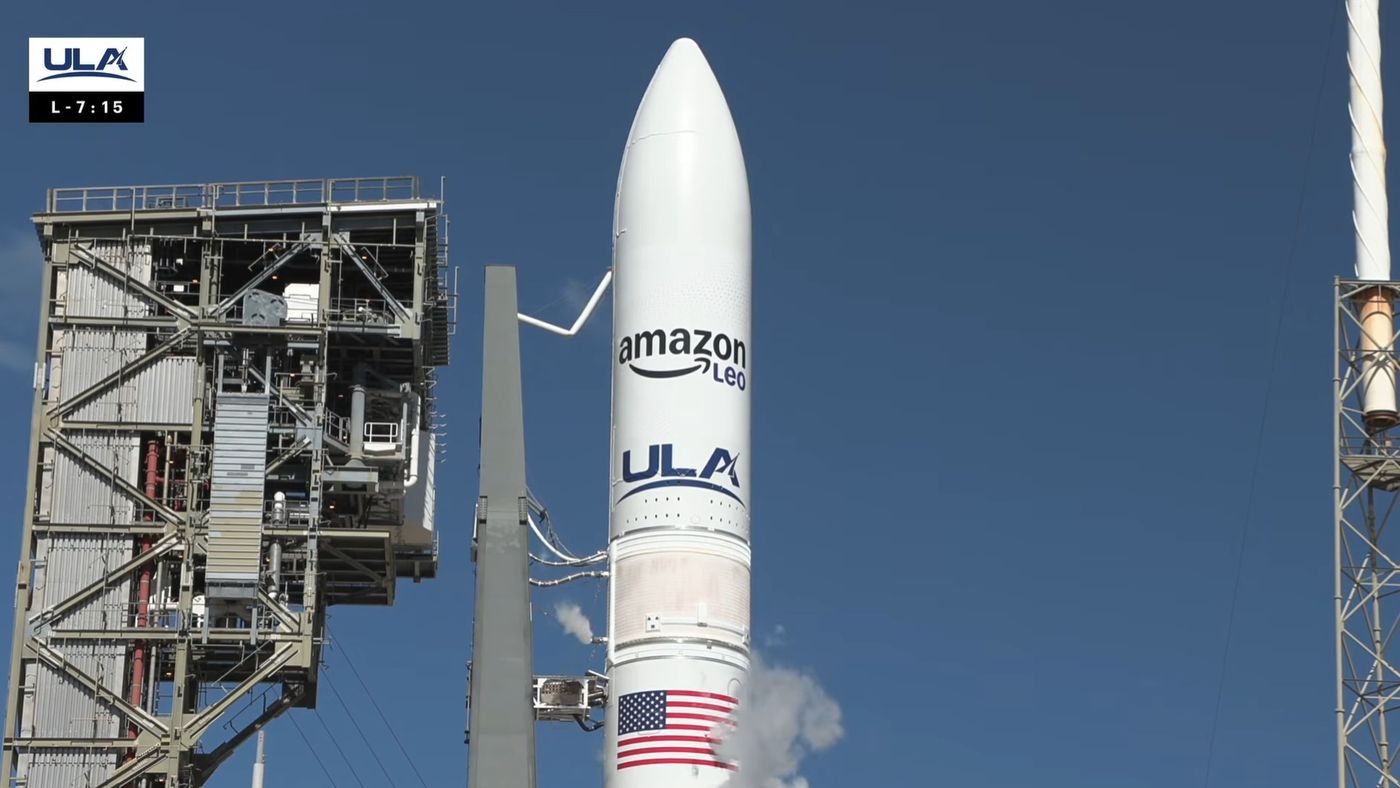
The Vulcan failure compounds a difficult period for Amazon’s multi-supplier launch strategy. It arrives nearly six months after a heavy-duty "New Glenn" rocket developed by Blue Origin—another critical launch partner for Amazon Leo—exploded during a prelaunch ground test. That specific vehicle had been assigned to deploy a batch of 48 Amazon Leo satellites.
Amazon Leo Still Go for Service Launch in 2026
Despite the loss of 40 satellites, Amazon confirmed on Monday that the Vulcan anomaly does not disrupt its core timeline to commercially launch Amazon Leo services in 2026. The company stated that it maintains a sufficient number of operational satellites currently in orbit to provide continuous coverage across specific latitudes, with initial service rollouts remaining on track to begin in the coming weeks, though exact commercial dates were not disclosed.
Amazon emphasized that it maintains hundreds of flight-ready satellites sitting on standby, ready to be integrated into upcoming launch manifests. To mitigate further delays, Amazon is actively looking at alternative launch providers. A mission scheduled with Arianespace is currently slated to lift off no earlier than November 23, and the company is evaluating all available options across the commercial aerospace market to support its long-term deployment schedule.
Pressure for Launch Capacity Builds
The latest setbacks faced by ULA and Blue Origin serve to highlight an escalating industry-wide crunch for reliable launch capacity. Analysts note that ULA’s ongoing operational struggles with the Vulcan rocket will only serve to amplify SpaceX’s market dominance and the regulatory scrutiny that inevitably accompanies it.
While numerous aerospace startups are attempting to scale manufacturing and launch capabilities to alleviate the current bottleneck, industry-wide delays suggest that alternative capacity will come online much more slowly than initially projected. As a result, launch providers with proven, reliable track records—most notably SpaceX and Rocket Lab—remain uniquely positioned to capture incremental market demand.
With SpaceX actively preparing to wind down its veteran Falcon 9 program as Starship maturation accelerates, industry observers are closely watching how the company will wield its near-monopoly on heavy-lift capability. Writing on X, TMF Associates analyst Tim Farrar raised questions about whether SpaceX will use its dominant market position to support competing commercial and defense constellations or if regulatory and political pressures will necessitate new operational safeguards. Farrar suggested that a key goodwill measure for SpaceX would be to guarantee third-party access to Falcon 9 launches for as long as market demand requires.
As the commercial space race accelerates toward the latter half of the decade, the events of the weekend have demonstrated both the extraordinary technological heights achievable through relentless innovation and the fragile, high-risk reality of humanity’s expansion into orbit.