Apple has officially entered the smart home display market with the announcement of the HomeView, a new device designed to serve as a central hub for smart home controls and interactions with Siri AI. Available starting November 13, the HomeView arrives as Apple’s first-ever dedicated smart home display, positioning the tech giant to challenge established competitors like Amazon and Google, which have dominated the space for nearly a decade.
Industry experts who have tested devices in this category since Amazon launched the original Echo Show in 2017 and Google introduced its first smart displays in 2018 note that Apple has considerable ground to cover. While competitors have iterated through multiple generations of smart speakers and displays—and occasionally abandoned entire product lines, such as Meta’s discontinued Facebook Portal—Apple is stepping into a mature market with high expectations. The stylish HomeView enters a landscape defined by entrenched rivals like the EchoShow 11 and the 10-inch Google Nest Hub Max, prompting early hands-on evaluations and strategic questions for consumers weighing their next smart home purchase.

Nuts and Bolts: Apple’s Stylish Display Faces a Challenge
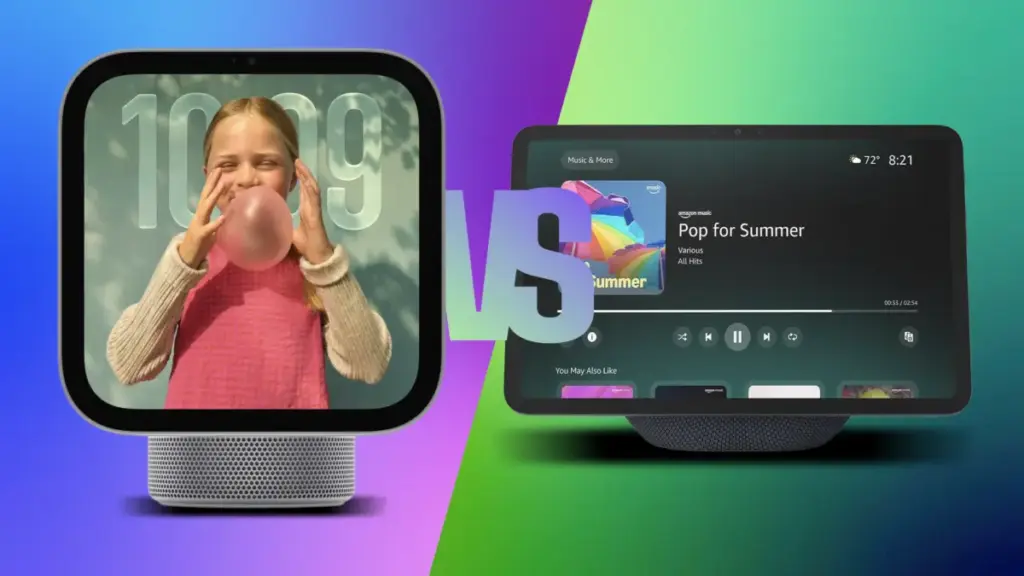
From a design standpoint, the HomeView presents a sleek aesthetic. It immediately evokes comparisons to the Echo Show 11, featuring a screen mounted on a low-set, domed base that houses the device’s speakers. Unlike Amazon’s discontinued Echo Show 10, which utilized an auto-rotating base that frequently collided with household objects, the HomeView relies on a stationary design.

However, the physical dimensions of the device have sparked immediate debate. At 7 inches, the HomeView is remarkably small. During Apple’s press briefing, industry reviewers noted that attendees frequently complained about the modest screen size. Compared directly to competing models built for similar environments, the HomeView’s display feels undersized, raising questions about why Apple opted for dimensions more traditionally suited to a bedside smart clock than a central kitchen or living room tabletop.

While the Liquid Retina display delivers vibrant colors and sharp details—and a smaller panel may have been necessary to keep the retail price below the $300 threshold—the footprint ultimately limits several core smart home display functions. Activities like video calling and watching media are significantly compromised on a compact screen. While Apple demonstrated video content playing on the device during its presentation, users are unlikely to comfortably watch movies from across a kitchen or parse detailed cooking instructions and family FaceTime calls on a 7-inch panel.
Both Amazon and Google have steadily increased the screen sizes of their flagship smart displays to accommodate their use as secondary televisions or detailed visual guides. Experience across the industry suggests that screens under 8 inches struggle to deliver utility unless viewed from a distance of just one or two feet.

To address placement flexibility, Apple is offering wall-mounting options for the HomeView, an area where Google’s Nest line has traditionally lagged, though Amazon offers similar mounting configurations for select Echo Shows. While reviewers observed that a wall-mounted HomeView presents a clean aesthetic, it requires professional installation to conceal the wired power connection, driving the total cost past the initial $300 price point. Furthermore, Apple’s cheapest wall-mount accessory adds an extra $60 to the purchase.
The screen size constraint remains a concern for wall installations as well. Devices like the Echo Show 21 offer expansive 21-inch touchscreens paired with built-in Fire TV platforms, providing significantly more screen real estate for general multimedia consumption compared to a compact unit better suited for monitoring security feeds and lighting controls.

The Battle of Voice Assistant AIs
Evaluating the big three voice assistants reveals distinct operational philosophies. While Google’s Gemini for Home offers reliable, accurate performance and Siri provides rapid execution for Apple Home device controls, Amazon’s Alexa Plus remains a standout for smart display interaction.
Alexa Plus combines a naturally conversational tone with a unique feature: the ability to choose from multiple distinct personalities, an option absent from rival ecosystems. Integration with Echo Shows allows the assistant to display previous conversational context for smoother continuity and pull up supplemental information on demand. While large language model chatbots occasionally exhibit overconfidence regarding their capabilities, Alexa Plus distinguishes itself through robust third-party app integration. Users can utilize an Echo Show to order food through GrubHub or Uber Eats, summon an Uber ride, purchase Ticketmaster event tickets, or book restaurant reservations via OpenTable.

In contrast, Siri AI on the HomeView does not appear to feature equivalent third-party application support for bookings and external services. Apple has indicated that the HomeView supports compatible third-party audio and video apps from a connected iPhone, but details remain sparse regarding broader service integration.
Siri AI carves out advantages in other areas, however. Demonstrations indicate that Siri can naturally search personal email and messaging applications to surface specific texts, recipes, or related information—a capability that competing voice assistants typically restrict to smartphones. Additionally, Apple allows users to customize Siri’s voice speed for improved accessibility. Pricing may ultimately influence consumer preference, depending on whether specific features require an iCloud Plus subscription, particularly when weighed against the monthly subscription fees required to fully unlock advanced features on rival platforms.

Smart Home Controls Are Where Apple’s Ecosystem Shines
Managing a multi-brand smart home using the Matter standard and various home hubs often involves friction. Linking diverse devices to Alexa or Google ecosystems frequently results in wonky interfaces, missing settings, disconnected hardware, and inconsistent voice commands.
Apple leverages its tightly controlled ecosystem and the Apple Home app to mitigate these challenges. The HomeView effortlessly discovers and pairs with compatible devices, a setup process compared in smoothness to pairing Apple AirPods. Siri AI further streamlines personalization through facial recognition or manual profile creation.

Much like HomePods, the HomeView supports content handoff from iPhones alongside integrated Find My mapping tools for locating misplaced Apple items. This creates a more cohesive user experience than many legacy smart displays, though device support remains narrower within Apple’s ecosystem. While Apple has recently expanded its hardware lineup with proprietary security cameras, a smart lock, and a smart thermostat designed for Siri AI and Apple Home, third-party smart bulbs, smart plugs, and security cameras with native Apple compatibility are less common, potentially requiring consumers to navigate self-imposed ecosystem limitations.
Always Double-Check Your Streaming Capabilities
Audio performance on the HomeView, driven by two custom full-range drivers, a down-firing woofer, and two passive radiators, has been described as surprisingly robust, though stopping short of the acoustic output delivered by a full-size HomePod. For comparison, the Echo Show 11 features two full-range drivers and a woofer without passive radiators, while the Nest Hub Max utilizes two tweeters and a heavy-duty woofer.

While all three platforms can easily fill a standard room with sound, service compatibility remains a critical factor. Apple Music is natively supported on the HomeView, but broader music streaming details remain limited. While Apple’s HomePod Mini 2 supports services like TuneIn Radio, iHeartRadio, and Audacy, official integration for the HomeView has not been fully detailed, historically leaving platforms like Deezer and Pandora as the primary alternatives outside of Apple’s ecosystem.
In comparison, Amazon’s Echo Show supports Amazon Music, Apple Music, Deezer, Spotify, Tidal, Pandora, and SiriusXM, while Google Nest Hubs support YouTube Music alongside Apple Music, Deezer, Spotify, Pandora, Amazon Music, TuneIn Radio, and iHeartRadio. Consumers relying on diverse music streaming services may find broader compatibility outside of Apple’s dedicated display.

A similar caveat applies to video streaming. The HomeView emphasizes Apple TV integration, leaving the availability of other third-party streaming applications uncertain. Conversely, Google Nest Hubs support numerous services via Google Casting, including Netflix, Disney Plus, Hulu, and Paramount Plus. Echo Shows provide direct access to Prime Video, Netflix, Hulu, YouTube, Peacock, TikTok, Disney Plus, and HBO Max, with larger models adding native Fire TV support for expanded application access.
Pricing Is Comparable, But Apple’s Display Will Still Cost the Most
Aside from its compact screen, the HomeView carries a baseline price of $299, positioning it closely alongside current flagship competitors. Amazon’s Echo Show 11 starts at $250—frequently subject to holiday discounts that Apple rarely matches—while the wall-mounted Echo Show 21 reaches $500. Google’s Nest Hub Max, though increasingly difficult to find as retailers await potential updates to the product line, typically retails between $230 and $250.

While the HomeView represents a higher initial investment than some base competitors, the price gap is narrower than what is typically observed across other Apple product categories.
One More Thing: Don’t Forget About iPads
Given Apple’s robust tablet ecosystem, an alternative approach involves utilizing an iPad equipped with a prop cover stand. An iPad can fulfill many of the same functions as a HomeView across kitchen counters and tables while offering a larger screen and broader compatibility with mainstream applications. Furthermore, tablets can be easily transitioned into portable computers or fitness companions when needed.

This approach carries two notable drawbacks: higher upfront costs, with iPad Air models starting around $750 and the iPad Mini priced around $600, and inferior standalone audio performance compared to the HomeView unless paired with external AirPods or a HomePod. As testing continues on Apple’s latest home hardware releases in the coming months, consumers will have clearer benchmarks to determine whether to invest immediately or wait for future iterations.