








In a significant escalation against the digital infrastructure powering the Russian wartime economy, the United Kingdom has formally imposed economic sanctions against Cryptomus, a chameleonic cryptocurrency platform identified by international security experts as a primary conduit for global cybercrime. The sanctions, announced on October 8, strike at the heart of a network that has long facilitated ransomware payments, narcotics trafficking, darknet market transactions, and large-scale financial fraud, all while providing a critical lifeline for Russia to circumvent Western financial restrictions.
The U.K. government’s action effectively freezes any assets held by Cryptomus within British banks and imposes a blanket prohibition on any British company or individual from engaging in business with the platform, whether through virtual assets or traditional financial services. This regulatory crackdown extends beyond Cryptomus alone, targeting a web of related virtual payment entities, including VexPay, TokenSpot, and the Tsunami Payments service. By dismantling this infrastructure, British authorities aim to choke the flow of illicit funds that have historically provided the Kremlin with the means to bypass global sanctions regimes.
Cryptomus has gained notoriety for its ability to reinvent itself in the face of legal pressure. Previously operating under the banners of Certa Payments and Xeltox Enterprises, the platform has exhibited a remarkable capacity for evasion. Its most recent incarnation, "Heleket," emerged last year as a direct response to a landmark decision by Canadian regulators, who levied a record CAD $176 million fine against the platform for flagrant anti-money laundering violations. Despite the severity of the Canadian penalty, the platform’s core operations remained largely unhindered, prompting investigators to warn that financial fines alone are insufficient to neutralize such resilient, decentralized criminal hubs.
Blockchain analysis firm Chainalysis, which has closely monitored the platform’s activity, highlighted the strategic importance of the U.K. sanctions. In a blog post released shortly after the announcement, the firm noted that Cryptomus and its alias, Heleket, had matured into critical payment hubs for illicit activity on a global scale. According to Chainalysis, the volume of illicit funds moving through these services surpassed that of many traditional mixers, with the number of illicit counterparties interacting with the platform surging to more than 900 in a single month in late 2025. This surge underscores the platform’s role as a primary artery for criminal syndicates seeking to launder the proceeds of their operations.
The scale of the platform’s reach is staggering. In April 2026, investigations by the blockchain analysis firm TRM Labs revealed that Cryptomus had processed more than $7 billion in transactions since its inception in 2022. The nature of these transactions was often grim, with findings linking the platform to the processing of funds for child sexual abuse material vendors, sophisticated terrorist financing networks, and international human trafficking operations.

TRM Labs further observed a tactical shift in the platform’s operations following the imposition of the Canadian fines. As regulators tightened the screws, Cryptomus experienced a significant drop in transaction volume after implementing mandatory "know your customer" (KYC) protocols. In an attempt to maintain its illicit client base, the platform launched Heleket as a parallel service. This new iteration was explicitly designed to bypass the stricter oversight of the primary platform, continuing to offer anonymous, no-KYC payment processing to the global criminal underworld.
Richard Sanders, a prominent blockchain investigator who has dedicated months to mapping the complex infrastructure of Cryptomus, emphasized the necessity of the U.K. intervention. Sanders has been a vocal critic of the limitations of civil financial penalties, noting that while the Canadian fine was substantial in dollar terms, it proved to be largely unenforceable and uncollectible.
"A fine doesn’t stop a cryptocurrency payment processor from processing payments," Sanders wrote in a recent LinkedIn analysis. "Sanctions kill the operation. The distinction matters."
The investigative trail leading to Cryptomus has long been shrouded in layers of corporate obfuscation. A 2024 investigation into the company revealed that it shared a registered Vancouver address with dozens of other foreign currency dealers and money transfer businesses—a classic hallmark of shell company structures. Many of these entities, despite their official registrations, did not appear to maintain any genuine physical presence at the designated locations. This pattern of deceptive corporate registration has allowed Cryptomus to operate in the shadows of multiple jurisdictions, appealing the Canadian penalties while simultaneously pivoting to its new Heleket service to ensure that the stream of illicit transactions never faltered.
Industry experts have noted that the U.K. sanctions are particularly notable for their geopolitical implications. They represent the first known instance of a "Five Eyes" nation—the intelligence-sharing alliance comprising Australia, Canada, New Zealand, the U.K., and the U.S.—taking direct sanctioning action against a cryptocurrency operation that was incorporated within another Five Eyes jurisdiction. This cross-border coordination marks a shift in how international authorities are beginning to view the enforcement gap that has allowed platforms like Cryptomus to thrive.

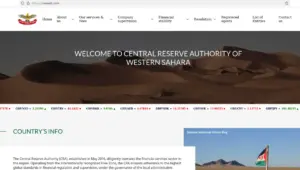
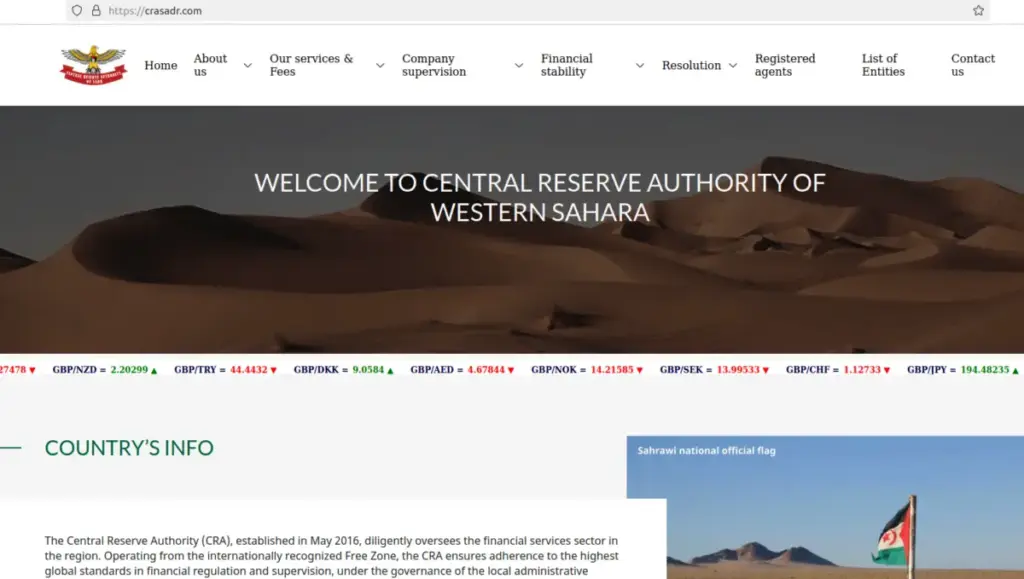
The authority under which these firms operate has also been a subject of intense scrutiny by investigators. The origin of the platform’s legitimacy, or lack thereof, appears to be rooted in a bizarre, artificial regulatory framework. Investigations into Certa Payments, the parent company of Cryptomus, revealed that its sole shareholder was a 25-year-old Ukrainian woman. She was also identified as the head of several other firms, including the WS Management and Advisory Corporation. This entity claimed to serve as the exclusive regulatory body for cryptocurrency, foreign exchange, and online gaming businesses incorporated in the Western Sahara, a disputed region in northwest Africa.
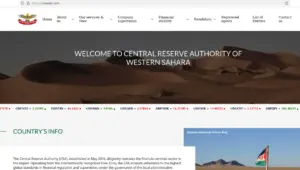
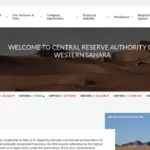
The legitimacy of this "regulatory" body is entirely illusory. The website for the Central Reserve Authority of the Western Sahara (crasadr.com) provides a facade of institutional oversight, listing the various entities that it has supposedly licensed. However, investigators discovered that the website for Certa Payments previously shared a server with over a dozen other domains, including those linked to the so-called Central Reserve Authority. By establishing a phony regulatory body in a region that lacks broad international recognition as a sovereign state, the operators of Cryptomus created a self-referential system of "official" documentation designed to satisfy the minimal requirements of third-party payment gateways and unsuspecting business partners.
As of October 8, the impact of the U.K. sanctions was immediate and visible. Users attempting to access the Cryptomus support bot on the encrypted messaging platform Telegram were met with automated messages stating that the service was suddenly unable to process transactions. Whether this disruption will finally result in the permanent cessation of the platform’s activities remains to be seen, but the coordinated pressure from British authorities represents the most significant blow to date against a service that has for years operated with seeming impunity at the intersection of international finance and organized crime.