









The way most organizations are rolling out artificial intelligence feels less like a calculated corporate strategy and more like a carefully orchestrated farce. If current enterprise AI adoption efforts were adapted into a feature film, movie reviewers would likely dismiss the plot as entirely unbelievable, arguing that no real-world management team could possibly be that naive. Yet, organizations everywhere are living through this reality, and what makes the situation all the more frustrating for industry observers is that corporate leadership has traversed this exact terrain before.
Back in 2014, consultant and author Paul Boag published Digital Adaptation, a book for Smashing Magazine that examined the systemic mistakes organizations were making in their approach to digital transformation and outlined what they should have been doing instead. Today, the similarities between the digital transformation boom of the past and the current artificial intelligence era are striking. Revisiting the lessons of that book reveals how the past can help modern enterprises navigate the profound operational and cultural challenges of AI today. Across industries, the single biggest mistake made during both eras remains identical: approaching a complex organizational shift purely as a technological challenge.
It’s About People, Not Technology
Of course, both digital transformation and artificial intelligence represent massive technological leaps forward, and implementing enterprise-grade tools requires a certain level of technical execution. However, that technical implementation is merely the tip of a very large iceberg.
During the height of the digital transformation era, internal IT departments busily rolled out content management systems, customer relationship management platforms, and corporate intranets. Concurrently, customer-facing divisions launched new websites, mobile applications, and personalization engines. Yet, leadership put almost zero emphasis on how real people—whether employees or customers—were actually going to use these systems. Internal workflows remained frustratingly difficult to navigate, and end users either did not care about what was being built or wanted something entirely different to solve their daily problems.
A remarkably similar phenomenon is playing out with artificial intelligence. Senior executives are buying heavily into the commercial hype, and internal IT departments are purchasing enterprise licenses—such as widespread rollouts of Copilot Studio—and considering their job finished. Aside from a bit of generic, organization-wide training delivered via slideshows, that is typically where the strategy ends. Consequently, everyday staff members are left scratching their heads, wondering what they are actually supposed to do with these sophisticated new systems, all while feeling intense pressure from above to use them and immediately deliver measurable business results.
Organizations must finally recognize that artificial intelligence represents a profound cultural shift as much as it is a technological one, and that fundamental shift carries enormous implications for their workforce. This time around, the stakes are arguably even higher because staff members are genuinely fearful for their futures and their job security. Employees have read the very same alarming headlines about automation as executive leadership, and no amount of reassuring corporate promises from the C-suite is going to alleviate those underlying anxieties.
Why Would Staff Want To Adopt AI?
Examining this dynamic from the perspective of an everyday employee clarifies the hesitation. Artificial intelligence offers frontline workers very little personal benefit, even when setting aside the implicit fear that management intends to use these tools to automate their positions away entirely.
The primary reason senior management is so enthusiastic about artificial intelligence is the promise of boosted productivity. Leadership sees a world where human workers can accomplish significantly more tasks in less time. However, that increased efficiency does not directly benefit the employee. Staff members are still expected to work their standard hours, but they are now pressured to produce a higher volume of output within that exact same timeframe. They do not receive extra time back in their schedules, nor do they see increased compensation for their elevated output. Naturally, employees ask a fundamental question: why should they embrace a technology that demands more of them without offering a tangible reward?
Before demanding that staff enthusiastically adopt artificial intelligence, organizations must first determine how they intend to genuinely motivate them to do so. One viable strategy involves helping employees identify the most tedious, frustrating parts of their daily jobs and showing them how AI can alleviate those specific pain points to make their tasks faster and less painful. People are inherently far more receptive to operational change when it is presented as a genuine opportunity to improve their day-to-day working lives rather than an administrative burden.
Beyond easing daily frustrations, organizations may need to consider providing direct incentives for AI adoption, ranging from pathways for career progression and financial compensation to reduced working hours for teams that successfully streamline their workflows.
Staff Need Time And Support To Adopt AI
Adopting artificial intelligence is far from a trivial task. It requires employees to actively challenge and unlearn almost every established working practice they have accumulated over years, or in some cases, decades. All of that accumulated procedural knowledge has to be systematically rebuilt and adapted to a new paradigm. That is an enormous burden to place on any workforce, particularly when employees are rarely operating under ideal circumstances.
Most corporate workers are already overworked, stretched thin, and perpetually struggling to stay on top of overflowing to-do lists. They simply do not have spare hours in the day to sit down, calmly learn a complex new software tool, and figure out how it integrates into their existing workflow. Acquiring proficiency with these systems requires much more than a quick training session; it demands deep consideration, patience, and iterative experimentation. Sending a staff member to a single generalized training course and expecting them to immediately leverage artificial intelligence to its full potential is entirely unrealistic.
At a bare minimum, staff require role-specific training tailored to the unique demands of their departments. Furthermore, organizations should develop sophisticated, ongoing support structures that give employees dedicated time to experiment with AI tools and discover the most effective ways to apply them to their daily responsibilities.
Formal training programs, however, will only take an organization so far. Experience shows that the most effective internal support typically comes from peers rather than top-down directives. Every organization features a small subset of enthusiastic employees who are already experimenting with AI tools on their own initiative, often without formal encouragement from management. Bringing these early enthusiasts together, granting them the time and space to share what is successfully working for them, and letting their organic enthusiasm spread to their colleagues is a powerful catalyst for adoption.
A similar dynamic was visible during the digital transformation era. Internal conferences where staff showcased projects they had built themselves did vastly more to drive organization-wide adoption than any formal memo issued from the executive suite. People are significantly more likely to try a new approach when they witness a peer in a similar role using it successfully, rather than when they are commanded to do so by senior leadership. Rather than expending energy trying to win over the most resistant employees first, organizations should identify the people already experimenting, give them a platform to share their insights, and let social proof do the heavy lifting.
Unfortunately, genuine experimentation inherently comes with a major hurdle: mistakes are bound to happen.
It Needs To Be Safe To Fail
Many organizations maintain a pervasive culture of fear where professional mistakes are treated as undeniable indicators of incompetence. Yet, by its very nature, mastering a novel technology like artificial intelligence involves trial and error. When an enterprise punishes missteps, fear becomes a massive barrier to widespread adoption.
This dynamic was heavily apparent during the digital transformation era, where senior executives demanded rapid modernization while remaining utterly confused when progress stalled. Management failed to realize they were sending profoundly mixed messages to their staff. On one hand, leadership demanded digital innovation, but on the other hand, they maintained rigid key performance indicators and aggressively penalized any operational slip-ups during annual performance reviews. There was zero structural space provided for failure because the relentless pressure to deliver immediate, flawless results remained unchanged.
In the current AI landscape, these counterproductive patterns seem even more pronounced. Reports circulate of employees being reprimanded by management for consuming excessive API tokens mere weeks after being instructed to embrace AI tools. In other cases, staff are lectured so excessively regarding what they are strictly forbidden to do with the technology that they become terrified to try anything at all. Under those conditions, employees naturally conclude that it is infinitely safer to simply stick to the traditional methods they have always used.
If executive leadership genuinely wants their staff to adopt artificial intelligence, they must cultivate an environment where it feels safe to experiment. Management needs to adjust key performance indicators, modify how employee performance is reviewed, and temporarily relax strict governance policies while workers are navigating the steep learning curve.
Handle Governance With Care
Of course, introducing enterprise artificial intelligence cannot happen in a complete vacuum; some level of internal governance is necessary. However, governance is yet another area that organizations have historically mismanaged.
During the digital transformation era, organizational governance typically swung wildly between two unhelpful extremes: it was either completely nonexistent or so suffocatingly strict that it entirely paralyzed innovation. The exact same pattern is emerging with modern AI adoption. Employees certainly need clear governance to understand where they stand, what is expected of them, and the boundaries of permitted behavior.

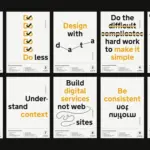
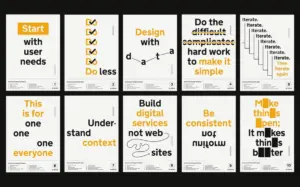
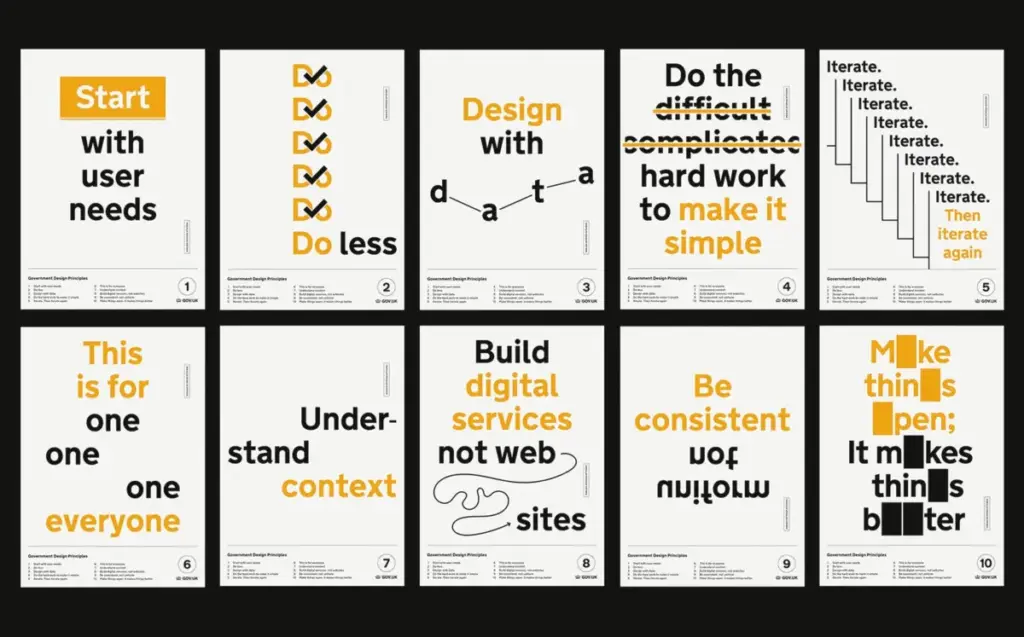
However, organizations frequently draft policies that are so restrictive that employees find it easier to simply do nothing at all. Lengthy, legally dense compliance manuals detailing every theoretical risk of what data should or should not be shared with an AI tool only amplify the culture of fear. Organizations would be far better served by establishing a concise set of core principles—guidelines short enough to fit on a handful of posters, reminiscent of the government design principles used by public sector digital teams. Beyond those brief principles, management must demonstrate a basic degree of trust in their employees to apply common sense.
Mistakes will inevitably occur, but that is the unavoidable cost of organizational evolution. Leadership must accept that reality and account for it during the rollout process rather than trying to legislate every human action.
Adaptive Technological Rollout
From an IT infrastructure perspective, organizations must also exercise caution in how they deploy AI tools. Once again, it is remarkably easy for overstretched technology departments to lock everything down, thereby choking off organic adoption.
A decade ago during the digital transformation movement, overburdened IT teams would select a rigid set of software vendors and roll them out globally with little to no consultation involving the actual end users. Anything falling outside that pre-approved software stack was subjected to a painfully complex approval process, usually bottlenecked by a bureaucratic steering committee. The resulting glacial pace of change contributed heavily to the high failure rate of digital transformation initiatives.
Today, identical bottlenecks are crippling AI adoption. IT departments purchase enterprise licenses for standardized platforms like Microsoft Copilot and consider the project closed. While convenient on paper, this approach frequently falls drastically short of operational needs. For example, specialized design and research teams often find themselves pressurized by management to adopt AI, yet the corporate-approved tools cannot support specialized workflows like building custom AI-powered research repositories or synthetic personas. When these teams attempt to navigate the internal bureaucracy to request alternative toolsets, they find their enthusiasm slowly dying under mountains of administrative red tape.
Rather than waiting indefinitely for steering committees to approve requests, many impatient employees are bypassing official channels entirely. Just as "shadow IT" flourished during the digital transformation era—with workers secretly signing up for unauthorized cloud storage tools because official corporate software was inadequate—enterprises are now witnessing the rapid rise of "shadow AI." When internal enterprise tools prevent staff from efficiently performing their jobs, employees simply open personal accounts on ChatGPT or Claude using their personal mobile phones or home laptops to get the work done.
This behavior introduces severe risks that far outweigh the problems strict IT restrictions were designed to prevent. Proprietary company data ends up flowing into external third-party tools that the organization possesses zero visibility over, with no formal oversight or audit trail. The instinctive corporate reaction to shadow AI is usually to clamp down even harder with stricter firewall policies, blocked web domains, and threats of disciplinary action. However, such punitive measures rarely succeed; they merely drive the behavior further underground.
Shadow AI should be viewed not as a disciplinary infraction, but as a valuable diagnostic symptom. It highlights precisely where official corporate toolsets are failing to meet the practical needs of the workforce. Instead of trying to stamp out shadow use entirely, organizations should analyze it. By talking to staff to understand what tasks they are using personal accounts for and identifying the functional gaps in official software, leadership can intelligently shape the next phase of technological rollout.
Allowing a temporary period of messy experimentation may feel uncomfortable for organizations that crave absolute centralized control. Yet, change inherently carries risk, and in a fast-moving technological landscape, the risk of moving too slowly is significantly greater than the risk of moving too fast.
The ultimate danger facing modern enterprises is failing to recognize that artificial intelligence adoption is fundamentally a human challenge rather than a purely technical one. Just like the digital transformation movement of the past, succeeding with AI requires a deep commitment to people, organizational culture, and empathetic change management. The sooner corporate leadership acknowledges the true scope of what they are managing, the better positioned their enterprises will be for the future.