The United Kingdom has launched a significant crackdown on the shadow economy supporting Russia’s wartime financial operations, issuing formal economic sanctions against the cryptocurrency platform Cryptomus. The move marks a pivotal shift in how Western authorities are attempting to dismantle the infrastructure used to facilitate ransomware payments, narcotics trafficking, darknet market transactions, and large-scale fraud. By targeting Cryptomus—a platform notorious for its "chameleonic" ability to rebrand and evade regulatory oversight—the U.K. government is striking at a primary artery of the illicit financial networks that have helped the Kremlin circumvent international sanctions.
On October 8, the U.K. government formally sanctioned Cryptomus, an entity previously known under various aliases including Certa Payments and Xeltox Enterprises. The sanctions are comprehensive: they freeze any assets held by the company within the United Kingdom’s banking system and explicitly prohibit British businesses, individuals, and organizations from providing any services to the platform, whether physical or virtual. The scope of the order extends beyond just the primary entity, targeting a web of associated virtual payment processors that have operated in tandem with Cryptomus, including VexPay, TokenSpot, and the Tsunami Payments service.
The sanctions represent a calculated effort to degrade the broader ecosystem of financial tools that enable Russia to sustain its military efforts. According to the blockchain intelligence firm Chainalysis, these platforms have functioned as vital hubs for illicit activity, processing massive volumes of capital that bypass traditional banking compliance. In a recent analysis, Chainalysis noted that the combined volume of illicit funds handled by Cryptomus and its affiliate, Heleket, surged dramatically toward the end of 2025, with the number of illicit counterparties interacting with these services reaching more than 900 in a single month. This level of activity, analysts suggest, far exceeds that of many traditional crypto-mixers, positioning the platform as a foundational pillar for modern cybercrime.
The history of Cryptomus is defined by a pattern of strategic rebranding and regulatory evasion. Since its emergence in 2022, the company has cycled through multiple identities to avoid the reach of international law enforcement. The platform’s most recent metamorphosis occurred last year when it began operating under the name "Heleket." This rebranding was a direct response to a landmark decision by the Canadian government, which levied a record-breaking fine of CAD $176 million against the platform for flagrant anti-money laundering violations.
Despite the severity of the Canadian penalty, the platform’s operations remained largely uninterrupted. The ability of the service to simply pivot and continue its work under a new banner highlighted a critical flaw in relying solely on financial fines to combat decentralized digital platforms. Richard Sanders, a veteran blockchain investigator who has spent months meticulously mapping the infrastructure of these services, notes that the U.K. sanctions represent a vital escalation in the fight against these entities.

"A fine doesn’t stop a cryptocurrency payment processor from processing payments," Sanders observed in a recent analysis on LinkedIn. "Sanctions kill the operation. The distinction matters." Sanders argues that the U.K. action is particularly significant because it marks the first instance of a "Five Eyes" nation—the intelligence-sharing alliance comprising Australia, Canada, New Zealand, the U.K., and the U.S.—sanctioning a cryptocurrency operation that was incorporated in a fellow Five Eyes jurisdiction. This cross-border cooperation suggests that Western intelligence agencies are beginning to close the loopholes that allow "shell" entities to exploit legal ambiguities between member states.
The sheer scale of the operation is staggering. In April 2026, research conducted by the blockchain analysis firm TRM Labs revealed that Cryptomus had processed more than $7 billion in total transactions since its inception in 2022. The nature of these transactions was far from benign; the platform’s ledger included funds tied to the distribution of child sexual abuse material, the financing of global terrorist networks, and the facilitation of human trafficking operations.
TRM Labs observed a curious trend in the platform’s data: transaction volumes experienced a sharp decline only after the company attempted to implement rudimentary "Know Your Customer" (KYC) requirements. However, rather than cleaning up its act, the platform responded to the pressure by spinning up Heleket as a parallel service specifically designed to continue offering no-KYC payment processing. This allowed the organization to maintain its illicit client base while creating the illusion of regulatory compliance on its original, more scrutinized platform.
The investigation into the origins of these platforms reveals a sophisticated web of deception. As noted in a December 2024 investigation by KrebsOnSecurity, the parent company of Cryptomus, Certa Payments, shared a business address in Vancouver with dozens of other foreign currency dealers and money transfer businesses. Physical inspections of the location suggested that none of these entities actually maintained a functional office there. The regulatory facade extended to the very documents the companies used to legitimize their operations.
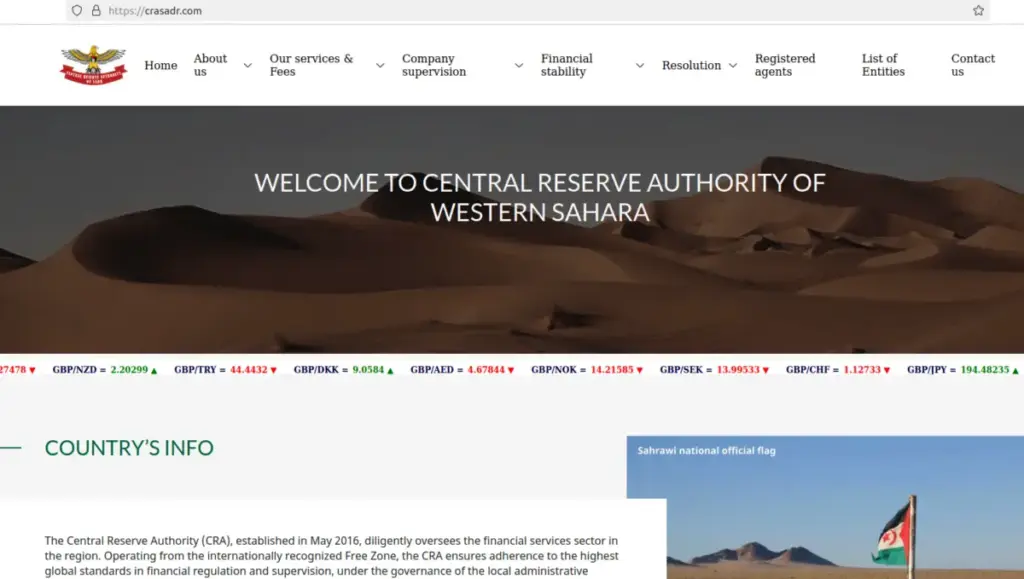
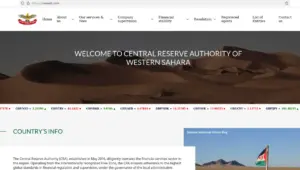
The sole shareholder of Certa Payments was identified as a 25-year-old Ukrainian woman who held leadership roles in several other firms, including the "WS Management and Advisory Corporation." This entity, which appeared to have no real-world infrastructure, presented itself as a high-level regulatory body responsible for overseeing cryptocurrency, foreign exchange, and online gaming licenses for businesses incorporated in the Western Sahara—a disputed region in northwest Africa.

This fabricated regulatory authority maintained a website, crasadr.com, which provided a veneer of legitimacy to various "offshore" businesses. The site claimed to assist applicants with bank setup, formation, and licensing. Further technical investigation showed that Certa Payments’ former website, certa.website, shared a server with over a dozen other domains, including rasd-state.ws, which purported to be the official site for the "Central Reserve Authority of the Western Sahara." This elaborate system of phony regulators and shell companies allowed platforms like Cryptomus to project an image of compliance while operating entirely outside the reach of established international financial law.
The impact of the U.K. sanctions has been immediate. On October 8, the same day the sanctions were announced, the Cryptomus support bot on Telegram—the primary interface for many of its users—suddenly began notifying customers that the platform was unable to process transactions. For many, this was the first sign that the game of musical chairs had finally come to an end.
The U.K. government’s decision to move against these platforms indicates a growing intolerance for the digital "grey zones" that have allowed illicit actors to flourish in the wake of the Russia-Ukraine conflict. By targeting the technical and legal scaffolding that supports these services—the payment processors, the shell corporations, and the fake regulators—authorities hope to make it significantly more difficult for criminal organizations to turn stolen cryptocurrency into spendable, usable cash. As international regulators continue to synchronize their responses, the "chameleonic" nature of platforms like Cryptomus is becoming a liability rather than an advantage, as every new name change or rebrand provides more data points for law enforcement to track, link, and eventually neutralize.