For decades, the life of a software developer has been defined by a familiar, ritualistic setup: a mechanical keyboard, a high-resolution mouse, a sprawling integrated development environment (IDE), a persistent terminal window, and a browser burdened with dozens of tabs, each holding a potential solution or a lingering bug. While the tools of the trade have evolved—from command-line interfaces to sophisticated cloud-native platforms—the fundamental relationship between the developer and the machine remained stagnant. Developers spent their careers learning specific syntax, memorizing intricate shortcuts, and adapting their cognitive processes to the rigid logic of the computer.
However, a profound shift is underway. Artificial intelligence is not merely changing how we write code; it is fundamentally altering the developer’s role from a manual operator of tools to an orchestrator of intent.
The Evolution of the Developer Workflow
The traditional paradigm required developers to act as the primary engines of execution. They were responsible for every keystroke, every library import, and every line of boilerplate. Today, AI-assisted development—epitomized by platforms like GitHub Copilot—is rewriting that contract. It is no longer just about prompting a chatbot to generate a snippet of code; it is about delegating complex, multi-step processes to an intelligent system that understands the structural nuances of a codebase.

Modern AI agents are now capable of deep repository analysis. They can inspect symbols, navigate dependencies, plan work, execute shell commands, run comprehensive test suites, and iterate based on failure logs—all while operating within the specific guardrails and policies defined by the developer. By describing an outcome, a developer can trigger a sequence of actions that culminates in a pull request ready for human review. This is the transition from "issuing commands" to "making intent executable."
This compression of the development chain is perhaps the most significant change to the craft in the history of modern computing. When the "how" of implementation is handled by an agent, the "what" and "why" become the primary focus. Developers are increasingly spending their time setting strategic direction, defining architectural constraints, and evaluating the quality of AI-generated outcomes.
The Rise of Human Judgment and Craft
As the mechanics of coding are delegated to machines, the value of the human developer does not diminish; rather, it pivots toward higher-order skills. Judgment, architectural foresight, and aesthetic "taste" in software design have become the most valuable assets in the engineering toolkit.
An AI agent can generate three distinct implementations of a feature in the time it takes for a developer to finish a cup of coffee. However, the agent cannot inherently decide which abstraction is cleaner, which migration strategy is safest, or whether the resulting code truly solves the user’s problem in a way that is maintainable and scalable. The developer remains the final arbiter of quality and the ultimate authority on the codebase. Accountability remains firmly in human hands, even as the burden of repetitive mechanical labor is offloaded.
This creates an environment where the goal is to embed AI into the workflow rather than placing it alongside it. We are moving toward "ambient intelligence"—a state where the AI understands the context of the work, the team’s conventions, and the project’s requirements without needing to be prompted for every minor task. To achieve this, the industry is looking toward portable context and standardized protocols like the Model Context Protocol (MCP), which connects agents to necessary tools, services, and repository instructions.
Ambient Control and the Return of Physical Hardware
As the software interface becomes more fluid and agentic, the way we interact with that interface is also undergoing a renaissance. For years, the keyboard and mouse were the undisputed kings of the desk. But as coding becomes less about typing and more about steering, the maker community has begun experimenting with alternative interfaces. From hackable picture frames to custom ESP32-based hardware, there is a growing interest in ambient control devices that allow developers to interact with their digital environment without constantly switching tabs or losing focus.
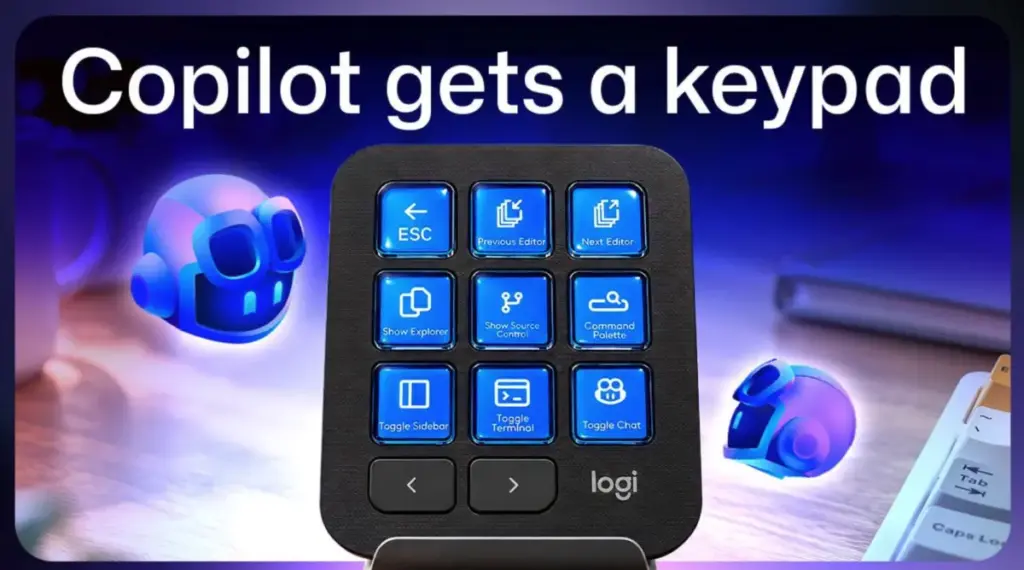
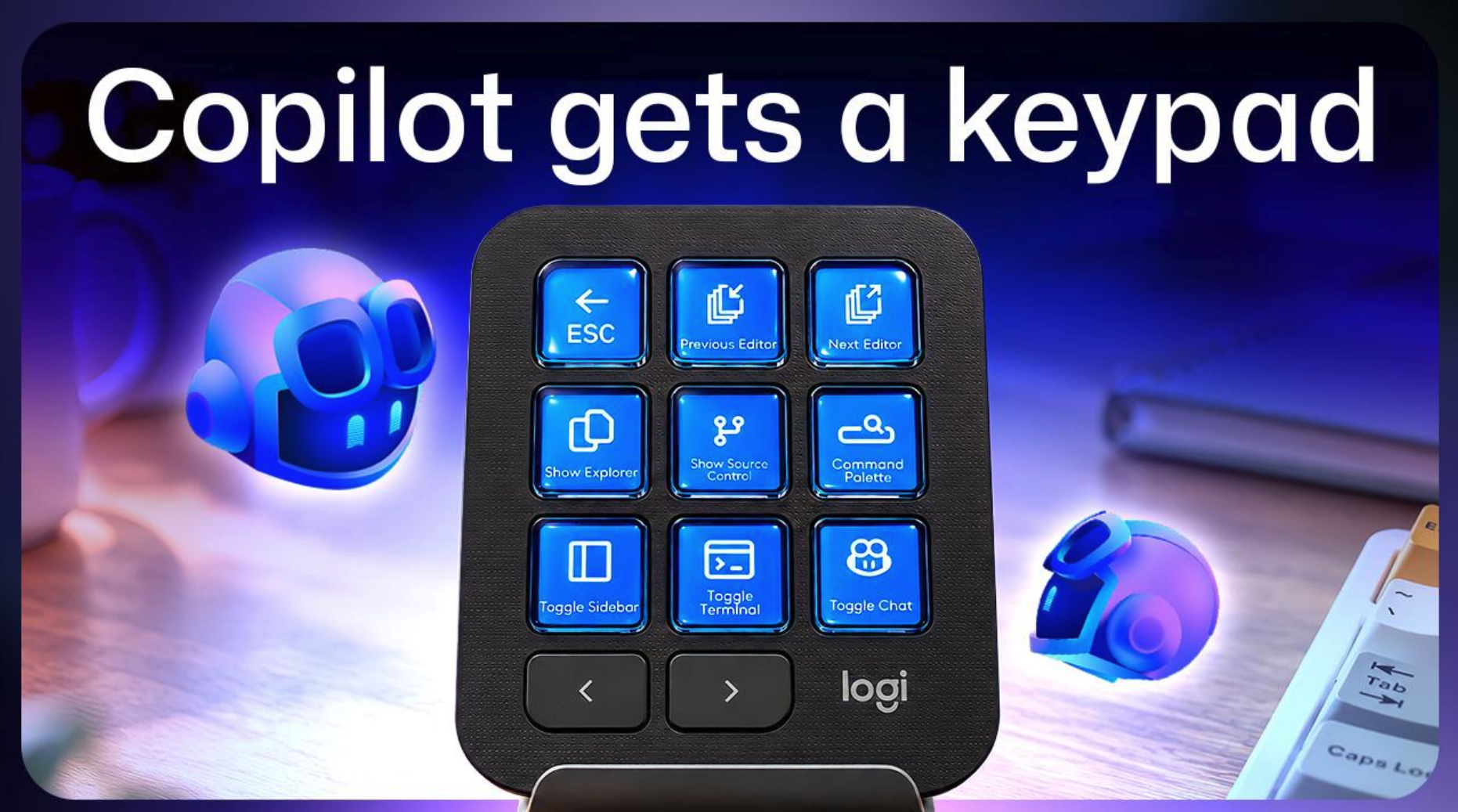
GitHub’s recent collaboration with Logitech, specifically regarding the MX Keypad, represents a practical application of this philosophy. The goal is to turn familiar developer actions into programmable, physical inputs that provide a tangible bridge to digital workflows. By allowing developers to map specific, high-frequency actions—such as submitting a parameterized prompt, resuming a complex Copilot session, or triggering a multi-step test sequence—to a dedicated physical key, the friction of switching contexts is significantly reduced.
This is not a suggestion that every developer needs a desk full of peripherals. Rather, it is about identifying the repetitive, distracting "micro-interruptions" that break a developer’s flow and replacing them with intentional physical triggers. When an action occurs frequently enough, removing even a few seconds of menu-navigating or keyboard-shortcut-recalling can preserve the cognitive momentum necessary for deep work. The developer ultimately decides which tasks earn their place on a physical button, ensuring that the technology serves the user’s workflow rather than dictating it.
The Path Forward: Managing the Agentic Future
As the industry stands at the threshold of this transition, the most pressing questions are no longer about whether AI can code, but about how to govern these agentic workflows effectively. Engineering teams are currently grappling with the operational reality of AI agents: How much organizational context should an agent retain? What is the appropriate scope for secrets, credentials, and network access? How do multiple agents coordinate their efforts to ensure they are not creating conflicting pull requests or redundant code?
The integration of the GitHub Copilot app directly into hardware experiences like the Logitech MX Keypad is an attempt to address the "steering" problem. By providing a physical interface for invoking, monitoring, and approving agentic work, developers can maintain a sense of control and clarity even as the underlying systems become more autonomous.
For decades, the developer’s primary job was to "speak computer"—to master the syntax, APIs, and arcane commands required to make the machine perform. Today, the computers are learning to meet developers halfway. The future of the IDE will not be defined by how many panels, buttons, or AI-powered widgets it can fit on a screen. Instead, the most successful interfaces will be those that understand the developer’s context, preserve the human’s ability to guide the process, and then recede into the background.
The objective is not to remove the developer from the equation, but to remove the friction that keeps them from building the software that matters. By pairing modern hardware with sophisticated AI, the industry is opening a new chapter where the interface is no longer just a screen, but an ambient extension of the developer’s intent. For those ready to experiment with this new way of working, the integration between the Logitech MX Keypad and GitHub Copilot Pro+ offers a concrete way to test how physical controls can help reclaim focus in an increasingly automated world.