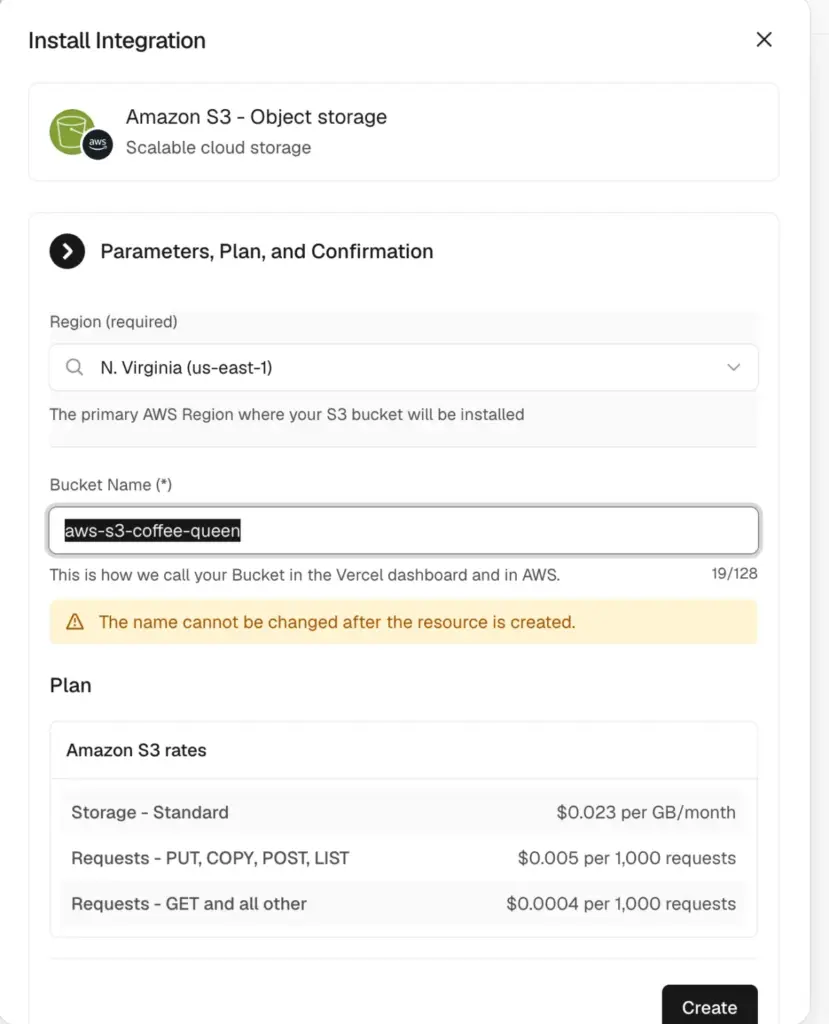
In a move set to streamline the development lifecycle for millions of engineers, Vercel has announced a major expansion of its platform capabilities. Developers building web and AI-driven applications on Vercel can now provision and manage Amazon Simple Storage Service (Amazon S3) resources directly through the Vercel Marketplace and the company’s AI-powered interface, v0. This integration bridges the gap between Vercel’s high-performance deployment workflow and the robust, scalable infrastructure of AWS, allowing for a more unified developer experience.
The integration covers the full spectrum of S3 functionality, including general-purpose object storage, Amazon S3 Tables, and Amazon S3 Vectors. By bringing these services directly into the Vercel ecosystem, the company aims to eliminate the friction that often accompanies multi-platform infrastructure management, such as the need to frequently navigate between the Vercel dashboard and the AWS Management Console to configure complex identity policies and storage credentials.
Bridging the Gap Between Storage and Deployment
For developers, the complexity of modern application architecture often lies in the "glue" required to connect a frontend or edge function to a backend storage solution. Previously, configuring S3 buckets required manual setup in AWS, followed by the careful handling of IAM roles and static credentials. This process could be error-prone and time-consuming, often leading to bottlenecks during the initial phases of development.
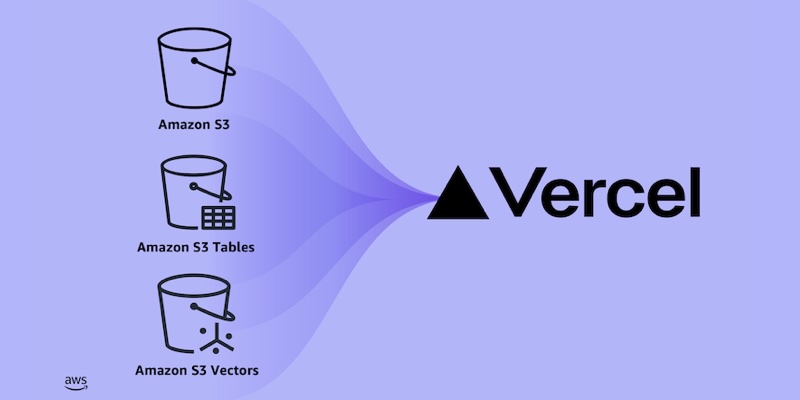
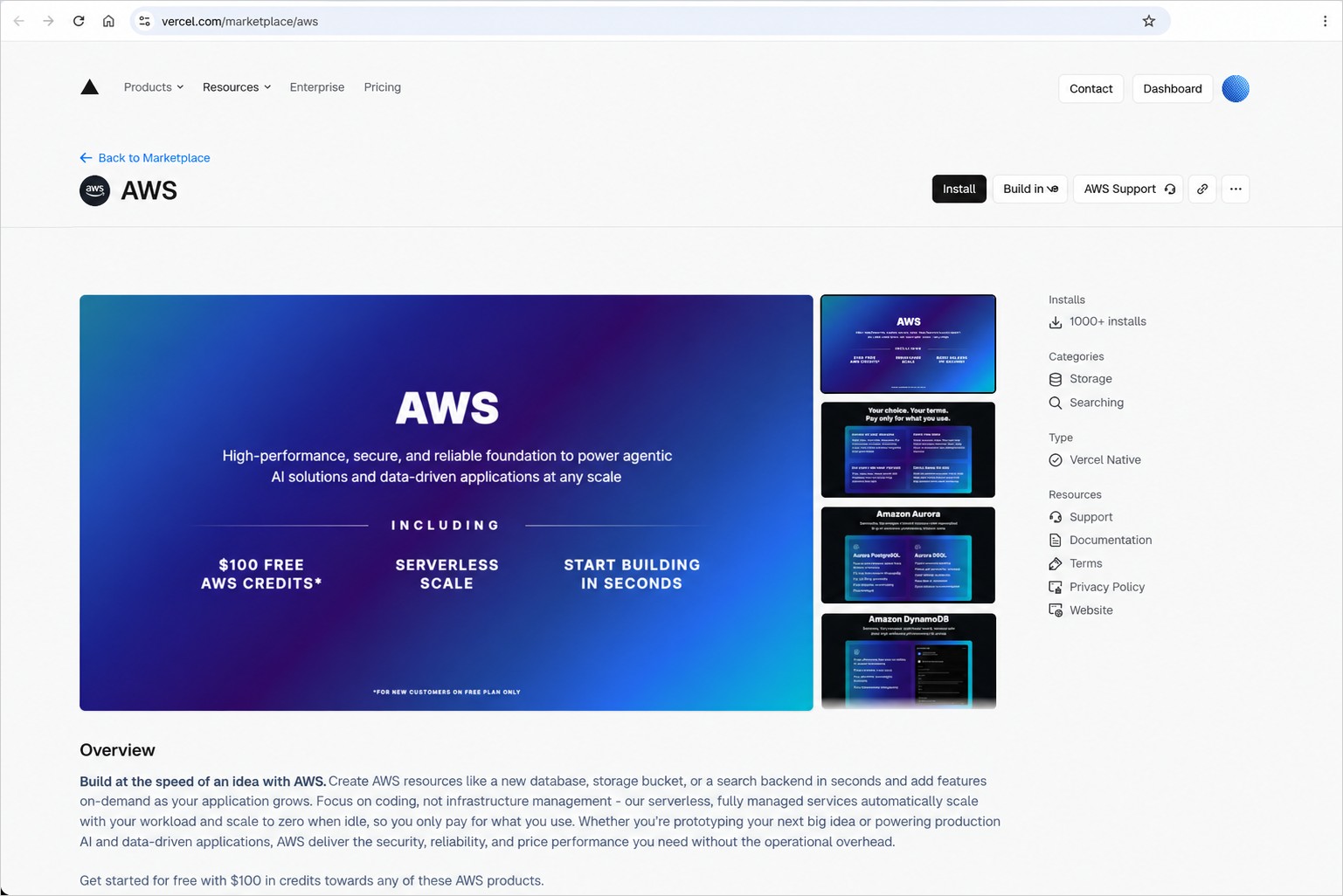
With this new update, the provisioning and connection configuration are handled automatically by the Vercel platform. This creates a cohesive application stack where object, vector, and open table storage exist alongside other existing integrations for Amazon Aurora, Amazon DynamoDB, and Amazon OpenSearch Serverless. Because these services now live within a single, integrated environment, developers can manage their entire infrastructure—from the database layer to the storage layer—within one AWS account, resulting in a simplified billing process and unified management.
The ease of use extends to the deployment pipeline. Once a bucket is created via the Vercel dashboard, developers can link it to their projects using standard CLI commands like vercel link and vercel env pull. The integration automatically handles the injection of critical environment variables, such as AWS_REGION, AWS_ROLE_ARN, and the relevant bucket names. Furthermore, the system utilizes the awsCredentialsProvider from @vercel/functions/oidc to exchange short-lived OIDC tokens with the AWS Security Token Service (AWS STS). This is a significant security improvement, as it ensures that no static access keys are ever stored within the application code or the Vercel dashboard, significantly reducing the risk of accidental exposure.
Expanding Functionality: From Objects to AI Vectors
The integration is not merely a shortcut for basic file storage; it encompasses the advanced features that make S3 a cornerstone of modern data-intensive applications. By supporting S3 Tables and S3 Vectors, Vercel is positioning itself as a primary hub for developers building the next generation of AI and analytics-heavy software.

S3 Tables are designed specifically for high-performance analytics. They provide fully managed Apache Iceberg tables that handle automated maintenance and compaction, ensuring that query performance remains optimized as data volume scales. By integrating these tables into Vercel functions—for example, by utilizing DuckDB within a serverless environment—developers can perform complex aggregate queries on large datasets without needing to manage a separate data warehouse. This "serverless analytics" approach allows for cost-effective, real-time insights directly within the web application flow.
Similarly, the support for S3 Vectors is a major boon for developers working on AI agents and semantic search capabilities. As AI-powered features like RAG (Retrieval-Augmented Generation) become standard in modern applications, the need for efficient, cost-optimized vector storage has grown. S3 Vectors allows developers to store and query high-dimensional embeddings natively within their existing S3 infrastructure. While the system does not handle the generation of embeddings itself—leaving that to the developer’s model of choice—it provides the critical storage and retrieval layer required to power sophisticated AI inference.
AI-Assisted Infrastructure Provisioning via v0
Perhaps the most innovative aspect of this announcement is the role of v0 by Vercel in the infrastructure lifecycle. V0, the company’s generative interface, can now translate natural language prompts into infrastructure configuration. When a developer describes a project—such as requesting "a photo gallery where users upload images using AWS" or "a support bot that answers questions from my PDFs"—v0 not only generates the frontend code but also identifies and provisions the necessary S3 resources.
This capability effectively democratizes cloud infrastructure. A developer who may not be an expert in AWS configuration can describe a complex, data-driven application, and v0 will configure the appropriate S3 bucket type, handle the connection logic, and generate the corresponding code snippets. This shift from manual configuration to intent-based infrastructure management represents a significant evolution in how developers interact with cloud providers.
Strategic Implications for Developers
For teams already invested in the AWS ecosystem, this integration offers a way to maintain the power of native AWS tooling while enjoying the velocity of the Vercel developer experience. Because these S3 resources remain part of the user’s own AWS account, teams retain full control over their data and governance. They can continue to use AWS-native management tools while benefiting from the simplified onboarding and runtime environment provided by Vercel.
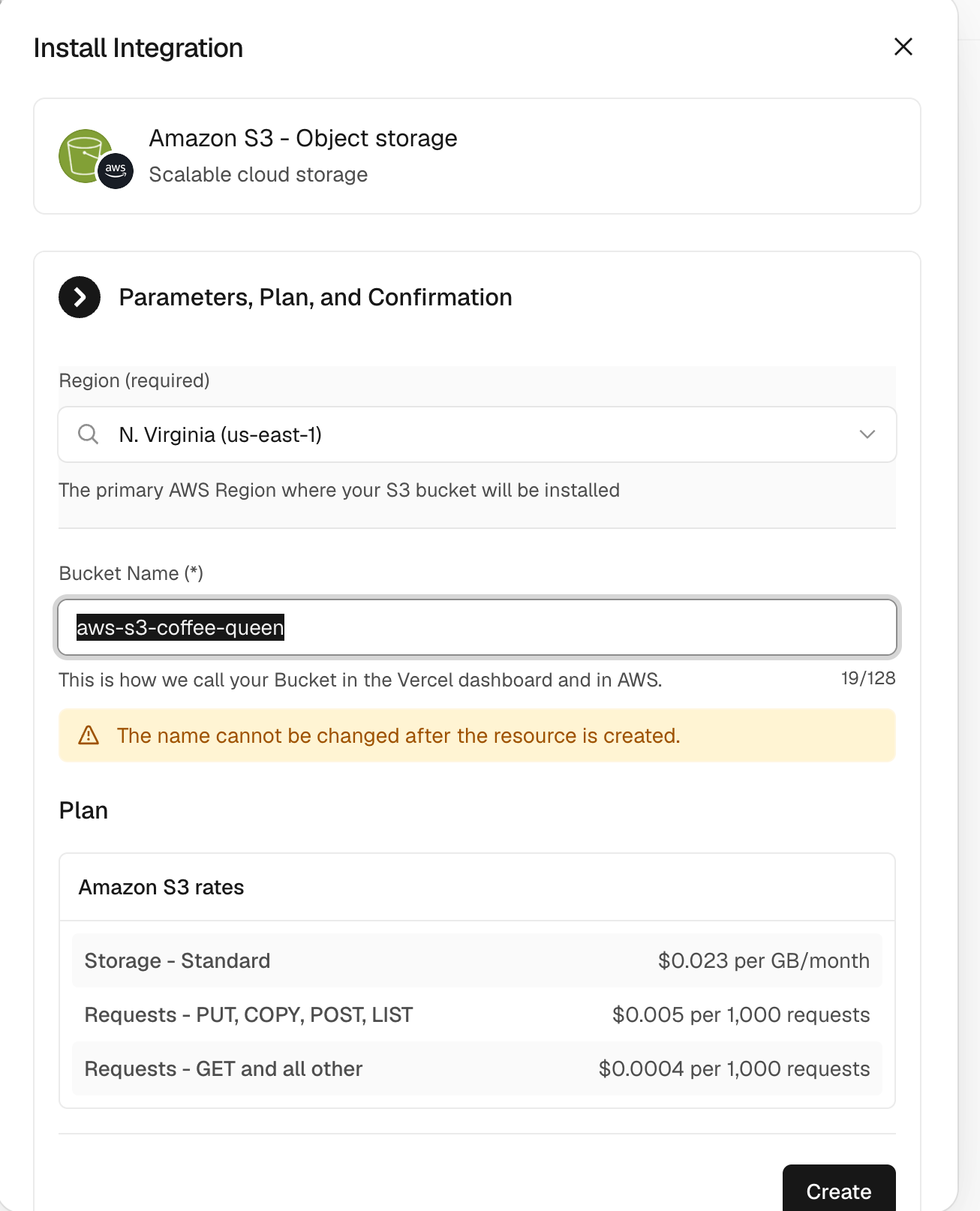
The financial model is equally straightforward. There is no additional charge for the integration itself; users simply pay the standard AWS pricing for the storage and compute resources they consume. To encourage adoption, new AWS accounts created through the Vercel integration come with $100 in credits, valid for six months, providing a low-risk environment for teams to test these features.
As the development community continues to navigate the complexities of building for the web, the convergence of high-level development platforms and low-level infrastructure providers like AWS remains a critical trend. By automating the connection between Vercel’s deployment environment and Amazon S3’s storage capabilities, Vercel is removing one of the last major hurdles to rapid, scalable application development. For developers, this means spending less time managing credentials and infrastructure policy, and more time focusing on the core logic of their applications. Those interested in exploring these capabilities can find the integration now available across all commercial AWS regions supported by Vercel, with detailed documentation and troubleshooting assistance available through the AWS MCP server and community forums like AWS re:Post.