










Amazon Web Services (AWS) has announced a significant expansion of its storage management capabilities, introducing the ability to clone Amazon Elastic Block Store (EBS) volumes across different AWS accounts. This update builds upon the foundation of Volume Clones—a feature introduced last year that enabled instant, point-in-time copies of EBS volumes within a single Availability Zone—and now extends that utility to facilitate secure, multi-account data workflows.
The new functionality is designed to address a common operational challenge for organizations managing complex cloud environments: the need to utilize production-grade data for development, testing, and experimentation without compromising security or architectural isolation. By enabling cross-account cloning, AWS allows developers and systems administrators to securely migrate copies of EBS volumes into separate accounts. Furthermore, the feature includes an option to re-encrypt these clones using an AWS Key Management Service (AWS KMS) key specific to the target account, ensuring that security policies and encryption standards remain consistent across an organization’s various business units or technical environments.
Streamlining Development and Testing Workflows
In modern cloud-native architectures, maintaining parity between production environments and staging or development environments is essential for effective testing. Often, developers require access to real-world data—such as sanitized production databases or complex filesystem structures—to troubleshoot issues, validate new deployments, or perform performance benchmarking. Previously, moving such data across account boundaries could be a laborious process, often involving snapshot creation, manual copying, and re-encryption.
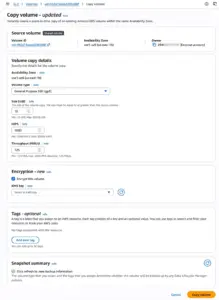
With the introduction of cross-account EBS volume clones, the process is significantly streamlined. An organization can now take a snapshot-like clone of a production volume and immediately provision it in a sandbox or QA account. Because the cloning process is near-instantaneous and creates a copy within the target environment, teams can iterate faster, test against representative data, and accelerate their release cycles without needing to manage the heavy lifting of traditional data migration pipelines.

The security implications of this update are equally noteworthy. By utilizing AWS KMS, teams can ensure that the data remains encrypted at rest, even after it leaves the source account. The ability to re-encrypt the volume in the destination account allows for strict adherence to the "Principle of Least Privilege," ensuring that the developers or automated tools in the target environment only have access to the specific keys and data they require for their tasks.
Implementing Cross-Account Sharing via AWS RAM
The mechanism behind this new capability is integrated directly into the existing AWS Resource Access Manager (RAM). AWS RAM serves as the centralized hub for managing the sharing of resources across AWS accounts or within an AWS Organization. By leveraging this established infrastructure, AWS has ensured that the cross-account cloning process remains secure, auditable, and consistent with existing governance policies.
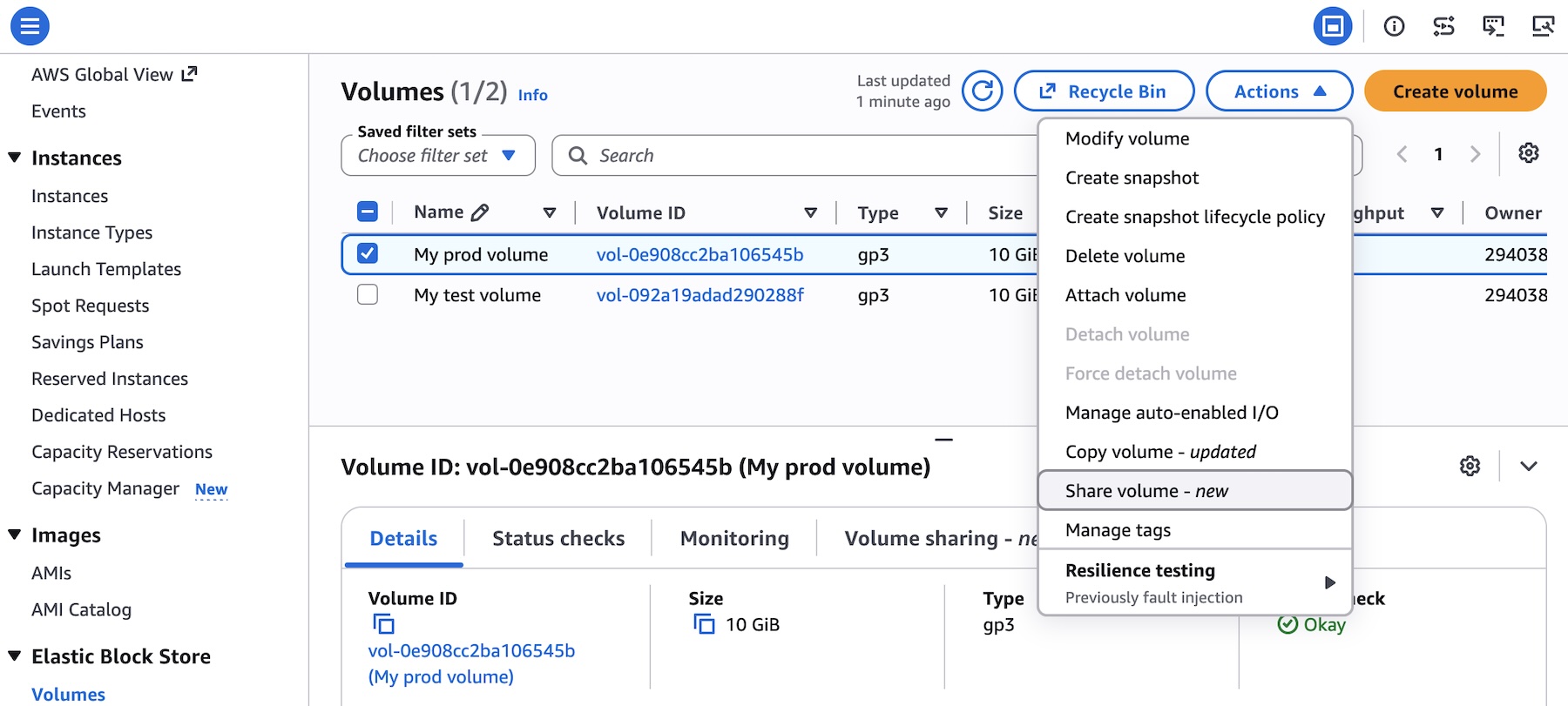
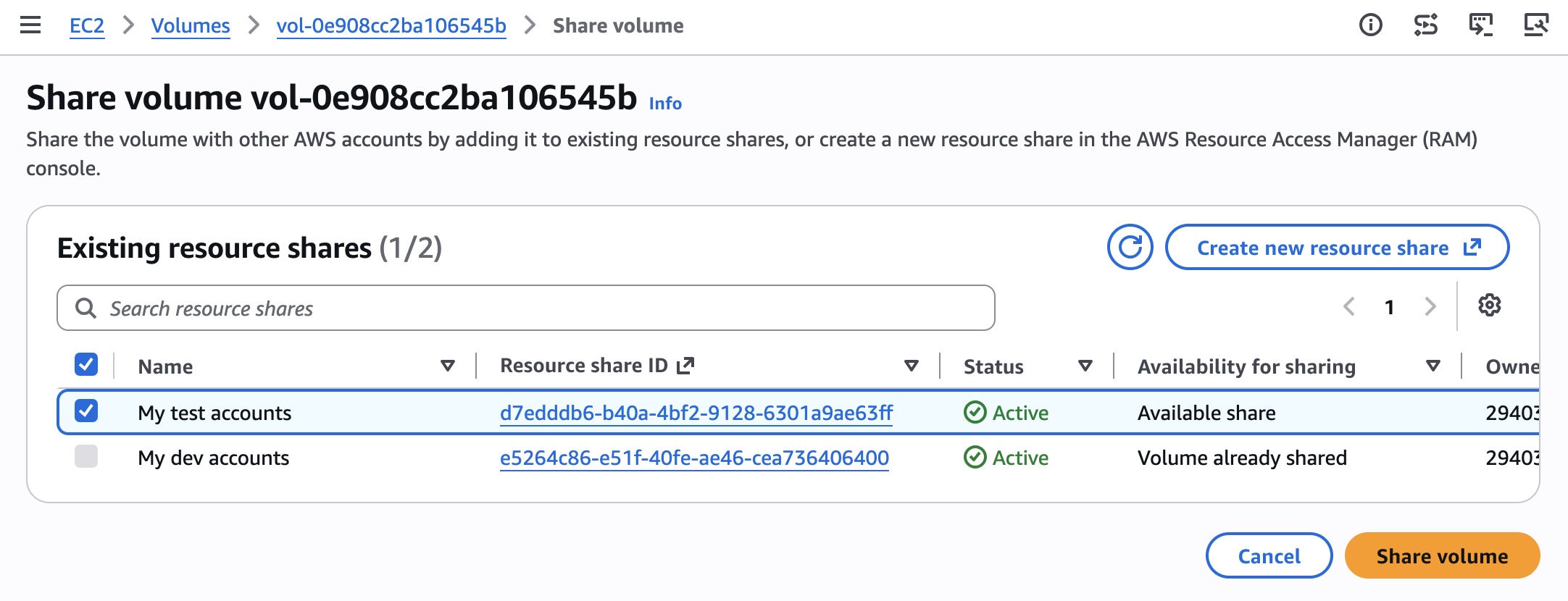
To initiate the process, the owner of the source EBS volume uses the Amazon EBS console to share the specific volume with a target account. Once the "Share volume" option is selected, the volume is added to a resource share. This can be done by modifying an existing resource share or by creating a new one within the RAM console. This approach provides administrators with a centralized view of all shared resources, allowing them to manage access permissions and audit who has access to which volumes across the entire organization.
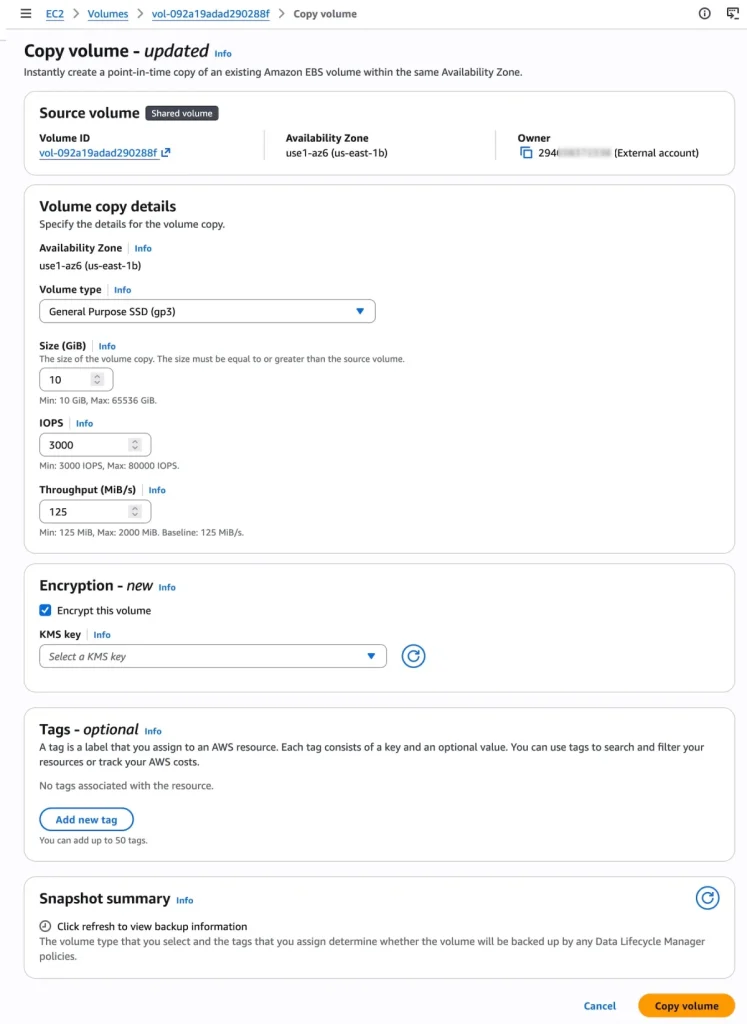
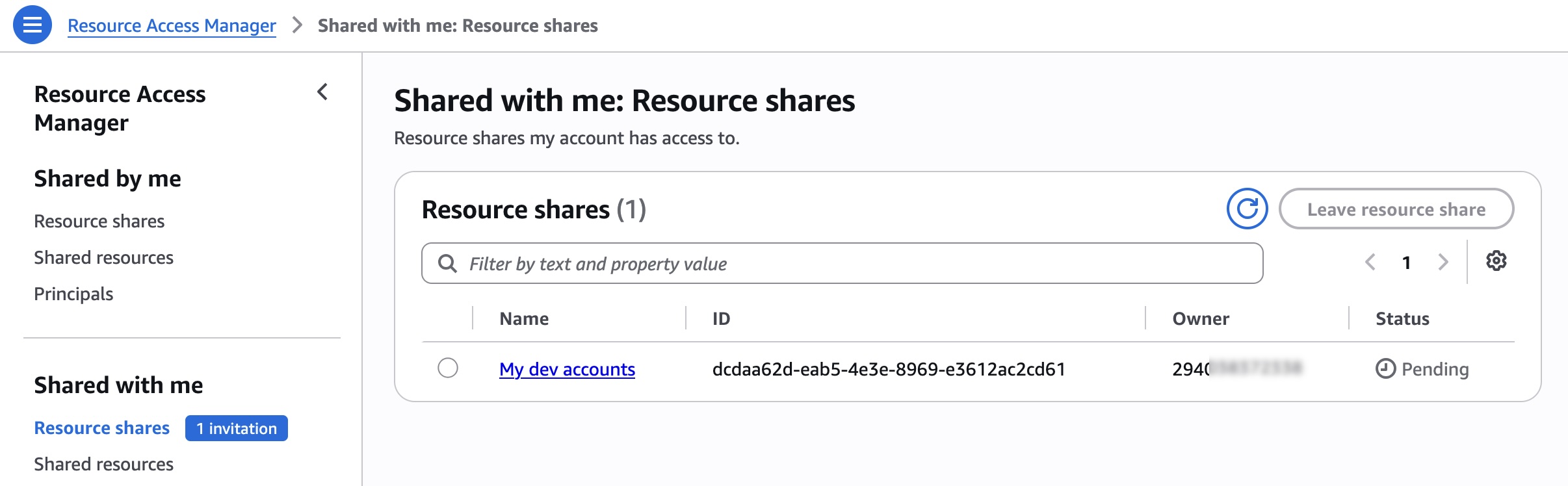
Once the source account owner has configured the resource share, the target account holder must formally accept the share through the RAM console. This two-way handshake process is a critical security feature, ensuring that resources are only accessible by authorized parties and preventing unauthorized data exposure. Once the resource share is accepted, the volume becomes visible within the target account’s EBS console, appearing alongside its own native volumes. From there, the target account user can perform a "Copy volume" operation, which finalizes the cloning process and creates an independent, usable copy of the volume in the destination environment.
Integrating Automation and Modern Tooling
Recognizing that many enterprises rely on Infrastructure as Code (IaC) and sophisticated CI/CD pipelines to manage their cloud footprints, AWS has ensured that these cross-account cloning operations are fully programmable. For organizations that prefer to manage their storage infrastructure via APIs or automated scripts, the new capabilities are accessible through the standard AWS CLI and SDKs.
In addition to traditional programmatic access, AWS is increasingly supporting modern AI-driven development workflows. The company suggests that users can leverage the AWS MCP (Model Context Protocol) Server and associated plugins to interact with these features through AI-assisted coding tools. By integrating these plugins, developers can receive guidance on API calls, search relevant documentation, and troubleshoot configuration issues more efficiently, reducing the time required to implement cross-account data sharing strategies.

This shift toward more integrated, tool-supported infrastructure management reflects a broader trend within AWS to lower the barrier to entry for complex administrative tasks. By providing developers with the tools to handle storage management within their preferred coding environments, AWS is enabling more teams to adopt sophisticated data management practices that were previously reserved for specialized DevOps or storage engineering departments.
Technical Considerations and Regional Availability
As with any enterprise-grade feature, there are specific technical nuances that users should be aware of when implementing cross-account cloning. While the process is designed for simplicity, it is fundamentally tied to the underlying EBS snapshot and cloning architecture. Users should consult the official Amazon EBS User Guide for comprehensive details regarding performance, API limits, and the specific permissions required for both the source and target IAM roles.
The feature is currently available in all AWS Regions that support Amazon EBS Volume Clones. AWS maintains a comprehensive "Capabilities by Region" resource, which users are encouraged to monitor for the most up-to-date information on regional availability and future roadmap developments. This transparency allows organizations to plan their multi-region and multi-account architecture with confidence, knowing which features are supported where.
As organizations continue to scale their cloud presence, the ability to move and replicate data securely and efficiently will remain a cornerstone of operational excellence. By extending the capabilities of Amazon EBS to support cross-account cloning, AWS is providing a vital tool that bridges the gap between production security and development agility. Users are encouraged to test these new workflows in their own environments and provide feedback through the AWS re:Post community or via standard AWS Support channels to help shape the future development of these storage services. Through these continuous refinements, AWS remains committed to providing the infrastructure necessary for businesses to innovate at scale while maintaining rigorous standards for data security and operational control.