










Securing that first wave of customers is widely considered the most grueling trial by fire for any early-stage startup. It is the moment when a theoretical value proposition must transform into a tangible revenue stream. Yet, even for companies that manage to generate initial buzz and secure a flurry of early sign-ups, the challenge is rarely over. Converting that initial curiosity into long-term retention remains a perennial hurdle, one that continues to bedevil founders across every industry.
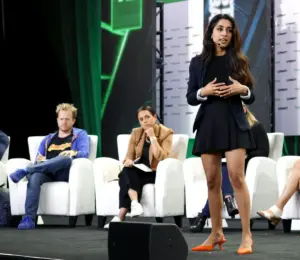
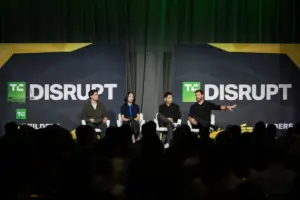
At last week’s TechCrunch Disrupt, a panel of seasoned industry leaders—Elia Wallen, founder and CEO of the travel and logistics startup Engine; Grant Lee, founder and CEO of the AI-powered presentation platform Gamma; and Crystal Huang, a general partner at Google Ventures—gathered to demystify the art of building a customer base. Their insights painted a nuanced picture of the modern startup landscape, suggesting that while the tools for reach have evolved, the fundamental principles of engagement remain deeply rooted in human connection.
In the current startup ecosystem, it is easy to view social media as the ultimate panacea for growth. We live in an era where AI-native companies like Cluely and Instinct have achieved rapid audience growth not merely through the utility of their software, but through the curated, vibrant online personas of their founders. For many entrepreneurs, social media appears to be a magic bullet, a low-cost, high-leverage way to bypass traditional marketing gatekeepers and speak directly to a global audience.

However, Grant Lee of Gamma warns that founders must approach this digital frontier with a high degree of strategic discipline. Gamma, which has successfully scaled into a multi-billion dollar valuation, utilized a distinct social media strategy that relied on an internal program of ambassadors, affectionately dubbed "Gambassadors." By empowering creators to act as brand advocates, Gamma was able to tap into niche communities long before influencer-based marketing became the standard playbook for tech startups.
Yet, Lee cautioned that a "set it and forget it" mentality toward influencer marketing is a recipe for failure. Simply handing a product to an influencer and expecting a surge in sales ignores the nuance of modern consumer behavior. For a product like Gamma, which serves diverse user bases—from high-level management consultants to marketing teams crafting presentations for a CMO—a one-size-fits-all approach is ineffective.
"If you have a product that can serve many different segments or use cases, then you want to basically have creators that can target each one of those," Lee explained. "If you have folks that are in consulting versus people that do all their marketing and create all the decks for their CMO, there’s all these different segments you might want to go after."
Crucially, Lee emphasized that the efficacy of this strategy depends entirely on the founder’s willingness to invest time in their partners. If a creator fails to grasp the deep, specific value proposition of a product, their promotion will inevitably fall flat, regardless of how much capital is poured into the campaign. The success of creator marketing, in Lee’s view, is not measured by the number of posts, but by the depth of understanding between the brand and the creator.
While the allure of viral content is powerful, it is far from the only path to success. For some businesses, the digital noise is simply a distraction from more effective, albeit traditional, methods. Elia Wallen’s journey with Engine offers a stark counterpoint to the social-media-first mindset. Engine, which specializes in managing lodging and travel bookings for midsize businesses, bootstrapped its way to a massive $150 million in bookings before ever taking a cent of outside venture capital. Notably, the company achieved this feat with virtually no social media presence.
For Wallen, the "old-fashioned" art of the sale remains the bedrock of his growth strategy. He advocates for a direct approach that many modern tech companies seem to have abandoned: picking up the phone and talking to potential customers.
"We did events and we smiled and dialed," Wallen said, describing the company’s early, scrappy days. "We still have a lot of people picking up the phone. A lot of people who didn’t grow up with that or don’t understand it think that it’s outdated or it doesn’t work, but it does. It’s a hard thing. There are a lot of companies that just refuse to do it or don’t know how to do it well. But they’re missing out on a very big offline client base." His conviction is simple: "The phone still works."
Wallen’s approach to growth was defined by personal engagement rather than algorithm optimization. In the company’s earliest days, he employed creative, high-touch tactics to capture attention, such as hiring a magician named David to perform at events. The goal was to pique curiosity and draw prospective clients to their booth, demonstrating that in-person human connection can often outperform the latest digital marketing trends.
As startups transition from the acquisition phase to the retention phase, the focus must shift toward data-driven insights and the cultivation of a loyal user base. Crystal Huang, who brings a wealth of experience from her tenure at Google Ventures, highlighted that the real goldmine for a startup often lies in the behavior of the customers they have already acquired.
"Can you look into usage data and figure out if it’s recurring, if it’s increasing, if they are referring their friends?" Huang asked, emphasizing that the answers to long-term sustainability are often buried in early usage metrics. She argues that retention is not just a defensive measure; it is a signal of product-market fit. When a product is truly valuable, the data will show it through consistent, deepening usage patterns.
Beyond the metrics, however, lies the "super fan" phenomenon. Huang suggests that the healthiest companies are those that foster a sense of belonging and advocacy among their users. When customers move from being passive consumers to active evangelists—even going so far as to seek employment at the company or vocally promote the brand—it provides a structural advantage that no amount of paid advertising can replicate.
"You need to have ways to create evangelists who are really passionate about the product," Huang noted.
Ultimately, the consensus among the panelists at Disrupt suggests that there is no singular blueprint for startup growth. Whether a company chooses to build a massive network of digital influencers, rely on the grit and persistence of a traditional sales team, or obsess over the granular data of their existing user base, the core requirement remains the same: a clear articulation of value.
In a world where startups are increasingly judged by their ability to scale rapidly, the stories of Engine, Gamma, and the broader portfolio managed by Google Ventures remind us that the most successful companies are those that remain agile, deeply connected to their customers, and willing to experiment with both the modern and the timeless. Whether through a viral TikTok video or a cold call made with conviction, the goal remains unchanged: finding the people who need your product, and ensuring they have a reason to stay.