








For years, smart home enthusiasts have known Aqara primarily as a reliable specialist in home security. The company built its reputation on dependable multipurpose security sensors, presence detectors, and versatile smart switches that seamlessly integrated into various smart ecosystems. However, at IFA 2026, the security-focused brand is making a sharp and unexpected turn into an entirely new consumer technology sector: smart lighting.
Entering the crowded smart lighting market is a bold strategic move, yet it is one that does not come as a complete surprise to industry watchers. By showcasing a comprehensive, multi-category suite of products designed to challenge established market leaders like Govee, Aqara is signaling its ambition to capture a significant share of the ambient and functional home illumination space. Rather than merely mimicking existing solutions, the company is attempting to carve out a distinct identity by leveraging its legacy expertise in security, sensors, and spatial intelligence.

Aqara is not simply dipping a tentative toe into the smart lighting waters at the Berlin trade show; instead, it is unveiling an extraordinarily dense product lineup that spans virtually every corner of the residential environment. It typically takes hardware manufacturers years of iterative releases to expand across so many distinct lighting categories, making such a massive simultaneous rollout an unusual and aggressive opening statement.

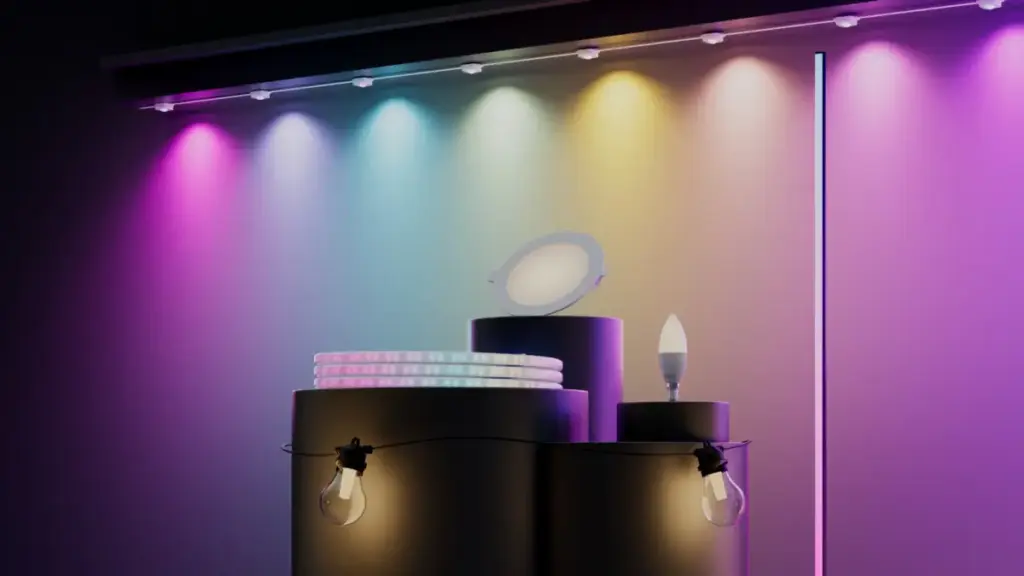
Within the indoor living space, Aqara’s new hardware includes both a striking standing floor lamp and a companion table lamp, both engineered with heavy emphasis on customizable multicolor displays managed through mobile application controls. The standing floor lamp, for instance, incorporates 18 individually addressable zones, allowing users to segment colors, apply dynamic gradients, or smoothly cycle through chromatic shifts across the vertical column. Beyond ambient floor and desk lighting, the comprehensive catalog also introduces a smart downlight tailored for low ceilings and a high-density smart LED strip boasting 108 individual light-emitting diodes per meter, a density specification that promises exceptionally smooth and vibrant diffusion compared to standard market alternatives.
Shifting its focus to the exterior of the home, Aqara’s portfolio extends outdoors with a new smart string light system featuring an exceptionally wide color temperature range designed to accurately mimic various forms of natural light, from warm sunset hues to cool daylight. Alongside the string lights, the company revealed a line of permanent, weatherproof outdoor eave lights engineered to remain mounted year-round, offering architectural accent lighting and security illumination regardless of weather conditions.

While official pricing structures and exact global release dates remain unconfirmed, the aesthetic and functional similarities between Aqara’s new hardware and existing market options are immediately apparent. The design philosophy behind the floor lamp and the permanent outdoor eave lights closely parallels popular configurations found in competitors’ ecosystems, positioning Aqara to confront current market leaders head-on. This direct competition provides consumers with a compelling alternative that has historically been limited to a handful of dominant brands.
Of course, observing hardware displays on a trade show floor only reveals a fraction of a product’s overall viability, leaving questions regarding structural durability, material design quality, and day-to-day software reliability. Independent evaluators and consumers alike will need hands-on, long-term testing periods to fully understand how these new illumination lines perform in real-world residential environments, particularly regarding how easily everyday users can adopt and integrate them into existing routines.
While matching competitors in hardware variety is one challenge, Aqara is distinguishing its approach by leaning heavily into artificial intelligence and what the company describes as "AI-driven spatial intelligence." This concept bridges the gap between its new lighting offerings and the legacy security sensors that have earned praise from smart home reviewers over the years. By establishing native interoperability between the new illumination hardware and previously released sensors, Aqara is unlocking versatile new automation paths that expand the utility of existing household devices.

To ensure broad consumer adoption, every lighting product announced by Aqara features native compatibility with Zigbee, Thread, and Matter protocols. This multi-protocol approach guarantees that the hardware can operate fluidly across dominant smart home ecosystems, including Amazon Alexa, Google Home, and Apple Home. Although past experience with Aqara hardware suggests that the company’s proprietary Aqara Home application offers the deepest customization options and device choices, the inclusion of modern industry standards provides crucial flexibility for multi-platform households.
This hardware integration allows homeowners to construct sophisticated automation rules using pre-existing infrastructure. For instance, a door sensor that traditionally triggers a security notification upon opening can now instantly command a nearby Aqara light to shift colors or illuminate an entryway to welcome a resident home. Similarly, overhead smart lights can automatically brighten the moment an Aqara presence or movement sensor detects human activity within a room. Furthermore, Aqara’s dedicated smart switches can be programmed to toggle indoor and outdoor lighting groups with custom routines at a single touch.
Although users could previously link third-party smart lights to Aqara sensors via universal Matter bridges, the introduction of Aqara’s proprietary lighting ecosystem promises a drastically more seamless configuration process while unlocking advanced automation triggers.

Another prominent trend in modern smart illumination is the integration of generative artificial intelligence to simplify scene creation, a feature popularized by competitors and various lighting manufacturers. These tools typically allow users to command lighting systems using natural language voice prompts, text descriptions, or reference images to instantly generate matching moods and color palettes.
Responding to this industry trend, Aqara has introduced "Gen-Scene," an AI-powered utility designed to generate complex lighting configurations. However, Aqara’s implementation places a distinct emphasis on orchestrating cohesive lighting scenes across entire home zones rather than simply applying isolated color schemes to a single device. The capability represents an interesting addition to the company’s expanding hardware ecosystem.
Alongside generative software tools, Aqara is also introducing a collaborative community platform called Aqara Builder. Conceived as a centralized hub for smart home enthusiasts, the platform allows users to share project inspirations, design ideas, and step-by-step automation walkthroughs. Crowdsourced automation sharing has historically flourished within open-source enthusiast communities like Home Assistant, where users continually exchange troubleshooting tips and creative routines. If Aqara successfully cultivates a similarly engaged, collaborative community around its proprietary ecosystem, it could represent a significant community-driven victory for the brand as it transitions from a niche security hardware provider into a comprehensive smart home lifestyle enterprise.