









The return of in-person gatherings has been a welcome milestone for professionals, open source advocates, and community organizers worldwide. After years of relying entirely on screens to collaborate, socialize, and learn, the ability to meet face-to-face has brought back a vital human element to conferences and meetups. Yet, the resurgence of physical events does not mean that virtual spaces should—or realistically can—be entirely left behind. Long before the global shift forced communities online, many groups were already experimenting with virtual formats such as hackathons, bug triaging sessions, and webinars. These digital initiatives were designed to foster collaboration and education across geographical boundaries. Necessity subsequently forced those virtual platforms to evolve rapidly, offering lessons that organizers are now carrying forward as they look to build a more inclusive future.
The conversation today is no longer about choosing exclusively between physical rooms or digital streams. Instead, the focus has shifted toward finding ways for virtual and physical events to coexist, creating an enriched experience for everyone involved. While nobody seems eager to return to a landscape where every single interaction occurs strictly behind a monitor, virtual events retain distinct and powerful advantages that make them indispensable to modern community building.
Costs and Crowds
Chief among the benefits of virtual events is accessibility, both financial and logistical. Launching a digital gathering requires very little overhead compared to renting a physical venue. Organizers often need little more than basic video conferencing and streaming platforms to get started. For smaller communities operating on tight or nonexistent budgets, this low barrier to entry is transformative. A community can effectively use a virtual event platform to build an audience, test ideas, and establish momentum before making the substantial financial commitments required to host an in-person gathering.

This reduction in logistical hurdles extends far beyond the organizer, directly benefiting attendees and community members. Consider a standard local meetup, which typically runs for 60 to 90 minutes. For many participants, committing to a commute of 30 minutes each way in heavy traffic can turn a simple evening of learning into an exhausting chore. Virtual meetups eliminate the commute entirely, lowering the participation barrier and allowing busy individuals to drop in from home or the office. This convenience is a primary driver behind why so many local and international groups continue to maintain a virtual presence even as physical spaces open back up.
Furthermore, the minimal cost of hosting online events creates a low-risk environment for experimentation. Organizers can freely test out novel content, untried formats, or entirely new target audiences without the crippling fear of financial loss. If a newly minted digital session fails to attract a crowd or falls flat, the organizer has not wasted thousands of dollars on venue rentals, catering, audio-visual equipment, travel, and staffing. No matter the outcome, valuable lessons are learned from every experiment, informing future programming without breaking the bank.
Practical Events
Beyond standard presentations and panel discussions, certain types of collaborative work are naturally suited for the digital environment. In open source communities, for instance, vital tasks like documentation writing, software testing, and bug triaging are essential for the health of projects. Despite their importance, these activities are frequently viewed by community members as tedious chores to be avoided in favor of writing exciting new code.
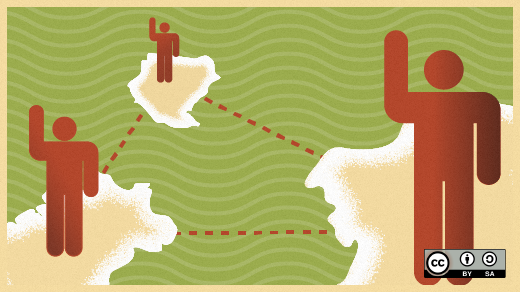
Virtual events offer a structured remedy to this engagement gap. Organizers can designate a focused window of time—perhaps one or two days—where community members gather online specifically to tackle these administrative hurdles together. By working collaboratively in a shared digital space, participants can support one another, troubleshoot issues in real time, and transform what would otherwise be a lonely, tedious chore into a productive and communal achievement.
Hybrid Events
To capture the best of both worlds, a growing number of organizations are adopting hybrid event models that consciously integrate both in-person and virtual components. True hybridity, however, involves more than simply pointing a camera at a stage in a conference facility and broadcasting a live video feed. Effective hybrid events often feature separate, dedicated tracks designed specifically for online participants, ensuring that virtual attendees are not treated as an afterthought.
A prominent example of this approach can be seen in events like FOSDEM, which have successfully implemented separate online rooms alongside their physical proceedings. Other organizations utilize virtual tracks for "Day 0" activities, such as initial orientations, project team meetings, and preliminary meetups. This strategy ensures that members who are unable to secure travel funding or visas, or who have personal constraints preventing them from traveling, can still participate fully in the crucial opening stages of a conference.
Integrating a robust virtual track can also help streamline the physical portion of a gathering. By shifting certain activities or preliminary sessions to the digital realm, organizers can potentially reduce the overall length of the in-person conference. This reduction is a significant relief for attendees, who no longer need to spend weeks away from their homes and families as they might during a traditional, fully in-person event.
Best of Both Worlds
The return of physical gatherings has undoubtedly healed some of the isolation felt during years of lockdowns and remote-only interaction. Seeing friends, colleagues, and collaborators from the global open source community face-to-face is an irreplaceable experience. However, the hard-earned lessons of the past few years prove that virtual events should remain a permanent fixture in the modern organizer’s toolkit.
By thoughtfully designing hybrid models that incorporate dedicated virtual tracks, communities can break down geographical barriers, include voices that would otherwise be silenced by travel constraints, and reach a much broader audience. Society has learned profound lessons about digital connectivity and collaboration over the past few years. Putting those lessons to good use ensures that future events are more resilient, inclusive, and accessible to everyone who wants to participate.