










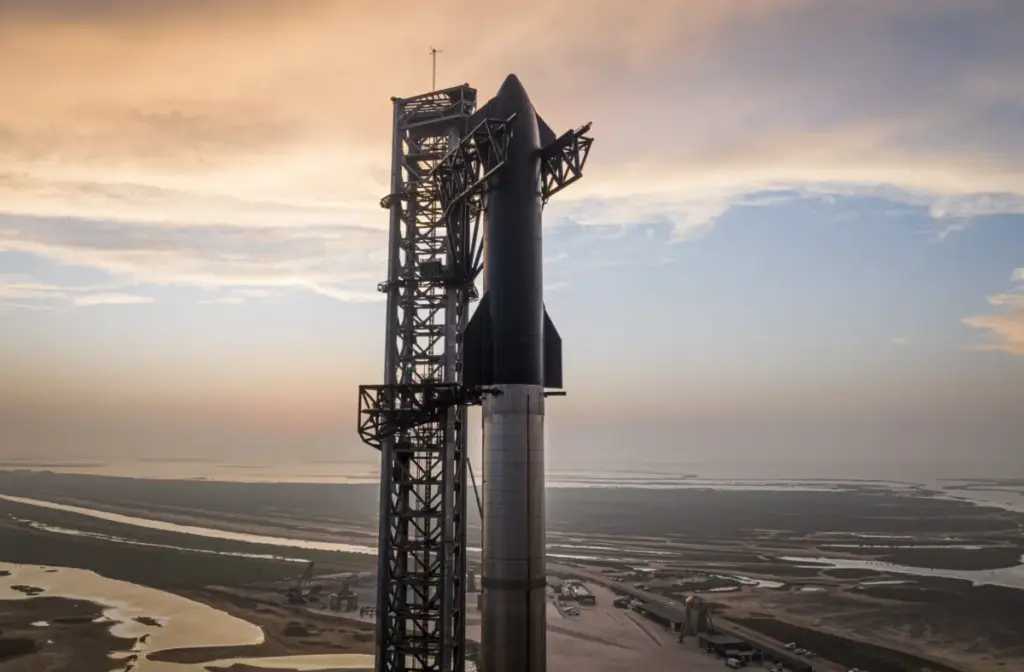
SpaceX is gearing up for a milestone mission that could fundamentally reshape its broadband capabilities and accelerate its long-term ambitions for fully reusable rocketry. Following a successful July test flight that verified sub-orbital deployment mechanics, the company’s upcoming 14th Starship test flight is scheduled to launch as soon as September 28, pending final regulatory reviews. This critical mission intends to place 26 high-capacity "V3" Starlink satellites into orbit to directly join the rapidly expanding Starlink constellation, marking the first time these advanced spacecraft will transition from testing into live operational service.
The upcoming launch represents a pivotal threshold for the aerospace giant. While previous flights were heavily focused on proving the structural integrity and flight characteristics of the massive Starship vehicle itself, Flight 14 introduces the first real operational payload designed to actively expand usable broadband capacity. Industry analysts from Evercore ISI highlighted this transition in a recent research note, pointing out that a successful orbital insertion and V3 deployment would provide the first tangible proof point for the next phase of SpaceX’s broadband capacity ramp. This milestone will begin validating the broader, high-bandwidth connectivity ambitions that the Starship architecture was specifically engineered to enable.
The technological leap embedded in the V3 satellites is substantial. Each V3 unit supports approximately 1 terabit per second of downlink capacity and 160 gigabits per second of uplink capacity. Furthermore, the satellites feature 2,049 transmission and receiving beams, delivering a tenfold improvement on the downlink and an astonishing 22-fold improvement on the uplink compared to the existing Starlink V2 generation. According to SpaceX calculations, the combined payload of 26 V3 satellites slated for the upcoming test will support a massive total capacity of roughly 26 terabits per second.

When these next-generation satellites are deployed at scale, they will allow Starlink to significantly bulk up its total available bandwidth, support a much larger user base, and further extend its competitive lead against rival constellations like Amazon Leo. The future rollout of V3 technology will also grant Starlink the capacity needed to extend reliable high-speed broadband access into denser geographic areas. Even so, industry analysts note that Starlink’s primary economic and operational strength will likely remain anchored in low-density markets where traditional terrestrial infrastructure is economically unviable.
Beyond residential and commercial broadband, the advanced technology powering the V3 satellites will also form the foundation for Gen 2 satellites dedicated to Starlink Mobile. This next-generation direct-to-device service will leverage valuable spectrum recently acquired from EchoStar, bridging the gap between traditional cellular networks and space-based satellite connectivity. SpaceX has established a 75-minute launch window for the mission, with operations initially slated to open at 7:15 a.m. CDT on the revised launch date of Monday, September 28.
Starship Also Set for First Orbital Flight
Alongside the critical V3 satellite deployment, Flight 14 will serve as a monumental milestone for the Starship launch vehicle itself. The mission aims to be the company’s first attempt to successfully put the vehicle’s upper stage into a true orbit before executing a controlled reentry and splashdown in the Pacific Ocean west of Chile. SpaceX plans to fly the Starship upper stage approximately 275 kilometers above the surface of the Earth, allowing it to complete six full orbits over the course of a demanding, nearly ten-hour flight test.
Prior flight tests have consistently utilized sub-orbital trajectories to evaluate individual subsystems and thermal protection systems under extreme atmospheric stress. For the upcoming mission, SpaceX has equipped the Starship booster with targeted hardware and software modifications designed to resolve issues identified during earlier flights. The modified booster is scheduled to perform a precise "landing burn" in the Gulf of Mexico, marking another step toward mastering complete recovery cycles.
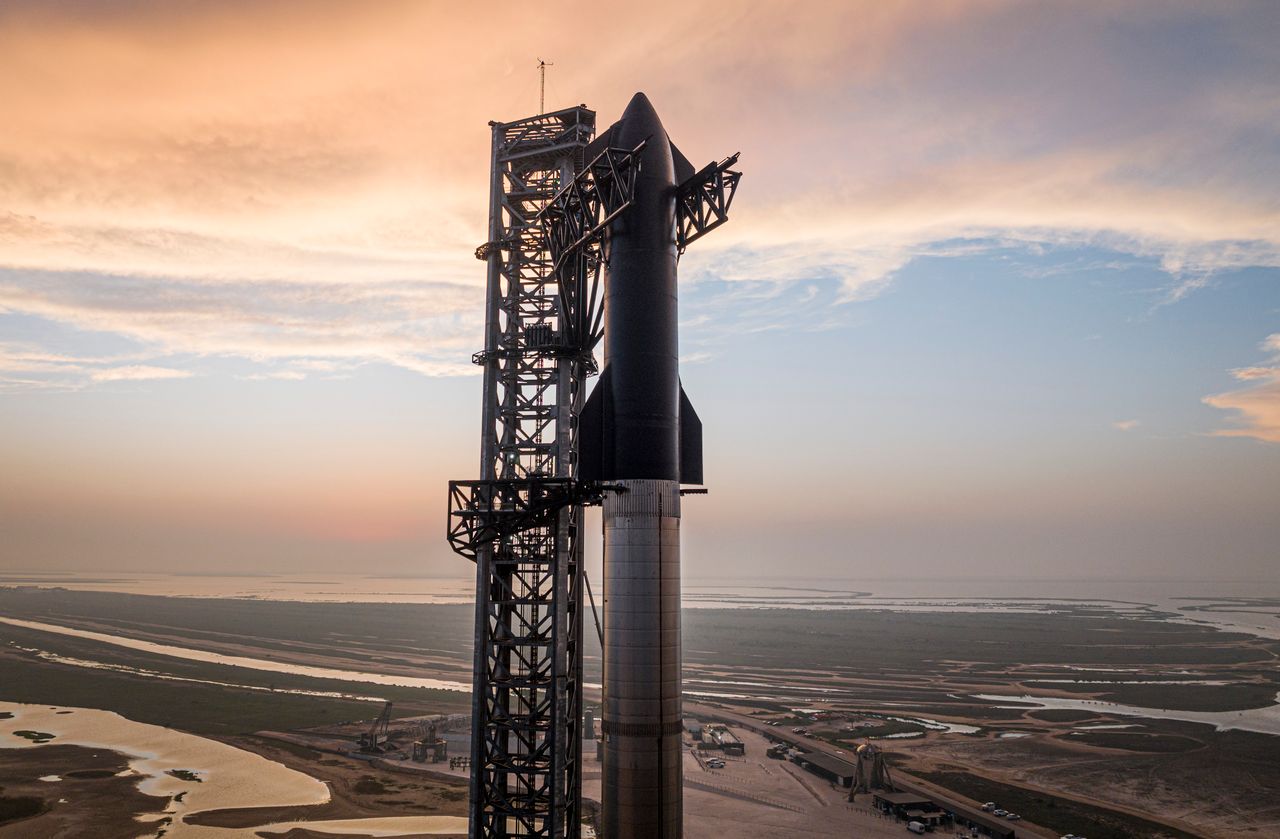
By successfully reaching orbit, SpaceX can initiate the next vital phase in its overarching development program aimed at making Starship fully and rapidly reusable. The long-term corporate vision relies entirely on transforming the heavy-lift rocket into a system that can be turned around as quickly as commercial aircraft.
If the upcoming Flight 14 proceeds smoothly and meets its core objectives, SpaceX plans to attempt an even more audacious maneuver during Test 15: catching the massive upper ship stage mid-air using mechanical arms attached to the launch tower. Speaking recently during a panel at the All-In Summit hosted by venture capitalists Chamath Palihapitiya, Jason Calacanis, David Sacks, and David Friedberg, SpaceX CEO Elon Musk offered a realistic assessment of the upcoming attempt, estimating a 50% to 60% chance that the ship stage would be successfully caught on the very first try.
From Mostly to Fully Reusable
While SpaceX has already successfully demonstrated the ability to catch and re-fly the booster portion of Starship, achieving full system reusability requires recovering both the booster and the upper ship stage. Musk indicated that the company aims to achieve the first integrated re-flight of both elements either by the end of the current year or, more realistically, in early 2027. Once that capability is proven in operational flights, SpaceX will have created the world’s first fully reusable orbital rocket system.
Contrasting this ambitions architecture with existing hardware, Musk noted that the workhorse Falcon 9 rocket is only "mostly reusable." While the first-stage booster routinely returns to Earth, the expensive upper stage is lost during every single launch, carrying a replacement cost roughly equivalent to a medium-sized commercial jet. Additionally, the Falcon 9 requires considerable time to recover, inspect, and refurbish the payload fairing and booster components between flights.
Starship, by contrast, is engineered from the ground up to return both primary elements directly to the launch pad, supporting a rapid operational cadence reminiscent of commercial aviation. Musk emphasized that Flight 14 will serve as a crucial diagnostic stepping stone to double-check every integrated system before the company attempts to catch the massive upper ship stage over land.
Addressing the inherent risks of landing such a massive vehicle near populated areas, Musk acknowledged the high stakes involved in atmospheric recovery over land infrastructure. The primary engineering concern centers on preventing any structural failure over inhabited regions, noting with characteristic candor that ensuring public safety and maintaining community confidence remain absolute priorities during the flight test campaign.
Looking further ahead, SpaceX intends to leverage the matured Starship architecture for ambitious interplanetary missions to the Moon and Mars, as well as for deploying specialized infrastructure such as "Starmind" AI data center satellites into low-Earth orbit. SpaceX President Gwynne Shotwell recently confirmed that the company remains firmly on track to begin launching specialized orbital compute satellites sometime in 2027, highlighting the steady convergence of aerospace engineering and advanced data processing in Earth orbit.