












Bitmine Immersion Technologies, currently recognized as the world’s largest Ethereum-centric corporate treasury firm, has continued its aggressive acquisition strategy. In the latest move to bolster its digital asset balance sheet, the company announced the purchase of another 27,562 ether last week. This acquisition, executed amid a broader market recovery, underscores the firm’s unwavering commitment to its long-term treasury policy despite the inherent volatility of the cryptocurrency markets.
The most recent purchase, valued at approximately $75.2 million based on Monday’s trading price of $2,727 per ETH, serves as a significant milestone for the firm. Following this latest transaction, Bitmine’s total ether holdings have climbed to an impressive 5,983,940 ETH. This massive stockpile represents roughly 4.9% of the total circulating supply of Ethereum—which currently stands at approximately 122.1 million tokens—bringing the company to the very precipice of its publicly stated goal of acquiring 5% of all ether in existence.
A Consistent Strategy of Accumulation
The firm’s approach to asset management has been characterized by remarkable consistency. Bitmine has maintained a steady buying pace over the past several months, a strategy that has not wavered even as market conditions shifted. Since June 2025, when the company officially pivoted its corporate treasury strategy to focus heavily on Ethereum, it has executed weekly purchases of the asset.

Market analysts tracking the firm’s activity suggest that at the current rate of acquisition, Bitmine is well-positioned to hit its 5% accumulation target within the next two months. This mechanical, disciplined approach to buying reflects a conviction in the underlying value of the Ethereum network, a sentiment that has remained a central pillar of the company’s investor relations and corporate communication.
Beyond simple accumulation, Bitmine has taken a proactive stance on yield generation. The company has staked approximately 5 million ETH—accounting for roughly 85% of its total holdings—allowing the firm to leverage the proof-of-stake mechanism of the Ethereum network. At current staking yields, the company has projected an annual revenue stream of approximately $357 million. This move into staking demonstrates a shift in how corporations view crypto assets; rather than treating them as passive, non-productive holdings, Bitmine is treating its treasury as a source of recurring operational cash flow.
The financial markets have reacted positively to these developments. Bitmine shares were trading 5.8% higher in pre-market sessions, building upon a robust 8% rally observed on the previous Friday. This market optimism mirrors the broader performance of the Ethereum network, which has recently surged to price levels not seen since late January, marking a significant recovery for the asset.
Tom Lee: The Case for a Year-End Institutional Catch-Up
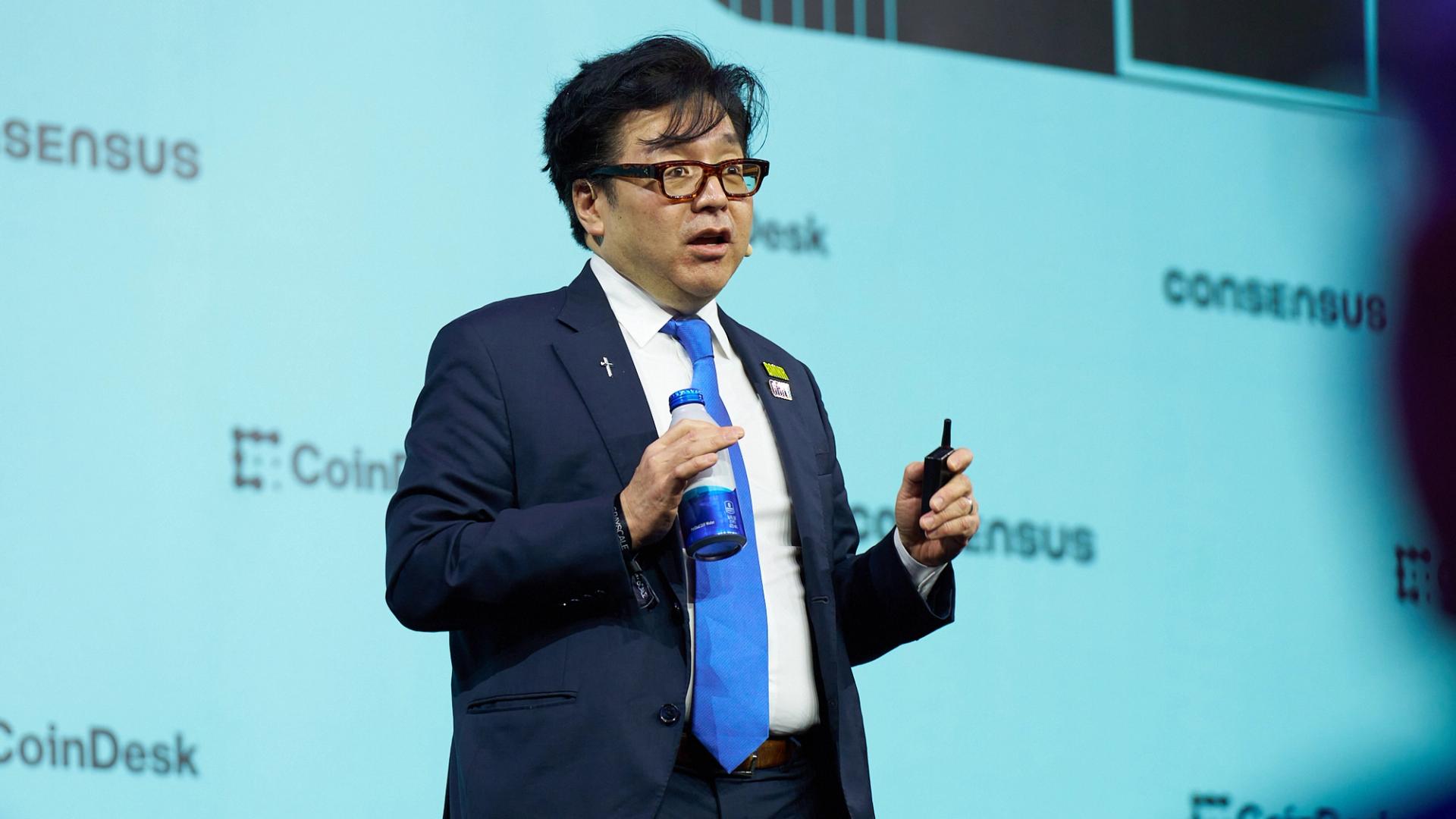
While the operational news regarding the treasury’s expansion dominates the headlines, the perspective provided by Tom Lee, the chairman of Bitmine and co-founder of Fundstrat, has provided significant context for why such a large-scale pivot to crypto is occurring now. During his appearance at the Consensus 2026 conference in Miami, Lee articulated a compelling argument regarding the behavior of institutional investors and their current positioning within the crypto space.
Lee suggests that the current market environment is characterized by a "catch-up" dynamic. Throughout much of 2026, institutional capital was heavily concentrated in traditional equity markets, specifically in companies tied to the artificial intelligence (AI) boom. This thematic focus on AI led many fund managers to remain underweight on digital assets. However, as the performance gap between traditional tech stocks and crypto assets has widened, the incentive structure for these managers is beginning to shift.
Since the end of June, the contrast in performance has been stark. ETH has risen by 76% during this period, significantly outperforming the S&P 500, which has recorded a relatively modest 2% gain. For institutional investors who rely on benchmarking against major indices, such a performance disparity is impossible to ignore. Lee believes that this gap is the primary catalyst that will force fund managers to reconsider their asset allocation strategies as the year draws to a close.
"Given institutions have underweighted crypto in 2026, partially due to the outperformance of AI stocks in early 2026, we expect institutions to substantially increase their exposure in the final three months of 2026," Lee stated. He argued that the current under-allocation to the sector is not necessarily a reflection of a lack of interest, but rather a byproduct of capital chasing higher-profile, albeit different, growth opportunities earlier in the year.
Long-Term Drivers for Institutional Adoption
Beyond the short-term performance metrics, Lee pointed to structural changes within the blockchain ecosystem as long-term drivers for institutional involvement. Specifically, he highlighted the growing trend of tokenization—the process of putting real-world assets on the blockchain—as a vital development that will eventually bridge the gap between traditional finance and decentralized infrastructure.
Furthermore, Lee emphasized the synergistic relationship between blockchain technology and the advancement of artificial intelligence. As AI continues to evolve, the demand for decentralized, transparent, and verifiable computational layers is expected to grow. Because Ethereum provides the base layer for much of this activity, the network is increasingly viewed by institutional participants not just as a currency or a store of value, but as a critical utility for the next generation of technological infrastructure.
The argument for institutional adoption is also bolstered by the regulatory and operational maturity of the ecosystem. As firms like Bitmine continue to demonstrate that holding large quantities of ether is a viable, transparent, and income-generating treasury strategy, the perceived risk of such holdings for other institutional players may begin to diminish. Bitmine’s success in integrating crypto into a standard corporate balance sheet provides a roadmap for other entities that may be considering similar moves.
As Bitmine moves closer to its target of 5% of the total ether supply, the firm stands as a bellwether for the institutionalization of the crypto market. With the combination of a disciplined, yield-focused accumulation strategy and a macroeconomic backdrop that appears to be shifting in favor of digital assets, the coming months are likely to be pivotal. For investors and market observers alike, the firm’s progress serves as a real-time stress test for the viability of Ethereum as a core component of the modern corporate treasury.
Whether the broader institutional market follows in the footsteps of Bitmine remains to be seen, but the narrative articulated by Lee suggests that the current cycle of accumulation is far from over. As the final quarter of 2026 approaches, the interplay between Bitmine’s aggressive buying and the predicted institutional pivot will likely remain a central theme for the broader cryptocurrency market, setting the stage for what many hope will be a robust conclusion to a year of significant recovery.